
THE BURDEN THEY CARRY
by
Book Cover & Preview Text
That day was bright and Billy was feeling hopeful, thinking it would be at the revival that he might be able to face down his demons. It had been too long since he felt comfortable in his own skin. In Nam the stench of death, the bravado of drunkards, the tales of sexual exploits filled the air, not piety nor prayer nor peace. He had put on a good show, but he was often revulsed by what he saw and heard. It all flew in the face of what he thought his life was really all about. He had always considered himself a cut above low-life people. His mother called him a “special” person because he always wanted to be a “good boy’ and he tried his best to live up to that image. He was an altar boy, he did volunteer service work, he studied hard and he went to church on a regular basis. Billy thought he was living an honest, dignified and upright life. He thought of himself as a noble person cast into the swamp of a war he didn’t quite understand and which he tried hard not to be caught up in. But Vietnam grabbed hold of him like a rabid dog, and he could not get away. He realized that just being there in Vietnam made a difference. Although the Army had transformed the Asian landscape into a mini-America called Camp Eagle, this area osmosed the death and destruction surrounding it. Huey helicopters took off daily for undisclosed battle missions. Soldiers bragged of their “kills.” In fact an area of the camp was sectioned off by barbed wire that housed those specially trained troops who at a moment’s notice would be swept up and inserted into the middle of a firefight. They were wound so tightly that the barbed wire fencing surrounding their quarters was not to protect them from others, but to protect others from them. Billy felt it, everyone on the base felt it, the hypervigilance that comes with the possibility of being killed, maimed or captured at any moment. Everyone knew that unless the perimeter of the camp was well-defended, every last soldier and Vietnamese worker in the camp would be slaughtered without mercy. Without guard towers and ambushes, the concertina wire and mines that made up the defensive perimeter would be breached and those in the camp would never go home to see their loved ones again. What was going on outside the camp seeped into the camp and put every soldier on edge. And those troops outside Camp Eagle felt they had permission to be hard and mean and uncaring. In this way each could cope with the awareness that no place was safe. Billy eventually became immune to the profanity and bravado that arose from the need to show fearlessness and manhood. Soldiers became warriors first and human beings second. They dehumanized the enemy. They all were “geeks” or “dinks.” They were no longer human beings deserving of respect and compassion. When hostiles were spotted coming toward the camp, everyone would get a proud, satisfying feeling when American Cobra helicopters mowed them down shredding their flesh with their miniguns. “Kill or be killed” changes a person. Billy felt shame at feeling glad that the enemy suffered and died. But,“Better them than us!” And he tried to avoid the drinking and gambling and pornography that seemed to occupy so many of his comrades in camp. But what else was there to do when the duty day was over, the mission accomplished? You head to the clubs on base and drink away the troubling feelings. Or you escape the darkness of what you had to do by developing a moral callousness or a sense of apathy that distanced a soldier from facing what he dared not admit. Billy recalled the time that an enemy combatant was killed trying to sneak into the camp and his corpse was hung up in a locker as if he were a side of beef. Billy had the nauseating thought that a human being had been treated like a slab of meat, but then there was also the titillating possibility that maybe he could see the corpse for himself and feel good that the bastard couldn’t kill him any longer. However, Billy had caught himself at that moment, realizing that the dregs of war were seeping into his soul. He never went to see the mangled cadaver. From that time on, Billy fought the temptation to take on the attitude toward the enemy held by fellow soldiers, “Kill them all and let God sort it out.” But it was like walking on a newly tarred road. Their attitude seemed to bond itself to him. He kept trying to pull himself away, but it was getting harder and harder to walk and not fall face first into that tar. No one cared about the enemy. The only good gook was a dead gook! He tried to banish this kind of thinking since it flew in the face of his moral code and his religious faith. But it was a constant battle within himself. Then came the ambush about a month before Billy’s DEROS date (scheduled change of station back to the U.S.). It damaged him. With it he gave up the battle to stay upright and noble. When he thrust the bayonet into that boy’s belly, he was no better than the other soldiers who constantly cursed, abused alcohol and drugs and bragged about their sexual exploits as if all this confirmed their heroism and status as red-blooded American males.
Formats



Book Details
About the Book
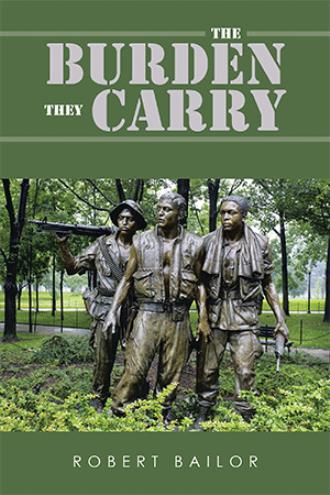
While on an ambush in Vietnam, Billy slaughters a Viet Cong boy soldier and spirals into guilt and shame. He cannot believe he did such a thing when all his life he wanted to be “a good boy” and respect all living things. He returns from Vietnam with PTSD and a conflicted spirit, not recognizing himself from what he did. Billy hates what he did and can no longer trust himself to be an honorable person. He is in deep despair when he meets a farmer named Rufus who recognizes Billy’s internal struggle being a veteran of the Korean conflict himself. Billy begins to find personal peace working with Rufus and living with his family but abruptly abandons Rufus when his yet unresolved guilt is forcefully thrown into his face by a revival preacher. Then as he is wandering along a dusty road, he is met by a fellow Vietnam veteran named Jack who empathizes with Billy’s soul sickness and takes him to a Vet camp where Billy meets other Vietnam vets as damaged as he. Finally, Billy finds solace from his internal torment through the care and concern of a Fr. Luke and a girl named Elizabeth, who surprisingly happens to be Rufus’ daughter. Their combined compassion and faith show Billy how to resolve his guilt and begin to trust in himself again.