
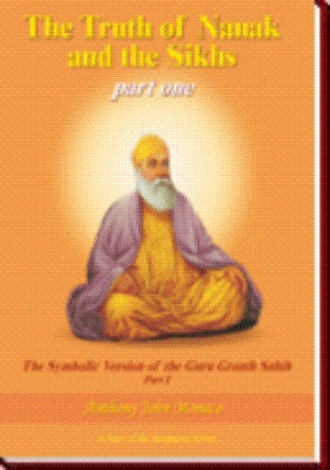
The Truth of Nanak and the Sikhs part one
by
Book Cover & Preview Text
Foreword
The book of Holy Scriptures known as the Guru Granth Sahib (also known as the Adi Granth) is the supreme spiritual authority and Head of the Sikh religion. The word Sikh means, “disciple”. The book is treated by Sikhs as a living Guru. The book of scripture of the Adi Granth is not worshipped as an idol (Sikhism rejects idol worship); the emphasis is placed on the respect for the writings contained within the book, which is displayed on the altar in the gurdwara, a Sikh place of worship. The book contains the repository of God’s revealed Word through ten Gurus. Sikhism is regarded as a revealed religion through specific people who experienced the movement of the Spirit of God through themselves and wanted others to have the same experience.
The Guru Granth Sahib is a collection of devotional hymns and poetry, which proclaim God. Each hymn has its own traditional tune. The hymns and poems stress meditation on the True Guru (God) and they also espouse moral and ethical rules for the development of the soul while it is on earth to achieve spiritual salvation and unity with God. The actual process of daily living is a continuous act of worship by a Sikh who functions on earth before his or her Creator. The true ablution consists of adoring God constantly. It is the written spiritual message contained within the words of the book that makes it important as a teacher for each person. In the Sikh religion, everyone is equally important: there is no distinction between priesthood and laity. All people have a direct connection with God, the Father of all. The word Granth is from the Sanskrit and means, “book”. The word Sahib is a term used to look at “man with respect”. The Guru Granth Sahib can easily be interpreted to mean God’s Book to Respectful Man.
The founder of the Sikh religion was the Guru Nanak (1469-1538 AD) who lived in the region of northern
People are at a various levels of spiritual awareness: a person who has achieved unity with God is called a giani; a person is filled with divine understanding is a brahmgiani; a person who functions as a guide to assist others toward spiritual enlightenment is a sant. The message of the Guru Granth Sahib is that the Spirit of the Lord is in and with everyone. The present level of human nature identity (manmukh) can be relinquished to experience his or her divine identity (Gurmukh). This ascending transitional experience in consciousness requires a willingness to depart from emotional attachment to the material world before the person can enter the spiritual world, Nirvana, the ultimate goal for all God’s children who are the Siblings of Destiny.
Formats



Book Details
About the Book
The Truth of Nanak and the Sikhs presents a detailed interpretation of the Sikh Scriptures known as the Guru Granth Sahib. This book contrasts the literal interpretation of the Granth with a new interpretation that explains the symbolism of certain words to produce a clearer meaning applicable to oneself in daily living. Symbolic meanings of certain words describe the eternal flowing action of spirit available to the reader for enlightenment, spiritual growth and inner peace. The simple message: Let the spirit of the True Guru (Almighty God) coming to you in the Granth come through you individually in each moment.
About the Author
As a retired health care professional, Anthony John Monaco has been interested in the cause of disease at the physical, mental and emotional levels of the individual. His scientific approach led him to study the scriptures and consider spiritual approaches to health. He has analyzed many major scriptures of the world and has written extensively on his interpretation of the original intent of the authors responsible for the various religions of mankind. This book includes the teachings and writings of Sikhism and a detailed examination and explanation of the symbolism used in the teachings recorded in the Guru Granth Sahib.