
Toxic Waste and Human Rights
by
Book Cover & Preview Text
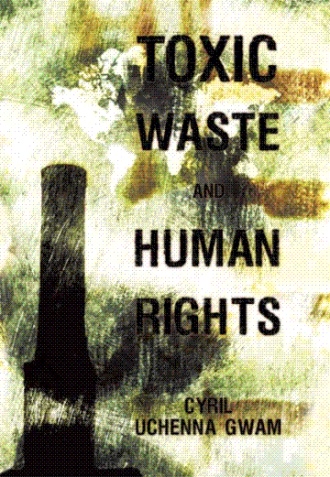
This book discusses the adverse effects of the illicit movement and dumping of hazardous, toxic and dangerous wastes and products in the developing countries, and the effect of such activities on the enjoyment of human rights, mainly from the perspective of the resolution of the former United Nations Commission on Human Rights (CHR). The most prominent of the entire relevant international instrument of this kind is the United Nations 1989 Basel Convention on the Control of Transboundary Movement of Hazardous Wastes and Their Disposals, to which other relevant human rights resolutions have made reference. In view of this prominence and importance, this paper analyzes the Basel Convention without losing focus on human rights. The study stands for the proposition that illicit movement and dumping of toxic and dangerous waste and products adversely affect the environment and human right to life and health. It illustrates that dumpers are mainly transnational corporations acting, at times, with the connivance of individuals in the sending and receiving states. The book further demonstrates that, although the international community is aware of the effects of toxic wastes dumping on the enjoyment and realization of all human rights, there exist certain factors in the international system militating against the full implementation of former CHR resolutions on toxic wastes. These factors include:
1. the politics of human rights, particularly, the politics of first and second generation rights; 2. the controversy over the obligations of states to aliens abroad; 3. the inequity of international legal instruments; 4. the ineptitude of certain international human rights bodies, such as the Committee on Economic, Social and Cultural Rights to articulate emerging perspectives on ways to realize the second generation rights; 5. the lack of will or commitment of certain states to comply with their international obligations; 6. the attitude of the OHCHR towards the Special Rapporteur on Toxic Wastes; 7. the status of international human rights law; and 8. the legal status of the resolutions of the former CHR.
However, despite the difficulties in implementing the former CHR's resolutions; this study supports the proposition that dumpers should be prosecuted for criminal activities in accordance with states' domestic laws. Moreover, victims should be able to receive compensation for physical, mental and emotional injuries, economic loss, and substantial impairment of their fundamental rights resulting from human rights violations.
Formats

Book Details
About the Book
This book discusses the adverse effects of the illicit movement and dumping of hazardous, toxic, and dangerous wastes and products in developing countries, and the effect of such activities on the enjoyment of human rights, more from the perspective of the resolutions of the former United Nations (UN) Commission on Human Rights (CHR). It is now called Human Rights Council. This study stands for the proposition that the illicit movement and dumping of toxic and dangerous wastes and products adversely affect the environment and human rights to life and health. It illustrates that dumpers are mainly transnational corporations. It demonstrates that, although the international community is aware of the effects of toxic wastes dumping on human rights, there exist certain factors militating against the full implementation of CHR resolutions on toxic wastes. These factors are: the politics of human rights, and the politics of first and second generation rights; the inequity of international legal instruments; the lack of will or commitment of certain states to comply with their international obligations; the attitude of the Office of the High Commissioner for Human Rights (OHCHR) towards the Special Rapporteur on Toxic Wastes; the status of international human rights laws; and the legal status of the CHR's resolutions. However, despite the difficulties in implementing the CHR's resolutions, the study supports the proposition that dumpers should be prosecuted for criminal activities in accordance with the state's domestic laws. Victims should be able to receive compensation for physical and emotional injuries, economic loss, and substantial impairment of their fundamental rights resulting from human rights violations. Specifically, developing countries should construct domestic legal system to protect such fundamental rights.
About the Author
Dr. Cyril Uchenna Gwam, a Nigerian, was a training officer at the World Meteorological Organization (WMO), the authoritative voice of the United Nations in the field of weather, climate and water. In Geneva 1993 to 1997 he was the Head of Political, Human Rights and Environment Section, Permanent Mission of Nigeria to the United Nations Office in Geneva (UNOG). He participated and chaired many international meetings. Dr. Gwam has traveled to all the the continents of the world. He is a member of many professional bodies, including American Society of International Law (ASIL) and Academic Council of the United Nations System (ACUNS).
Dr. Gwam has a degree in International Law (PhD) Preston University, Wyoming USA in 2006; Certificate of attendance in International Humanitarian Law, San Remo Institute of Humanitarian Law, San Remo, Italy; Certificate in International Negotiation, (CASIN) Geneva, Switzerland; M.Sc in (International Relations), University of Ife (now Obafemi Awolowo University) Nigeria; and B.Sc (Pol Sc), University of Benin, Nigeria in 1978. He has attended many training courses.
Dr. Gwam has written extensively in many renowned academic journals in international politics and international law.