
Dudley Huggins: Memoir of a West Indian's Journey.
by
Book Cover & Preview Text
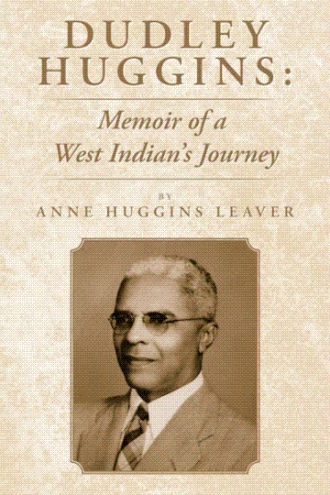
This is the chronicle of my polymath father whose distinctive feature was that he treated everyone regardless of who they were with the same graciousness and kindness. Adjectives I would use to describe him are: altruistic, determined and ambitious, yet modest and dignified. He didn’t seek fanfare or public recognition but was calm, genteel, courteous and enormously kind. He was an exemplary Christian, yet quiet in his faith, Methodism. He was an avid, omnivorous reader, knowledgeable about history and always abreast of current world events. Here is his story.
He was born in
In 1911, as a five-year-old, he caught typhoid fever and became so ill he was expected to die. He was nursed by his mother, as opposed to his nanny, and that created a much stronger bond between them. After about six weeks, when he was somewhat recovered and considered no longer infectious, he was sent to live with his maternal grandmother, Bridget Angelica Hanley (née O’Brien), at Brown Pasture to recuperate. There he was lonely and homesick. When eventually he had regained his strength, he returned to the family home, Longstone House in
It was at Christmas time that he used to remember his childhood days much more clearly than at other times. He recalled how he would look forward to the toys he received, how he used to steal the rich black cake, which was made only at Christmas, how he ate so much and so often that before Christmas was over he felt in need of a rest after his great exertions eating and smashing up his toys. He remembered too that he would be first awakened on Christmas morning by the sound of singers, who went in groups of about twelve from house to house singing Christmas songs. Some of these Christmas hymns had very pretty tunes and even prettier words. These songs were the unmistakable signal that Christmas had arrived.
In 1916 at the age of almost eleven, my father was sent to
In school games he played in the first eleven at cricket and was reputedly a good bowler whilst also achieving even scores as a batsman.
Formats

Book Details
About the Book
About the Author
This tale, “Dudley Huggins: memoir of a West Indian's journey” started off being written for my children, nephew and grandchildren as an account of their West Indian ancestry. However, because of the difficulties of researching alone and across the seas it became essentially the story of my father, [Hastings] Dudley Huggins and his attainments in nascent times in the background of the Caribbean and the University of the West Indies in that era, as those years were interesting, exciting and rapidly changing historically, economically and socially in the West Indies, were woven that too into the narrative.