
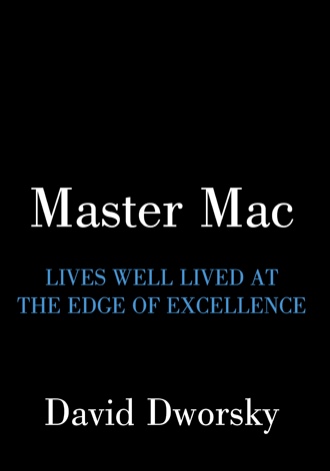
Master Mac
Lives Well Lived At The Edge Of Excellence
by
Book Cover & Preview Text
Formats

Book Details
About the Book
Master Mac spans three generations of high-achieving men and women who changed not only their own but many other pieces of the world. Despite differences in ages and backgrounds, they were linked by what McBurney had taught them. That linkage encompassed classrooms, conference rooms, operating rooms, ballrooms and bedrooms. The people of Master Mac liked each other, respected each other, believed in each other, fought for --and with --each other and slept with each other.
The First Generation (Founders of the Flame) included the British- born and educated Richard Amberton MacAllister, who became the `Master Mac' of the story, and Frank Abner, a one-time jailhouse kid and World War Two Marine who became `Master Whack'; a prep school disciplinarian with compassion.
Among the Second Generation (Keepers of the Flame) were Roscoe Zill, head of America's third largest company and womanizer extraordinaire; Aaron Diehl, a talk show host with an international audience; Ronald Krittle and Deena Kass, developers of mass communications, and Arthur Astrachian, vice president of the United States.
The Third Generation (Inheritors of the Flame) raised the standard of excellence still higher: Maryann Randolph, a battlefield transplant surgeon who received the Nobel Prize in Medicine. Zachary Zill, a naval aviator who became an astronaut and was awarded the Medal of Honor for a daring rescue in space. Tameka Astrachian, who became a gifted actress and then a recluse. Matthew Bowen, a peace advocate who was brutally murdered in the barrios of East Los Angeles. Joyce Levanto, the secret service agent who failed to protect the president from terrorists. And Steven Krittle-Kass, who won a seat in the US Senate by applying the lessons of McBurney.
These are the people of Master Mac. The people of excellence.
About the Author
By his own estimate, David Dworsky has written millions of words, including the 200,000 or so in Master Mac. David decided to write the novel --his first --in the aftermath of a long career hammering away at telexes, typewriters, computers and other machines from which words could be coaxed. As a fledgling novelist, David decided to stick to a rule that had served him well as a journalist and corporate writer: Write About What You Know. Accordingly, he drew from concepts and themes that had loomed large in his professional life. Plus oceans and the boats that sail upon them. Master Mac is told through the prism of the McBurney School; a once-prominent but now-defunct New York preparatory school which the author attended as a teenager. McBurney sought to teach students about excellence in many shapes & forms; masks & disguises; configurations & structures. Although McBurney is years in the past, it ripened into a lasting memory and a defining experience. With a McBurney boy's typical modesty, the author denies that he is an example of the excellence about which he has written. He concedes, however, that he is one of the main characters in Master Mac, although in deep disguise. David hopes that readers will find in Master Mac the concept of excellence that enriched the lives of thousands of boys --and what a few of them made of it.