
BILLBOARD IN CONCERT
A FICTIONAL NOVEL
by
Book Cover & Preview Text

INTRODUCTION
Today political scientists and observers are beginning to ask if political science as a subject is still considered scientific in the sense that it explains the actions and behavior within the society. During the cold war, which predominately was fought between the then Soviet empire and the
Deterrence not of fact of deterring the opponent but deterrence of fact deterring the holder or holders of the nuclear weapons not to use them at all; for fear of unknown outcomes, is what has made deterrence work. A nuclear weapon, if used, may (instead of destroying the opponent) destroy the world. At that time, what good could come of ever using it? Despite that, both sides feared a nuclear attack from either side. And for same reason, each side preoccupied itself with developing nuclear weapons with super warheads capable of serious adversity if used. Each side perceived the other side as manic, contemplating suicide, and would not mind what doing it took to accomplish their insane plan. There was an issue that was left unattended: If one person or nation is suicidal or run by insane persons, why reduce or subject yourself to that level of insanity to deter them from using the nuclear weapon? Why do this, if the use of the same will not only destroy their aimed at target but will go a long way to subdue the world, if not totally annihilate it?
Nuclear weapons were never used during the cold were, but it is still believed that they may one day be used. The resulting question that the behaviorists of political science never asked is Why defend against its use if when it is used, no one may live to give an account that it was used?
Decision makers of both the cold war and post-cold-war era occupied their time with the need to procure the first-, second-, and third-strike capabilities. They, however, forget that the ability to have a capability is life. The opponent that launches a nuclear weapon against its adversary does not intend to leave him alive. If he or she = desired to attack with nuclear weapon, he or she would strike with the amount of force necessary to disable the enemy.
For the purpose of second-strike capabilities, the
While this is not a book in political theory, it is a fictional novel that borrows from political philosophy to see the need for global peace and security. With that said, it should be noted that the cold war madness progressed with lots of money and human resources wasted on the ideology of crazy men. The amount of the uncountable zillions of dollars wasted in fighting the shadow of the other man could have bettered the world with medicine, agriculture, music, and social and human developments. If the money thrown into the development of star wars projects alone had gone into all of these disciplines, the world today could have been richer, more advanced, and better educated.
Professor Claude Emerson Ake said that democracy as the rule of the majority has seen a collapse because of the growing number of homeless people. Ake said that with the trend unchecked, the near future will present the days when the majority of the voters will be homeless. Ake then proceeded to argue that unless the leaders themselves are homeless. Then the majority, who are supposed to be leading, are homeless and are ruled by those with roofs over their heads, which constitutes the minority.
With the amount already spent, and is continued to be spent on defense, it raises the question as to the sanity of the people who voted to elect the group of persons who seem so bent on chasing after the likely conduct of an insane person at the very expense of all other social reforms. Instead of chasing after the likelihood of an attack by a manic the leadership as well as those who elected them, we should invest in universal social reform, such as education. Then the world no doubt will be a better place, which will not only protect us from the emergency of a manic in power but will build a social system that will operate in such a friendly way as to make it impossible to breed insanity.
William Shakespeare mentioned with cautio
Formats

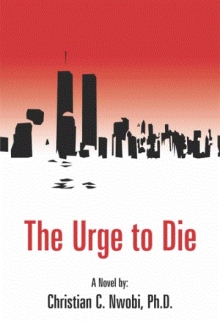

Book Details
About the Book
Janet has been secretly in love with her millionaire boss, Paul. And when her boss was going through his divorce, he scheduled a trip to the
Janet wished that Paul would marry her and informed him so, but Paul said that his desire for polygamy would not allow him to get married. So Janet invited eight of her girlfriends—Vicky, Monica, Comfort, Judith, Sarah, Mary, Maggie, and Florence—to come over and spend the weekend with her and Paul, catering to Paul’s whim of sleeping with multiple women. The relationship went from a week to a lifetime, as Paul kept the girls when they asked him to keep them. Monica then convinced Paul to invest in a charity by allowing them to operate orphanages around the world and adopt orphans in the name of their charity, which was Paul’s Foundation. Paul granted them five million dollars and ten percent of five million every year thereafter to open and manage orphanages around the world. Paul also introduced them to his family, which included his socialite mother and his brother, the publisher of a major magazine.
When the president declared the year a tax-free year for individuals and corporations due to the assassination of all the Senate members, Paul decided to sail in his boat for a five-day cruise. The nine girls decided to come with him and they sailed to
When the rest of them got back to
About the Author
Christian C. Nwobi Ph.D is a graduate of State University College of New York at Buffalo He did his postgraduate studies at the State University College of New-York at