
A Farm Boy in the Foreign Service
Telling America's Story to the World
by
Book Cover & Preview Text

In the Foreign Service
On January 22, 1951, I took the oath as a Foreign Service Staff Officer of the United States. I was now a member of the State Department, the official organization charged with carrying out United States' foreign policy and representing the United States abroad.
Harry Truman was President of the United States. Dean Acheson was Secretary of State. The Korean War was at its apex. Chinese "volunteer" troops had overrun United Nations positions, and UN forces were struggling to throw them back. Western Europe and the United States were engaged in a Cold War with the Soviet Union. The Truman Doctrine had staved off a communist takeover in Greece and stymied similar offensives in Western Europe.
On the home front, anti-communism was growing in intensity, fueled by Congressional hearings on alleged communist influences in the U.S. Government. Senator Richard Nixon had singled out Alger Hiss, a top echelon Department of State official, for attack. Senator Joseph McCarthy had launched his charges, mostly unfounded, against the Departments of the Army and State for alleged communists influences. Several veteran China specialists were about to be railroaded out of the Foreign Service, accused of having turned China over to the communists. One of them was Jack Service with whom I was destined to become good friends in my post-Foreign Service career in Berkeley.
On the diplomatic front, backed by America's predominant military and economic strength, we were using a "Campaign of Truth" to combat communist anti-American propaganda. In Latin America, where I was heading, virtually the whole continent was living under military dictatorships, anti-communist in name, but oppressive in character, creating fertile fields for communism.
A plaque on the USIA headquarters building at 1776 Pennsylvania Avenue read "Telling America's Story to the World." Through my oath I had sworn to help tell that story. It was a heady thought. I had been a member of the U.S. military forces fighting fascist aggression during World War II. Now I was once more joining the fray, this time in the diplomatic service, America's first line of defense against communist aggression.
I found a room in a private home on Cathedral Avenue and immediately began orientation for my assignment with the title "Information Assistant" at the American Embassy in Caracas. There were a dozen new Foreign Service recruits in my group, including Stan Moss, my classmate and good friend at the University of North Carolina in Chapel Hill. Stan had specialized in Latin America at UNC but was being assigned to Cebu in the Philippines instead. I had served with the U.S. Air Force in China and had focused on East Asia at LSU but was going to Latin America.
"Just like the Army," Stan said.
Pressure was on State to fill openings abroad, and we were both being sent where we were needed without any country-specific training to equip us for the tasks ahead of us. Most of our three-week training period was directed at familiarizing us with State Department administrative procedures, cultural exchange programs, and Washington support services to field posts. These included press and motion pictures in Washington, and the Voice of America in New York. (VOA would move to the capital later.) Television was still in its infancy and USIA had not yet established a television branch.
One memorable training exercise focused on how to handle communist hecklers. The training officer played the role of a communist agent. Addressing himself to each of us individually, he fired vitriolic accusations against the United States charging Americans with supporting racist and colonial policies, a lack of any real culture, violence in their cities, and economic imperialism. Our task was to respond coolly and factually to each of these charges. My experience with communist activists at a student conference on international relations at the University of Oklahoma served me well, and I came out of the exercise sweating but with the feeling that I had met the challenge. But the real test would come in the field.
Later I would learn much more about the duties and responsibilities of life in the Foreign Service. At that time my colleagues and I looked forward to representing the United States to foreign publics, to serving on the frontline of America’s engagement abroad. We hoped to have some impact on our audiences and play a part in making history, but this was still pretty much of a dream. Part of that dream was travel abroad, experiencing new cultures, learning new languages, seeing new sights and finding lifetime friends in foreign cultures. I already had a taste of this from my China experience and looked forward to great deal more. We understood from what we had read and from our short acquaintance with State Department officials that we would be working with highly talented individuals and that the challenges of our new jobs would never give us a moment to get bored. In recompense we would be provided housing and free medical care while living abroad. The salary I would be drawing at first was modest, but it was still considerably more than I was receiving as a journalist. Even so, what appealed to me most was the challenge of the job itself. I was excited and looked forward eagerly to this new phase of my life.
My orientation period was hectic, but I also had to equip myself with a diplomatic wardrobe for service in the tropics in mid-winter Washington. Stan was a big help. He had grown up in nearby Baltimore and knew his way around the capital. The month passed quickly. Before leaving Washington in mid-February, I wrote a protocol letter to my Ambassador-to-be in Caracas and advised him that I would arrive at the Maiquetia airport on February 22.
My travel orders gave me four days leave en route. I used them bid farewell to Margaret, my college sweetheart in Chapel Hill, and to say goodbye to my family in Lake Charles, Louisiana. My hometown paper published an item about my Foreign Service assignment accompanied by a photo of me boarding a plane for New Orleans and the overnight flight to Caracas.
Japan-America Forums
One winter day in 1955 Nishimura-san and I were driving back to Takamatsu following an official visit to Tokushima. It was cold, the roads were rough, and we were both badly in need of something to warm us up. We stopped for coffee at the only cafe available in Anabuki, a mountain village at the prefecture border. The coffee was terrible, but it was hot. We had hardly finished our first grimace when the cafe owner asked if I was an American, a rarity in those parts. With my affirmative nod he began a bombardment of questions on everything from American attitudes toward the Korean conflict to sex and marriage in the American society. A man with a vision larger than his business indicated, he complained that the people of his town--the mayor, the school teachers, and many others--were eager for contact with Americans from whom they could learn more about the United States. His questions matched those I had encountered in earlier discussions with my Japanese contacts, and I found that I could handle them just as well as any lecturer who might be riding the USIS circuit.
Continuing our journey to Takamatsu, Nishimura-san and I hit upon the idea of holding a series of Japan-America Forums with community leaders around Shikoku in which I could respond to whatever quest
Formats

Book Details
About the Book
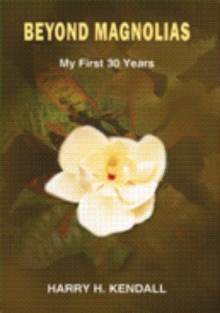
This book provides an intimate
view of the United States Information Agency's highly successful public
diplomacy program during the Cold War and lessons on how it was done when
communism, rather than terrorism, was America's chief concern. It is the story of
a Louisiana farm boy whose encounter with Chinese culture during World War II
started him on a career of “telling America's story to the world.” The
narrative begins as the writer accepts a State Department invitation to join in
a "Campaign of Truth" to counter communist anti-American propaganda
and relates his experiences as he interacts with audiences in Latin America,
Europe and Asia. It also relates his experience with USIA in keeping a world
public informed on the unfolding drama of America's conquest of outer space and
landing on the moon. Throughout, the emphasis is on the personal aspects of how
the writer copes with life and work in foreign cultures on behalf of his
country. Reviewers have described it as “heart warming,”
“superbly readable,” and “one of the best books in its genre.”
About the Author
Harry Kendall is a retired
Foreign Service Officer and specialist in public diplomacy. A native of
Louisiana, he served with the 14th Air Force in China during World War II.
Subsequently, taking advantage of the GI Bill, he earned a BA in journalism at
LSU, an MA in international relations at Yale and did PhD work at the
University of North Carolina. He was a reporter for the Charlotte Observer when
the Department of State invited him to join its newly established information
and cultural program (later the U.S. Information Agency) designed to counter
Soviet anti-American propaganda and give the world a realistic picture of the
United States. During his 29 years in the Foreign Service he interacted with
audiences on every level of society in Latin America, Europe and Asia. Upon
retirement from the Foreign Service he joined the Institute of East 'Asian
Studies at the University of California in Berkeley where he is currently a
research associate. His previous publications include articles and
collaborative works on Vietnam, Mongolia, Korea, Japan and Southeast Asia.