
World of Existence
Ontological Foundations of the Kurdish Philosophical System
by
Book Cover & Preview Text
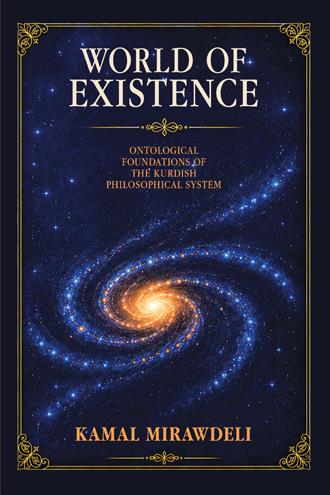
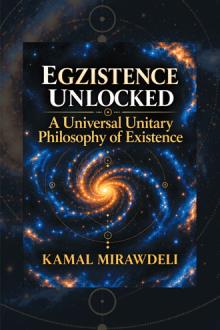
This book provides a comprehensive and detailed overview of the Kurdish Philosophical System (KPS), a unique metaphysical framework grounded in Kurdish phonetic ontology, biological processes, linguistic structures, ethics, culture, and the cosmos. Created by Kamal Mirawdeli, the system emphasizes self-giving existence, continual renewal, and interconnectedness, offering a non-theistic, non-dualist alternative to Western metaphysical traditions. It integrates ontology, epistemology, ethics, language, culture, and the environment into a cohesive, regenerative worldview. Ontological Foundations At the core of Kurdish ontology is the principle of Da (givenness), which states that existence is ongoing and self-given rather than caused or created. This principle is closely connected to Dan (space), which provides the field or space for beings to emerge and interact. The ontological sequence proceeds from Da through biological and existential stages marked by Kurdish phonemes representing selfhood (Xo), structure and soul (G), life and motion (Z), consciousness (EZDA), and lived experience (J). The ontology rejects traditional substance metaphysics, causality, and theological explanations, instead focusing on a biologically grounded and linguistically encoded process of becoming. Worldhood is seen as a gradual process of giving space, moving through layers such as the womb (Zêdan), formed interior space (Makdan), self-space (Xodan), collective social space (Kodan), ecological land (Xakdan and Zemindan), and cosmic space (Gerdûndan). Self-Giving Being: XODA and EZDA XODA embodies infinite, undivided self-giving existence, representing Da without intention, purpose, or moral judgment. It is the metaphysical foundation from which identity, motion, consciousness, and renewal arise. Unlike traditional theistic ideas, XODA lacks omniscience or moral authority and is characterized by amoral generosity. Conscious existence (EZDA) develops as a participatory mode within XODA, reflecting self-awareness without being its source. The dynamic relationship between XODA and EZDA creates a metaphysical loop where existence becomes self-aware and ethically meaningful. Structure, Motion, and Lived Experience The interaction of G (structure), Z (motion), and J (lived experience) forms the triadic foundation of being. G provides coherence and identity, organizing dynamic energy; Z animates life, driving birth, knowledge, transformation, and eternal regeneration (Zawûzê); J integrates these into relational, ethical, and meaningful lived experience. Along with space (Dan) and form (Mak), they sustain existence and enable ongoing renewal. Epistemology and Language Epistemology in Kurdish ontology begins after embodiment and emergence into worldhood, specifically at Zarok (the living human body). Consciousness (EZDA) is a differentiation within worldhood rather than a precursor. Knowledge develops through stages, including sensation (Hest), experience (Ezmûn), desire (Xwast), knowing (Zanîn), language (Ziman), and science (Zanist). Language is central, functioning as an ontological archive that encodes the structure of existence and as a medium for constructing the world, shaping perception, identity, ethics, and culture. It preserves memory, transmits ethical principles such as care (Soz), justice (Dad), measure (Asa), and cosmic truth (Asha), and serves as a tool for resistance and renewal. The dynamic phonetic operators—such as Zar (mouth/speech), Ziman (language), Zan (birth/knowledge), and Zanîn/Zanist (knowledge/science)—illustrate the natural connection between life, expression, and understanding, emphasizing knowledge as a living, participatory process. Ethical Framework Kurdish ethical principles arise ontologically from the self-giving structure of existence, emphasizing relationality, balance, and renewal. The five interrelated ethical pillars are: Principle Description Soz (Care) Compassion, relational warmth, and mutual responsibility arising from shared vulnerability. Xwê/Xud (Self-Measure) Inner balance, restraint, and ethical self-regulation maintaining harmony and preventing excess. Dad (Justice) Fairness, equity, and balance in social relations aligned with natural and cosmic order. Asa (Natural Balance) Respect for natural boundaries, ecological sustainability, and proportionality in actions. Asha (Cosmic Truth) Alignment with universal harmony, truth, and deeper ontological order of existence. These principles guide ethical behaviour at personal, community, ecological, and cosmic levels, with Soz and Dad complementing each other by providing emotional support and structural fairness respectively. Ethical collapse disrupts these balances but is healed through the principle of eternal regeneration, Zawûzê, which ensures continuous renewal of ethical life and cultural identity. Negative Ethical Cycle The document also describes a harmful ethical cycle called Druj, characterized by lies, force, fear, predation, and collapse, which causes personal, social, ecological, and cosmic damage. Renewal through Zawûzê counters this destructive cycle by restoring the five ethical principles. Cultural and Environmental Ontology Culture is viewed as a dynamic ontological framework, a shared space (Dan) and formed identity (Mak), sustained through language, narratives, customs (Destûr), and art (Huner). Language preserves cultural memory and identity, serving as a tool for resistance and renewal. The environment (Jînge) is a sacred, relational space vital for life, identity, nourishment (Bijewî), and lived experience. It influences traditions, ethics, and memory, and safeguarding it is an ethical and metaphysical obligation. Losing the environment leads to cultural trauma, while its renewal encourages cultural revival. Cultural identity arises from the interaction of birth, language, knowledge, nurturing environment, self-giving being, and collective space, maintained through participation in the ongoing processes of existence and renewal. Renewal and Transformation: Zawûzê Zawûzê is the principle of eternal regeneration that ensures continuous renewal across ontological, cultural, ethical, and ecological domains. It enables healing after collapse or trauma by regenerating forms, cultural identities, ethical life, and ecological balance. Through Zawûzê, communities reclaim language, memory, and customs, fostering creativity and resilience and sustaining the dynamic, participatory nature of existence. Historical and Comparative Foundations The Kurdish phonetic ontology uncovers an intellectual tradition with deep historical roots spanning Proto-Indo-European, Indo-Iranian (Avestan, Sanskrit), Mesopotamian (Sumerian, Akkadian), Anatolian (Hurrian, Hittite), and classical Kurdish sources. The phonemes relate to ancient cosmologies—such as XOR/XODA connected to the sun and self-givenness, G to soul and vitality, Z to life and knowledge, D to giving and placing, and J to living and sustaining—preserving a layered cosmological and ethical system. Applications and Implications The Kurdish Philosophical System provides a strong alternative to Western metaphysical traditions, emphasizing relationships, embodiment, and cosmic involvement. It opposes reductionist and teleological models, advocating for a holistic, participatory, and ethical approach to knowledge, science, ecology, politics, and education. Its ethical foundation promotes environmental sustainability, social justice, cultural resilience, and anti-war principles rooted in care and harmony. The system also supports interdisciplinary research and the decolonization of knowledge systems.
Formats




Book Details
About the Book
This book arises from a dedicated effort to define the ontological foundations of Kurdish thought through a rigorous philosophical framework rooted in language, biology, and lived experience. At its core is the phonetic ontology developed by Kamal Mirawdeli, a system that reinterprets Kurdish linguistic structures as vessels of metaphysical insight and portrays existence as a dynamic process of self-giving. The work presented here is not an ethnographic study, a cultural survey, or a theological reinterpretation. It is a philosophical endeavour in the strict sense: an attempt to develop a coherent, systematic, and conceptually robust account of Being as revealed through the Kurdish intellectual and linguistic tradition. The project is rooted in the belief that Kurdish thought possesses its own metaphysical structure—one that has long been implicit in language, oral tradition, and cultural memory but has rarely been articulated systematically in philosophy. The phonetic ontology of Xoda and Ezda offers the conceptual tools necessary for such expression. Through the principle of Da, understood as primal givenness, Kurdish ontology presents a different perspective from the dominant metaphysical frameworks of Western philosophy, which often depend on concepts like substance, causality, or transcendental subjectivity as fundamental. Instead, existence is viewed as an open, regenerative, and self-sustaining process in which life, consciousness, and worldhood emerge from the continual act of giving.
About the Author
Dr. Kemal Mirawdeli British-Kurdish philosopher, poet, writer and political activist 1 · Overview Kamal Mirawdeli is a British-Kurdish philosopher, poet, writer and political activist, born in Marga, Iraqi Kurdistan in 1951 and based in London. His work spans four connected fields: an original philosophical system rooted in the Kurdish language, literary criticism and adaptation of classic Kurdish epic, Kurdish and English-language poetry, and a long record of political writing and advocacy on Kurdish autonomy and human rights. 2 · Background and Education Early life. Born in Marga, Iraq, the son of a nationalist poet and town mayor. Education. B.A. in English, Baghdad University; M.A. in Philosophy and Ph.D. in Literature, University of Essex; M.Sc. in Political Economy, London School of Economics. First political activity. Ran as an independent candidate in the July 2009 presidential elections for the Kurdistan Region of Iraq, finishing as second runner-up. 3 · Political Career and Platform Mirawdeli is a prominent voice in Kurdish politics and civil advocacy, best known for his 2009 independent presidential campaign. The 2009 election Running as an independent outsider against entrenched political establishments, he mounted a significant challenge and finished as second runner-up. His platform focused on democratic reform, anti-corruption, institutional accountability and social justice. Geopolitical commentary Based in the UK, he works as a senior political analyst and contributing writer for platforms including Ekurd Daily. His writing features open appeals, letters and policy critiques directed at world leaders on Kurdish autonomy, human rights and regional security — including open letters to British Prime Ministers and US Presidents on the protection of Kurdish allies in Syria. 4 · Philosophical Foundations Mirawdeli’s English philosophical texts explore the intersection of language, ontology and classical historical critique. Phonetic Ontology: Unlocking Existence in a Grain of Salt In Unlocking Existence in a Grain of Salt: Phonetic Ontology of Xoda and Ezda, he introduces the system known as phonetic ontology. The cosmic grammar. Language does not merely name an existing world but actively reveals the mechanics of how reality manifests; a primordial metaphysics is embedded in the phonetic structures of Kurdish. The architecture of being. Specific elemental sounds — X, G, Z and J — serve as the building blocks of consciousness, existence and continuous cosmic regeneration. Self-actualisation. Through the etymology of ancient names such as XODA and EZDA, he builds a framework in which existence is Self-Given, human consciousness is Self-Awakened, and true knowledge is entirely Self-Born. Asabiyya and State: A Reconstruction of Ibn Khaldun’s Philosophy of History A study of the foundational 14th-century North African polymath Ibn Khaldun. Systematic synthesis. Ibn Khaldun’s Muqaddimah (Prolegomena) is widely considered a foundational text for sociology and the scientific approach to history; Mirawdeli untangles its concepts to present them in a modernised, accessible analytical context. Knowledge versus power. Rather than tracking historical cycles alone, he examines the conditions that made Ibn Khaldun’s philosophy possible, mapping how historical data explains the relationship between structural knowledge and state power. The Kurdish Philosophy of Existence In Self-Giving Existence: A Short Introduction to Kurdish Philosophy of Existence, Mirawdeli moves past etymology to establish a complete ontological framework. The concept of XODA. Where Western metaphysics often tethers existence to external creator figures or teleological blueprints, he uses the ancient Kurdish word for God/Self, XODA, to define existence as something that inherently gives itself, forms worlds and sustains life entirely from within. No guarantees or teleology. The universe expands, shifts and self-renews without a final destination or pre-written cosmic guarantee — a continuous, spontaneous state of being. Non-imperial universality. By showing how a stateless, historically marginalised culture holds a profound understanding of reality rooted directly in its language, he challenges dominant Eurocentric and imperialist philosophical systems and offers an alternative view of human consciousness. 5 · Poetry and the Poesophical Framework Mirawdeli treats poetry and philosophy not as separate tracks but as a unified way of understanding the universe. Poesophical Vision & Works (2026) In this anthology he introduces the concept of “Poeo-Sophy”: a deliberate intellectual and creative merger designed to restore the ancient, severed connection between artistic poetic vision and rigorous philosophical enquiry. Within it, poems are treated not merely as aesthetic arrangements or emotional outlets but as immediate, dynamic experiments in ontology — the act of writing becomes an exploration of reality itself. Kurdish Odyssey: Poems of Love and Alienation (2021) His premier English-language poetry collection. Themes. The lived complexities of Kurdish identity, balancing intense feelings of personal exile and alienation (gurbet) in the West with a deep connection to human love and cosmic oneness. Literary merit. Celebrated for structural variety and thought-provoking themes; critics note that his verses treat living beings and inanimate objects as co-equal components of a shared, interconnected landscape. 6 · Mem û Zîn: Adaptation and Criticism A cornerstone of Mirawdeli’s creative work is his engagement with Mem û Zîn, the classic 17th-century epic by the foundational Kurdish poet Ahmad Khani — addressed through both analytical scholarship and creative modernisation. Revolution of Love: Tragedy of Mem û Zîn. A dramatic 50,000-word verse adaptation in Standard Kurdish. The play modernises Khani’s narrative, preserving its poetic aesthetic while transforming the historical protagonists into timeless, universal representations of sacred love, national liberation, spiritual transcendence and structural resistance against oppressive political authority. Love and Existence. A companion analytical text offering literary criticism and philosophy. He parses Khani’s multi-layered themes — from local Kurdish culture (Kurdewarî) and Sufi mysticism to political allegory — establishing the work within the framework of universal philosophy. 7 · Critique of Folklore Mirawdeli applies his philosophical framework to Kurdish oral literature, reinterpreting traditional myths through political consciousness and existential survival. Moving beyond the myth. In his critical essays and commentaries, he argues that masterpieces of Kurdish folklore — such as the tragic oral epics Mem û Zîn (Meme Alan) and Dimdim — should not be dismissed as simple regional fables or peasant bedtime stories. The repository of a stateless people. For a people facing systematic cultural erasure and geopolitical fracturing, oral folklore became the primary vessel for preserving history and philosophical perspective. The analytical shift. In Love and Existence he shows how classical writers such as Ahmad Khani extracted raw folklore and elevated it into sophisticated allegories of national liberation, spiritual mysticism and political defiance — validating the intellectual heritage of an oral culture. د. کەمال میراودەلی 8. Selected English-Language Works His English-language bibliography includes Voluntary Sector and the State (1992), Passage to Dawn (1997), America in Iraq (2005), Modern Kurdish Poetry: An Anthology & Translation (2006), Archaeology of History (2010), Love and Existence: Analytical Study of Ahmadi Khani’s Tragedy of Mem u Zin (2012), Assabiya and State: Ibn Khaldun’s Philosophy of History (2015), History of the Present: Kurdistan in the 21st Century (2015), and Kurdish Odyssey