
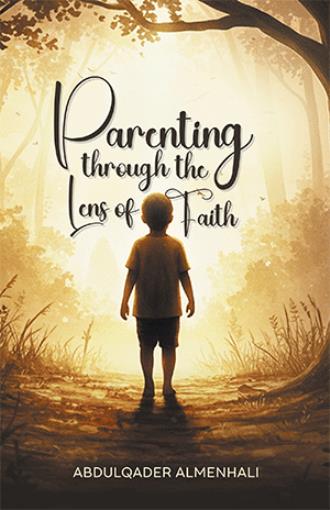
Parenting through the Lens of Faith
by
Book Cover & Preview Text
Let’s be honest—parenting is a divine gamble. You bring a tiny human into the world, armed with zero instruction manuals and a whole lot of please-don’t-turn-out-like-that prayers. You guide, you discipline, you sacrifice sleep and sanity… and still, you’re never quite sure if what you’re doing is “right.” That’s where faith comes in. And no, I’m not just talking about religion. I’m talking about faith as trust, as mindset, as a kind of sacred stubbornness—the belief that what you pour into your child matters, even when you can’t see the results yet. Faith-based parenting isn’t new. It’s as old as humanity itself. Take Adam and Eve, for example—the original parents. After being cast out of paradise and thrust into the chaos of Earth, they were tasked not just with survival, but with raising the first generation of human children outside divine perfection. Their story isn’t just about sin—it’s about starting over. And parenting, more than anything, is a constant act of starting over. Their sons, Cain and Abel, reflect the tension every parent fears: you can raise two children under the same roof, with the same values, and still watch them make completely different choices. Did Adam and Eve fail? Or were they simply the first to learn what all parents eventually do: you can guide the heart, but you cannot control it. Now fast forward a few thousand years and cross over to Japan. In Shintoism and traditional Japanese culture, the role of the parent is deeply tied to giri (duty) and on (obligation). In many homes, children are taught to bow each morning to their elders—not just as a sign of respect, but as a daily ritual of gratitude and humility. That, too, is a form of faith: faith in structure, tradition, and the belief that character is shaped long before results are seen. And unlike Netflix, you can’t skip to the end to see if it all works out. In ancient Sparta, parenting was state business. Boys were taken from their families at age seven to be raised by the state, trained for discipline, survival, and loyalty. In stark contrast, Jewish tradition emphasized the role of the home, with Deuteronomy commanding parents to “teach these words diligently to your children.” Two civilizations. Two philosophies. One prioritized strength. The other, story. Both believed the future depended on parenting—but they disagreed on what kind. Whether through ancient scriptures or modern city apartments, East or West, the lesson is the same: parenting requires faith. Faith in God. Faith in the process. Faith in the child. And sometimes, faith in yourself—especially when you feel like you’re getting it all wrong. Children are the future. Think back to your own childhood: were your parents strict? Did you grow up in a household with complete freedom, or one with neglectful parenting? Perhaps there was a mix of discipline and liberty. Now consider how those parenting styles shaped your values today. Beyond parenting styles, religion often plays a pivotal role in a child’s development. A recent study found that approximately 80% of religious parents prioritize passing their faith to their children as a central parenting goal. Think about your own family—was faith a central theme? Were there rituals or teachings that shaped your identity? How that faith is instilled makes all the difference. For example, eating pork is forbidden in Islam, consuming beef is against the Hindu faith, and abstaining from alcohol or harming any living being aligns with Buddhist principles. In Jewish tradition, marriage outside the faith is often discouraged. Are these practices rooted solely in scripture, or are they reflections of the parenting behind them? Dr. Diana Baumrind, a leading researcher in developmental psychology, categorized parenting into four major styles: authoritarian, permissive, uninvolved, and authoritative. The most effective, she found, was the “authoritative” style—firm, yet loving; disciplined, yet empathetic. What’s striking is how closely this style mirrors faith-based parenting at its best: rules with relationship, correction with compassion. Yet, faith-based parenting is about more than rituals—it shapes a child’s entire worldview. From an early age, children absorb values not just from instruction, but from observation. Across faiths, principles like honesty, self-discipline, and compassion are emphasized, whether through parables, hadith, Vedic verses, or mindful reflection. But we’re raising children in an era of algorithmic influence. One TikTok is all it takes for a stranger with a ring light to challenge everything you’ve ever taught. That’s where the tension lies: parents are competing with voices louder, cooler, and more “rational” than their own. In no other place is this paradox more visible than in the UAE. A child here might begin their day with Quranic memorization, spend lunchtime speaking three languages, and finish the evening watching anime or Korean dramas online. It’s not uncommon for kids to ask whether Christmas is “ours,” or why one classmate fasts and the other doesn’t. The exposure is beautiful—but without reflection, it can be destabilizing. That’s why the home becomes more than shelter—it becomes compass. We’re raising children in a country that hosts over 200 nationalities, where mosques stand next to skyscrapers, and Friday sermons share the same airwaves as Netflix. Parenting here isn’t just about passing down faith—it’s about anchoring identity in a rapidly shifting world. This book is here to spark thought, offer insight, and open up a conversation. Because in a world full of noise, raising a child with faith—whatever that may mean to you—is one of the most countercultural and courageous things you can do. This book won’t give you all the answers. It’s not a list of dos and don’ts. It’s a mirror, a conversation, and sometimes, a challenge. Because parenting through faith doesn’t mean having it all figured out—it means showing up with intention, even when you’re unsure. After all, even the most revered figures in history—those we look to as prophets, sages, and leaders—struggled with raising the next generation. Prophet Nuh (Noah) couldn’t convince his own son to board the ark. Ibrahim (Abraham) had to face the unthinkable command of sacrificing his child. Even in stories of divine guidance, there was heartbreak, resistance, and uncertainty.
Formats

Book Details
About the Book
In today’s world, parents are surrounded by advice, yet few conversations cut to the heart of the matter: how do we raise children with values that endure? Parenting Through the Lens of Faith is both a guide and a reflection, weaving together cultural insight, psychological research, and personal honesty. Rather than offering quick fixes or rigid rules, the book invites readers to explore how faith, whether rooted in religion, tradition, or cultural identity shapes the way we nurture, discipline, and connect with our children. From the role of fathers and mothers, to the powerful forces of honor and shame, to the challenges of social media and interfaith households, Abdulqader Almenhali unpacks timeless questions within a modern context. He highlights the ways Eastern and Western parenting models overlap and diverge, showing how parents across cultures face similar struggles while drawing from different strengths. The message is clear: children raised with emotional intelligence, consistent values, and open communication are more likely to grow into empathetic, resilient adults. Yet many parents today feel torn between preserving tradition and embracing change. This book bridges that divide with empathy, clarity, and hope. Whether you are a parent, educator, or simply reflecting on your own upbringing, this book offers guidance without preaching and questions without judgment. This isn’t about perfection. It’s about parenting with purpose.
About the Author
Abdulqader Almenhali is an Emirati writer and talent acquisition professional who brings a distinctive voice to conversations about culture, faith, and modern family life. With a background in international relations and a career spent working across diverse industries in the UAE, he has gained rare insights into how identity, values, and community intersect in today’s globalized world. Though not a parent himself, Abdulqader writes from the perspective of someone who has lived within a deeply rooted cultural and spiritual tradition while observing how families evolve in rapidly changing societies. His reflections draw from personal experience, intercultural dialogue, and research, making his work resonate with readers navigating the tensions between tradition and modernity. Known for his honest and approachable style, Abdulqader engages readers with warmth, clarity, and thought-provoking questions. He challenges parents, educators, and individuals alike to think deeply about the kind of values they wish to pass on. His writing reflects a commitment to fostering intentionality, compassion, and resilience in a world where raising children has never been more complex—or more important.