
Unstoppable “By Choice”
by
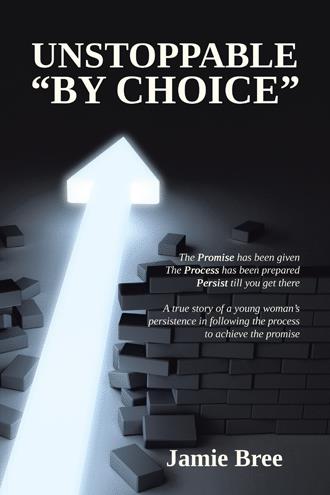
Book Cover & Preview Text
I had dropped out of typing class in high school because I had no desire to be a typist for anyone, nor did I think I would ever need this skill. However, when I decided to pursue full-time employment, the program that was available through the local Office of Economic Opportunity with the National Aeronautics and Space Administration required me to be able to type at least 25 words per minute. There was just this little problem, I could not type. But I was determined to get a job. The Civil Rights Act had been passed in 1964 and many government agencies were working on programs to integrate their workplaces. NASA had decided to institute this clerical training program to bring minorities into predominately white clerical positions at the Langley Research Center. I borrowed a manual typewriter, covered the keys on the typewriter, got a typing book from the local library, and taught myself to type. When I took the typing test, I had the required 25 words per minute with 47 errors! Thank God they did not subtract for errors. I was now eligible to apply but there were no spaces available in the first class which had begun in February 1969. Three months later, I got a call that a trainee had dropped out and there was a vacancy, but I would have to play catch up if I wanted to attend the class already in session. I was ready to go to work, so I said, yes, I could do it. So that May, at the age of 21 I entered the Office of Economic Opportunity (OEO) and National Aeronautics and Space Administration (NASA) Clerical Training Program at the Langley Research Center in Hampton, Virginia. The OEO Director encouraged NASA to let me start even though the class had already been in session for three months ensuring them that she felt comfortable I could handle it. I had met with the Director during the application process and she said she saw a lot of potential in me and believed if I put my mind to it, I would do it. I just wanted a job and if typing was involved, so be it. Because of her recommendation, I was accepted into the program and was determined to work hard to catch up on the three months of assignments that I had missed. Because my typing skills were low, I spent most of my time outside of the classroom teaching myself to type. The other classes were not a problem for me even though I had never done shorthand or knew what office procedures entailed, I was a fast learner. The classes were typing, English, math, shorthand, and effective office procedures. After six months in the classroom, we were assigned to job sites on the Center as clerical assistants. We were “under-privileged and under-skilled” and this program was intended to ultimately help us get clerical jobs with the federal government. At the end of the program we were given the Federal Civil Service Entrance Exam. We needed to get at least a score of 70 to be qualified to be placed on the list to become permanent federal government employees. The OEO/NASA program included intensive classroom instruction and job placement at select sites. This was my first time working in an office and I really enjoyed it. We spent one month on each site and had job descriptions and supervisors who would evaluate our performance and character. I worked on three job sites. We were evaluated after each assignment. My evaluations included such accolades as cooperative, ambitious, self-confident, neat in appearance, congenial, business like, industrious, etc. I enjoyed organizing the office, performing the performing the administrative duties, but I was not too happy with typing. I still made a lot of errors and used a lot of correction tape and typing erasers whenever I had a typing project to complete. There were two primary teachers who were extremely helpful and concerned about our success. They both have passed, but they made some great strides in their lives towards helping others achieve. They were the Chief of the Stenographic and Special Typing Section and her Assistant who were both white women. We also had a math teacher who was a quiet spirited and very smart African American woman. She looked white and was one of the few Black Mathematicians at the Center. She would later be recognized in a movie called “Hidden Figures” about her life as a Mathematician at NASA. Although this was a different environment for me, I felt comfortable. After completing my assignments, I would frequently assist the teachers in correcting papers and tutoring students. I enjoyed the work I was doing and seeing my initiative, the instructors gave me more responsibility and I started constructing practice entrance exam quizzes for the class. Because we were studying to pass the Federal Civil Service Entrance Examination, I used my smarts to develop a “mock” practice exam and became an “acting” teacher. I enjoyed this immensely. I had always wanted to be a teacher but my Mom told me I would end up hurting someone’s child because of my lack of patience. I came to realize that teaching adults, rather than children, was my forte and I enjoyed every minute of it. We took the Federal Civil Service Exam for Office Assistants that August and every one of the students passed. I passed with an 89.9 and was hired as a Clerical Trainee GS-1. My score qualified me to be placed in a GS-2 grade level position. I was hired February 1970 as a GS-1 Temporary Clerk-Typist Trainee. My assignment was to work with the primary teachers in the Stenographic and Special Typing Section with the second Clerical Training Program that was about to begin. My primary duties were to correct papers, type and compose tests, teach Arithmetic and basic typing principles. Teach typing, yeah! This was a big laugh for me, but I loved my job and looked forward to coming to work to do whatever I was assigned.
Formats

Book Details
About the Book
Unstoppable “By Choice” offers a transparent picture of a young girl’s pursuit of the abundant life. It relates the life of a young under-privileged girl who overcame the odds and ended up not being another statistic because she was a high-school drop-out, pregnant and married at 17 with three children by 19, living with a military spouse and unaware of how to make a marriage work or raise a family. Her feelings of rejection caused her to become unstoppable in all her pursuits regardless of the many opportunities to fail. Although she lacked adequate knowledge, skills and abilities to achieve that abundant life, God had a plan for her life. As her relationship with Christ grew, she was better able to handle life’s challenges. She grew up in a two-parent home with a mother who was a homemaker, a father who was a laborer and seven siblings. She chose to stand up and step ahead regardless of the odds to live a better life. She believed the promise her daddy told her: “You can achieve whatever you want if you are willing to follow the process and persist in spite of the odds.” This book introduces us to a myriad of seemingly impossible emotional, mental, physical and spiritual challenges that were overcome by a young girl who persisted in establishing a process that led to the abundant life she was promised. This book will challenge you, excite you and encourage you to pursue the promise and tell your story. It may be the most memorable and impactful book you will read all year.
About the Author
The author is a believer in Jesus Christ and brings a unique perspective to being unstoppable. She is a gifted teacher, leader and visionary. Jamie Bree currently serves as the Under Shepherd of her home church and is the Owner and CEO of a training and consulting firm and spiritual enrichment training ministry. She has authored three handi-books published by Gooch Enhancement Enterprises: Your Mouth, What Are You Saying; Your Mind, What Are You Thinking; and Your Individual Group Plan. She has traveled extensively for over 30 years locally and abroad. She is the second oldest of eight siblings. Brenda has three adult sons and daughters-in-law and is a grand-mother and great grand-mother. She holds advanced degrees in Business, Public Administration and Ministry. Her life’s motto is “if I can help someone as I travel through this life, then my living will not be in vain.” Life’s experiences have prepared her to share these riveting experiences from lowly beginnings to living an abundantly blessed life. Her story will enrich your life.