
The Last Pathway Home
by
Book Cover & Preview Text
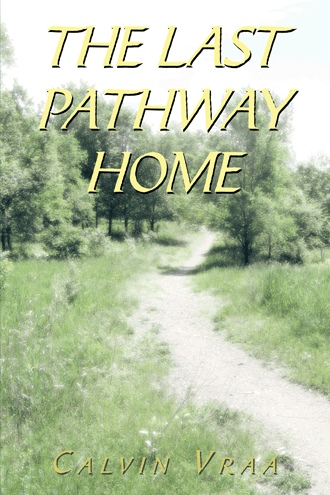
She knelt to one knee on the soft grass and set the geranium between the gravestones, sprinkled dirt around the flower with her long, graceful fingers and tamped the moist black earth with her garden trowel. The red flower, always her mother’s favorite, cast a small shadow on the lawn, and complemented the gravesite near the scenic west end of the cemetery where she adored the tranquil beauty of the scene with the hill, plain-pretty in the sunlight, above the confluence of the twin rivers that wound northeast through town to the Mississippi River. The light breeze off the river valley massaged her bare feet and tousled her well-groomed auburn hair. She achieved some peace with her family here in the cemetery near her hometown. She smiled as she brushed her bare legs below her Capri style denim jeans, and at age fifty-two she still felt attractive when part of her long, shapely legs were showing. But long-time emotions of loneliness, which had gripped her for five decades, swelled at the thoughts of what she had missed. She earned a masters degree nine years ago that led to a teaching position at the local junior college, and now she was a candidate for the academic dean’s position. Despite her success, a hollow sadness in her heart still lingered as she read the headstones: Grace Morgan 1920 – 1989. Walter Morgan 1920 – 1945. She placed another flower near the headstones and leaned close where the sweet scent twitched her nose. Mama was buried here. She tamped the earth near the flower, and her tears trickled again because daddy was not buried here. He had been killed in World War II and was buried in Belgium. She had never seen him and with crushing but sensitive empathy, she broke down, crying again over her new, but very late, realization that she was not the only loser. Neither had daddy ever seen his daughter, Jessica. Jessica had endured a lifetime without a father, and she had blunted the loss for years with alcohol. She rose straight on her knees. The urge to learn about him, buried below her sorrow and feelings of abandonment, rose to an irresistible drive that she finally faced. “I’m coming to see you, daddy. I’m coming to Belgium to see you.” She and her older brother Don had received little as children and teenagers. For Jessica, school had been painful despite good grades. She was the only one in her early grades without a father, and she suffered silently when kids and teachers talked about their dads. She shed tears if they asked about her father. In time, she could answer without tears, and that was due to a sensitive teacher who talked with her about fathers. She grew to be willowy-attractive, almost six feet tall with poise and balance. Don and she took swimming lessons offered by the city’s park board. Don and mama encouraged her to try out for the high school cheerleading squad. She had performed her difficult try-out routine without flaw, and she was a standout with her height. But the squad positions went to popular girls with fathers. Forty years later that loss still hurt her. A car honked, and Don’s white Cadillac pulled up near the wrought iron fence. He eased out and strolled with precision in blue slacks and a red and white sport shirt. “Hi, Don,” she said gaily. “Hello, Jessie,” he replied, his lips tight. He was two years older and six-feet two inches tall—she was five feet eleven. He had been an outstanding football player in college, and his academic success, intelligence and ambition led him to marry into a successful family with a growing chain of variety stores for which he was not being considered for the top position. He took her hands. “How are you, Jessie? Anything new on the deanship?” “I’m fine, and I met with Dr. Shaw,” she replied. “I am still under consideration.” “Wonderful. I’ll put in a good word for you,” he said. “Quietly, of course.” Don stepped over and viewed the gravesites. “You spend a lot of time here,” he said. “The gravestone and all.” His face tightened but he didn’t face her. She bit her lip. Don’s distress was evident. She shifted her eyes to the hill above the river. “I come here almost daily now. I just started calling him daddy.” “That can be a problem at your age,” Don replied. “We didn’t know him and calling him daddy isn’t going to help anything.” “Don, please don’t be upset with me.” “I’m sorry, Jessie,” he replied in earnest. “I don’t mean to be rude. But right now I face serious issues at the company that I must attend to every day. You know I’m being considered for CEO.” She gazed back to the low valley beneath the bluff and the rivers. “Something’s on your mind, Don.” “Yes.” He took her hand and led her to a bench where they sat close to each other. “This business of yours with father distracts me.” He went on and told her about his family situation. He had never made efforts to think of his father. His wife’s family, the owners of the store chain, was like a family to him, and her father was like a father to him. He was not going to delve into the past about his father. They talked on, a discussion that covered both families. In time he took her hands and looked at her. “It’s all right, Jessie,” he said. “Look, I have to run now. We’ll talk again.” Don left with poise, and she returned to the gravestones. A light breeze drifted off the valley and the rivers. She knelt and tamped the flower next to his headstone. “I’m coming, daddy,” she said. “I’m coming to find you. I’ll follow your paths from Normandy Beach to your burial gravesite. I’m coming.”
Formats

Book Details
About the Book
The way out of tragedy can be a long, intense journey, and in the end it may not be successful. The novel sets this journey against one of the most personal and powerful relationships in life, that of parent and child. Jessica is a heart-broken, middle-aged woman whose father was killed in World War II. She never she saw him. She sets out on a path to learn more about him by seeing the World War II battle sites where he fought. Her purpose is to understand him better by learning about his war record and to seek closure of her own lengthy loneliness by finding and walking on the grounds where he fought and to reconcile her thoughts and feelings at the end of her pathway, his gravesite.
About the Author
Calvin Vraa has been a student of World War II and its effects in both his career as a psychologist and as a National Guard infantry officer, which included a deployment to Germany. He holds a doctorate in psychology and worked with families or members who sought help or assistance in his practice. He was commissioned through the infantry Officers Candidate School (OCS) at Fort Benning, Georgia. He retired as a lieutenant colonel. He is the author of When the Warflowers Bloomed, the story of the relationship between an American infantry officer and the woman, a world-class musician, he finds dying when he liberates a Nazi concentration camp.