
The Secret History of England
by
Book Cover & Preview Text
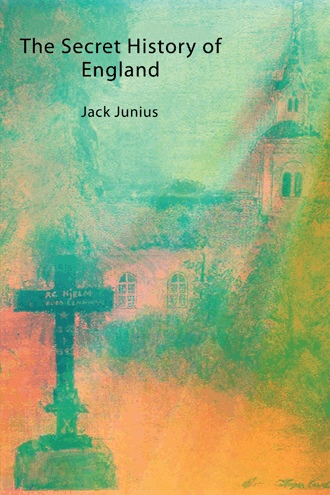
He thought about Ana, the girl who came every Sunday. It didn't seem to worry her. But she was not one of his own people. There was no warmth between them. Her efforts were mechanical for the most part. She looked a bit like Helen, but there was a hardness and a coldness about her that was not just about being paid, but about where she came from. A place somewhere east of east, far beyond the reach of laws and health and safety, with broken pavements, burnt out or abandoned trains and dangerous factories owned by gangsters. It suited her well, their arrangement. Crisp bank notes unseen by tax collectors, some of which went home to grateful hands in crumbling blocks of concrete flats. Helen was so different. Being near her was like being in the sunlight. She seemed so warm, so redolent of openness and loving people and safe gardens. Somehow sex had seldom been like that for him. His mind went back to his teens. A midsummer night's party in a big garden, the dress pulled over her head and her arms reaching out. But after that it had seemed to be all unloving hearts and cool, distant marriages and now quite alone. 'So, just once?' 'I think so, get it out of the system, but a nice memory, and you'll have the film for those long winter evenings.' 'This Sunday at my place?' 'Right.' It wasn't much of a bargain. To give up hectares of vineyard to have elderly sex just once. He could see the vines march across the hill behind his house, the appreciative nodding in the tasting marquee at the three cathedrals festival and the golden-green of the wine as he lifted the glass to drink. But vineyards took a long time to grow, while Helen was here and now. There was a sickness out there in the ocean, so they said. Each year the autumn winds blew more strongly, and when they howled around the house and through the hills, he wondered if he'd live to see the spring. His doctor wasn't very optimistic. Nothing terminal as such, but generally not in good shape. He shouldn't drink so much. She said he would live longer if he went into residential care. No alcohol, more reliable medication and less stress whatever that meant. He'd visited friends in those places. You were locked in and became a drugged zombie. None of this he thought, glancing at Helen, nor the new wine from his vineyard. But the doctor was probably right about longevity. There might not be much time. He was always at funerals nowadays. His peer group and younger than that sometimes. People he had known disappeared into an over elaborate wooden box. Soon there'd be a service where he was the one in the wooden box. Was there really a place where there were no girls or wine or gardens with herbaceous borders, but just darkness or nothing at all? Probably the doctor thought so, although the two of them would never dream of discussing it, even in a private setting. That was probably why she favoured the zombie plan as being one level better than nothingness. But he wasn't sure about that. That chirpy little woman that did for a vicar nowadays spent most of her time talking to old ladies in the council houses or organising charity things. He didn't like women vicars, and they were nearly all women these days. He could remember when he was a boy, there had been a grey-haired man with certainties for answers. Still this little woman had seemed very bright and confident about the clear and present hope of resurrection when she did the funerals. Then one day, when he had had perhaps a bit too much at a drinks party in the village, he had tentatively tried to broach the subject with her. She had stared at him as if he were a lunatic, and then had quickly gone off to talk to some other women about arranging a tombola stall. He looked at Helen. Really the answer was obvious.
Formats

Book Details
About the Book
Could bad dreams that have troubled Helen since her childhood be a sickness of the mind, or are they a remembrance of evil coming to her from a tragedy in the deep past? This question comes to the fore when James, an archaeologist, arrives to excavate the site of a Roman villa next to her home, and quickly becomes involved in a relationship with Helen. Meanwhile the site quickly yields discoveries that support James' own controversial theory that seeks to rewrite the early history of England. The discoveries unleash turmoil for the couple and those around them. A painful rift divides James and Helen. The story becomes a quest to establish the truth as revealed by these discoveries in the face of a stifling academic and cultural establishment. The couple discover that this quest will call for sometimes humiliating personal sacrifices.
About the Author
Jack Junius was brought up in the English countryside, which forms much of the background of 'The Secret History of England'. He became interested in both writing and the mystical in his teens, but these interests lay dormant for some years, while he was at unniversity and later working in the City of London, which also features in the Secret History. From the 1990s onwards he became interested in subjects such as altered states of consciousness and near death experiences, and the 'Secret History of England touches on these areas.