
Recollections
by
Book Cover & Preview Text
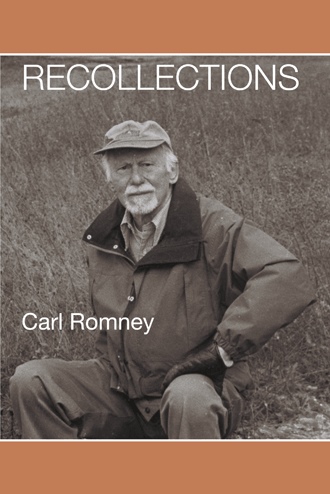
This memoir outlines the life of a scientist spanning much of the twentieth century. It began at a time before radios were found in most American homes, and before the advent of “talking pictures.” His interest in science was born at an early age, sparked by his mother, as she introduced him to the stars in a dark Utah sky.
Early experiences and training were much the same as for any other boy at the time. But with the beginning of war in Europe, and the U.S. response by instituting universal conscription (the draft), he realized the importance of education in fulfilling his military obligation, and enlisted in a Navy training program. Navy service took him to Chicago and Southern California, and eventually to little-known Peleliu Island in the Western Pacific, a foretaste of a life of frequent travel to follow.
World War II was followed all too soon by the retreat of the Soviet Union behind an “Iron Curtain” of secrecy, a massive buildup of conventional forces and armed occupation of neighboring countries. It became essential to know when they succeeded in building the atomic bomb. This book is a first-hand account in non-technical terms of some of the ways in which this was accomplished. This was followed by attempts to ban the bomb, or at least to ban nuclear testing. The author was fortunate to be near the center of U.S. efforts in many of these attempts, and the book describes important activities and events that ultimately led to achieving the lesser of these goals.
Formats

Book Details
About the Book
This memoir outlines the life of a scientist spanning much of the twentieth century. It began at a time before radios were found in most American homes, and before the advent of “talking pictures.” His interest in science was born at an early age, sparked by his mother, as she introduced him to the stars in a dark Utah sky.
Early experiences and training were much the same as for any other boy at the time. But with the beginning of war in Europe, and the U.S. response by instituting universal conscription (the draft), he realized the importance of education in fulfilling his military obligation, and enlisted in a Navy training program. Navy service took him to Chicago and Southern California, and eventually to little-known Peleliu Island in the Western Pacific, a foretaste of a life of frequent travel to follow.
World War II was followed all too soon by the retreat of the Soviet Union behind an “Iron Curtain” of secrecy, a massive buildup of conventional forces and armed occupation of neighboring countries. It became essential to know when they succeeded in building the atomic bomb. This book is a first-hand account in non-technical terms of some of the ways in which this was accomplished. This was followed by attempts to ban the bomb, or at least to ban nuclear testing. The author was fortunate to be near the center of U.S. efforts in many of these attempts, and the book describes important activities and events that ultimately led to achieving the lesser of these goals.
About the Author
Dr. Carl Romney was a pioneer in the development of scientific means for detecting and determining the characteristics of nuclear explosions at ranges of thousands of miles. He was instrumental in the design and development of the seismic component of the U.S. National System for detecting foreign nuclear explosions. His initial research on nuclear test detection was done in 1949. In 1955 he was hired by the Air Force Technical Applications Center (AFTAC), the U.S. agency responsible for monitoring foreign nuclear testing, where he became Assistant Technical Director for Geophysics.
He was a key member of the 1958 Geneva Conference of Experts, the first substantive meeting between nuclear powers about a nuclear test ban; and he continued to advise or participate in test ban treaty negotiation teams through 1980.
In 1972, he transferred to the Department of Defense’s Advanced Research Projects Agency (ARPA), and in 1980 became Deputy Director of ARPA. After leaving ARPA he became Director of the Center for Seismic Studies for eight years, and continued assisting the Center on a part-time basis until 2001.
Romney has earned numerous awards for his work, including the Air Force Exceptional Civilian Service Award, the Department of Defense Distinguished Civilian Service Award (twice), the Presidential Rank of Meritorious Executive, and the President’s Award for Distinguished Federal Civilian Service.
He lives with his wife, Barbara, in Northern Virginia.