
Iglu
by
Book Cover & Preview Text
Chapter 1: Umiak Square April’s bare heels slipped in and out of her father’s tennis shoes as she crept across the ash-covered lawn. Most of the houses and trailers along the gravel road had been smashed by bulldozers or bombs, and twisted metal fragments glimmered in the moonlight. April snuck around to the back of a trailer that wasn’t too badly mangled and stepped through a hole in the screen door. The walls of her stomach churned with hunger. She tore open the kitchen cabinets searching for food, but found only mouse droppings and trash. The refrigerator was also bare, but there were two trays of melted ice in the freezer, and she drank them, one after another, before heading back out into the night to search for food. Far in the distance, an airplane droned over Kayasak Mountain, dropping bombs. An explosion rumbled across the night sky and April glanced up at the flashing clouds in fear. Am I the only one left? she wondered, gazing down the empty street. Has everyone else been taken away? “Maybe they were taken somewhere safe and there’s no reason to hide,” she said aloud. “Maybe Mother is waiting for me, wondering why I haven’t come!” And I’ll get food if I turn myself in, she thought. She stepped out onto the road and listened. When the next ATV came by she would call out, and the soldier would take her to her mother and all the hiding would be over. All she had to do now was wait. April sat down in the middle of the road and wrapped her arms around her knees. Her long black hair whipped about in the wind. Across the alley sat a double-wide trailer, riddled with bullets. Its body was blackened and the sliding glass door had been smashed in. A line of melted plastic puffins dangled from the edge of the roof. April remembered seeing Susan’s family lined up in their pajamas beneath the puffins. April had been riding home on her bicycle when the Skyhawk man knocked Susan’s father to the ground with the butt of his rifle. Susan cried out and one of the soldiers threw her back against the wall. April watched helplessly, hoping that someone would come to help, but no one had; and when one of the soldiers yelled to her, she frantically pedaled home, burst through the door and fell into her mother’s arms. “They’re forcing people onto trains heading somewhere to the north,” her mother explained in a trembling voice, “no one knows where. We must hide you in case they come.” “But what about you?” April asked. Tears ran down her cheeks, catching on the claw piercings below the corners of her mouth. “I’ll be fine,” she said. “Gladys says they’ve only been taking Eskimos. Now listen, I’m going to tell everyone that you’ve gone to live with your aunt in Anchorage.” April had protested when her mother showed her the small mattress and food tins she had placed in the crawlspace beneath the stairs, but after a few weeks she became used to life in hiding: eating and reading by candlelight, going to the bathroom in a bucket, whispering with her mother through the cracked door about the dozens of people who had disappeared in the middle of the night. Then, early one morning, the soldiers had come. How long ago was that? April wondered, staring up at the full moon. A month? How long was I hiding under the stairs? Though she struggled to separate the last few weeks of her life, April could always play back the moment her mother was taken. She pictured herself back in the crawlspace, paralyzed with uncertainty and fear as the heavy footsteps echoed down the hallway. Her mother had cursed and then screamed; a glass broke and things were thrown about the room. April had to stuff her shirt sleeves into her mouth to keep from calling out. Then, it had gone silent and her mother was gone. “I didn’t help Mom,” April whispered, sitting in the middle of the road with her head in her hands. “I didn’t help Susan. What a coward. I deserve to be caught. Here I am!” she yelled, raising her arms in the air. “Take me away with everyone else!” April looked up at the plastic puffins dangling from the roof and once again pictured the soldier knocking Susan’s father to the ground. “What am I doing?” she asked, realizing the danger of sitting in the open road. She ran through the front yards of the trailers, turned the corner and ducked behind a bush to hide. April listened for footsteps or engines but there was only the sound of her heavy breath. “Sedna,” she whispered, rubbing the seal tooth hanging from her neck. “Aaka, help me.” She stood and the burnt grass crackled beneath her feet. The house behind her was completely burned. The roof and walls had caved in and only the door jamb and garage remained. A broken down ATV sat in the driveway, surrounded by empty plastic containers. April ducked under the handlebars and darted across the street toward the blackened rooftop of the qargi. The meeting house had mostly been destroyed, but when April noticed the tall wire fence of the community garden a smile spread across her face. Nearly all of the beds were empty or overtaken with weeds, but she found a flowering spinach plant among the scotch broom, and devoured the bitter leaves and the stem all the way down to the roots. She found two cherry tomatoes still clinging to their vine and stuffed them into her mouth along with a small, shriveled-up potato. A light rain began to fall. April cupped her hands to the sky, sucking the droplets of water from her palms, but it only made her hungrier. Where can I find food? she wondered, chewing on the tomato vine. On the edge of town she stopped in front of Bryan’s house, picturing him playing basketball in the driveway. Things had been so good between them before the war. Bryan’s family was one of the few white families that had remained in the neighborhood after Point Hope had seceded from the United States. Their parents had been friends since college, and the families spent a lot of time together while April and Bryan were growing up. April had a crush on him starting in the sixth grade and they had finally kissed in her backyard more than two years ago. Bryan was her first boyfriend, and as they talked and kissed, the threat of war shrunk to something far away on the distant horizon. When the war started, Bryan’s mother had forbidden him to see her. And after the insurgency was crushed and the Eskimo Army had fled to the mountains, April would sometimes ride her bike by his house, hoping to see him playing ball in the driveway, but he was never there, and she had been too afraid to knock on the door.
Formats

Book Details
About the Book
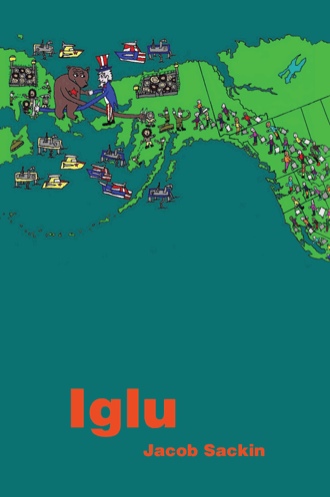
The rising sea has swallowed up most of the Iñupiaq people’s native land and millions of Americans from the lower forty-eight are being relocated to Alaska due to the devastation from global warming. But when the Iñupiaq people rise up to fight for the survival of their culture, the private army Skyhawk is brought in to subdue the growing insurgency and the Iñupiaq rebels are labeled as terrorists. Separated from her family in the aftermath of the ensuing battle, fourteen-year-old April Ipalook desperately searches for a place of refuge amidst the war zone of northern Alaska.
About the Author
Jacob Sackin was born in Columbia, Missouri and grew up in Kansas City. He earned a Masters degree in Creative Writing from Northern Arizona University and has been an environmental educator for 11 years. This is his second novel.