
Out Of Zion
A Soldier's Dreams, Demons and Destination
by
Book Cover & Preview Text
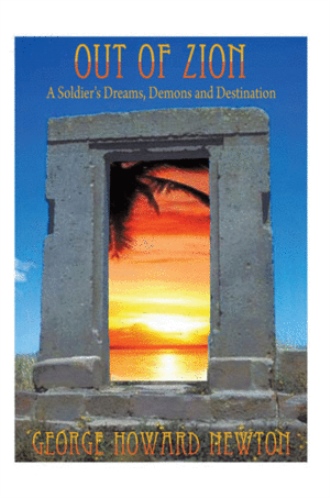
Out Of Zion is written about the life of a British West Indian emigrant of low estate. He sneaked into the United States and made the ultimate sacrifice to become a soldier in the U.S. Army and served in active combat in World War II. Seldom does a person of humble means get center stage, yet his life story is worth detailing. The emigrant's daughter who was born in the U.S., and had children of her own,suddenly realized that her father had disclosed very little about his upbringing in his homeland, Nevis. Was there anything to tell? Obviously, in the indigent's mind, there is hardly anything worthy of note to report to his offsprings concerning the early formative years in his homeland. Yet, every generation needs to recognize the hardships, sacrifices and obstacles that confronted their parents and grandparents, if only it is to avoid a repeat of the scourge of deprivation. Customarily, West Indian stories are shared orally and mainly at family gatherings. With the extensive dispersion of families, the rich and informal exchange of stories, tales and occurrences has been depleted. As a result, progenies feel disconnected and aloof from the grit and grind of their pioneering forefathers. The book goes back and forth in time and place. It is interspersed with anecdotes of the soldier's life from various settings: Nevis, Puerto Rico, Chicago, San Juan and Zion. It unfolds an interplay of social, economic and spiritual forces at work among these settings. Evidently, this poverty stricken emigrant had a rich life story. Whereas his parents were share-croppers or peasant farmers, they promoted the efficacy of good schooling although this was merely a minimal exposure to a basic education. In a way, his parents guided him to appreciate and value the beauty and the strength of family. He learned to esteem the practice of hard work, and he embraced the soundness of a good education to influence one's plight out of poverty. Along the emigrant's journey, he encountered a few demons. Cigarette smoking was a "cool" thing to do as a soldier, but it had disastrous consequences. Additionally, the emigrant drank alcohol regularly and hardly anyone close to him recognized his dependency. Also, he was averse to his wife's affiliation to a sect which painfully disrupted his domestic life. He died prematurely at fifty four. The book is a reminder to present generations that their parents and grandparents made sacrifices, built bridges, and laid foundations so that they could experience a privileged life. It ends with the discourse in favor of emigration as an "escape valve" for disadvantaged areas. Actually, the story is told by the emigrant's eldest son who grew up in Nevis, much like his father, and unlike his siblings who were U.S. born. The author risked airing "dirty linen" in public. However, he remained oblivious to the "dirt" and simply aired the "linen." Enjoy the long and winding journey out of Zion.
Formats


Book Details
About the Book
George Henry Newton had a dream. His dream was to get out of Zion, Nevis. The village was poverty stricken. He ventured abroad and entered the United States. He became a soldier and fought in W.W.II. Fortunately, he escaped the ravages of the battle field. During the post war years, he acquired a career, raised his family, made his mark but became victim of a dependency. He died at age fifty four, but his eldest son did not let his legacy die with him.
About the Author
George Howard Newton, Ed. D. was born in Nevis and grew up in Zion. He has a Doctoral Degree in Educational Leadership, a Master of Arts degree in School Administration and Supervision, and a Bachelor of Arts degree in Linguistics with a minor in Literature. He held extensive teaching positions in Nevis, Puerto Rico and St.Thomas, U.S.V.I. He was a part-time instructor of English at the University of the Virgin Islands. He is a retired school principal. He is also the author of a book of poems: Ties That Bind Caribbean People.