
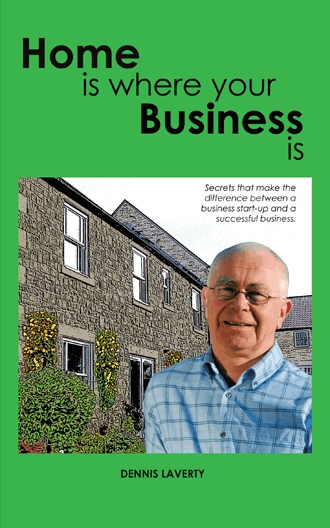
Home Is Where Your Business Is
The secrets to establishing a business that fits your lifestyle and ambitions
by
Book Cover & Preview Text
Successful entrepreneurs will tell you that “Cash is King” and this is true. Make sure it is coming in on a very regular basis, but keep a focus on mid and long-term work. It is foolish to expect that all income will come in within the period of your payment terms, eg; 30 days. When you put your Business Plan together, be realistic. Even though your payment terms may be strictly 30 days, clients will try to stretch the time and you have to chase them up. In your Business Plan, do not make the mistake of planning for all monies invoiced in one month being received the next month. Be Careful With Credit If you are going to be delivering your products or services to customers and then invoicing them later, be careful what terms you offer them. You do not want to attract customers on the basis that you allow them longer to pay than your competitors do. You may only be winning a customer who is your competitor’s bad debt! A customer who does not pay you is not a customer – Fix your focus on the fact that a customer is only a customer when you generate a profitable income from them. It is estimated that one in every seven pounds spent in the UK is spent with Tesco. Tesco turn the entire value of their stock over in only 20 days. Supposing the stock they hold today has a value of £1 billion – they will have sold £1 billion-worth of stock within 20 days – they will have banked that money. Tesco’s agreed payment terms to their suppliers are 25 days net. This means that Tesco get the cash for what they sell before they have to pay their suppliers – Cash is King. The suppliers enjoy the relationship, because Tesco are good payers and terms of 25 days net are better than they get with most clients. When you put your business plan together, make sure that you will generate profitable income from everything that you bank and do not let customers use your business as their bank. When you start Biz@home you may not be able to work to the Tesco model of money-in before suppliers get paid, but it is a target to aim for. How can you keep money coming in on a regular basis, without more going out? This is all part of Planning for Success. Keep The Bank Out Of It As you put your Business Plan together, you will work out how much start-up capital you will require to ensure success. I always advise aspiring entrepreneurs not to use more of their own money to start their business than they are prepared to lose – minimum risk. So, if your business does need start-up capital, get creative and think how to raise the money. Shaf Rasul of Dragon’s Den Online in his excellent book Secrets of a Serial Entrepreneur agrees that it is best to avoid using bank finance for your start-up capital. In order to start your business, you do need a bank account, but you do not need to use them for loans or credit for reasons I gave earlier. If you were to take out a bank loan to start Biz@home, you will be committed to making monthly payments to the bank. If you hit an unforeseen problem where cash becomes tight until a client pays you, the bank shows no sympathy and takes their monthly payment and will not try to help. So, you are not going to use your own cash for start-up and you are not going to use bank finance, where are you going to get the start-up cash from? Business Angels are always a good source for investment, although the deal for them is a share of your business which pays them a profitable return. An advantage for you is that they want to know that your business will be profitable before they will invest so they act as a good sounding board for you. You can get more information on Business Angels from the British Business Angels Association at www.bbaa.org.uk . Alternatively, if it is a relatively small amount of capital that you require in order to buy fixtures, fittings, equipment or technology, you can use credit cards. Okay, so you have to pay the card off sometime, here is the deal. There are a vast number of credit card offers for balance transfers – Buy the things you need on your credit cards, and then transfer your balances to a credit card operator who offer interest free for 6 months. If you are not in a position to pay the card off in total after those initial 6 months, transfer the balance to another card operator who is offering you the same 6-month interest free inducement. Keep on doing this until your business is generating sufficient profitable income to allow you to be able to afford to pay the balance off. A word of caution on this one! – You need to be able to see in your business plan a time when you will be able to pay this balance off, and that if you do not discipline yourself to transfer the balance to another card before the end of the interest-free period it becomes an expensive way to acquire credit once you are paying interest on your credit card. I mentioned previously a book by Terry Allen called No Cash No Fear which will give you excellent ideas for raising start-up capital. Your Plan For Success will involve you making money from your bank by having an interest-bearing bank account and paying them no interest for loans or overdrafts. Keep the banks out of your business. More on the disadvantages of dealing with the banks as we go along!
Formats

Book Details
About the Book
This book is written by a serial entrepreneur for aspiring entrepreneurs - It is written by someone who has walked the walk for those who would like to walk the walk of independence, freedom and full control of the lifestyle they would like to enjoy. Anyone can start a business - it may be trading goods on-line or at car-boot sales, but it takes something more to establish a successful business. In this book, Dennis Laverty does not look at starting a business - the focus is on establishing a successful business that will fit in with your lifestyle and ambitions. Every year, thousands of businesses start up in the UK, and statistics indicate that over half of them fail within the first year. Many businesses close as a result of pressure from those lovely banks when they fail to meet their financial commitments. In this book, you will learn why not to borrow money from a bank in order to start your business. More importantly - learn HOW to start your business without borrowing from a bank! There are lots of other easy-to-apply tips and techniques to help you such as: · Applying the Is-it-worth-it-ometer? to your decisions · Overcoming every barrier that may put you off starting a business · Unique disciplines to successfully run a business from your home · Creating your Lifestyle Vision and Lifestyle Costing · Trial-trading is Market Research at its best · 7-steps to determine the best name for your business · Easy-to-apply techniques to get the pricing structure right Each Chapter concludes with a list of hints and tips for you to follow up as part of your Enterprise Development. Following the tips and applying the techniques to your business idea will be the difference between merely starting a business and running a successful business long-term!