
Old Maggie’s Spirit Whispers
by
Book Cover & Preview Text
Critters and Creatures ~ One ~ 1815 It was said an earl had pinned the moniker “Old” on Maggie’s name when she was just a little girl. If any parts of that tale were still true to the original hearsay, the young, rambunctious earl had come barreling through Paddington Cove during a downpour in the middle of a moonless, spring night. Thoroughly disguised, foxed beyond reason, the drunken earl had not let the weather, rutted roads, or time of day put a stop to his dangerous ride. When his two horses reared up in fright at the sudden and astounding clap of thunder just as the gentleman reached the bridge, he lost control of his carriage. The harness snapped and the horses raced on in terror as the carriage veered through the rotting railing and into the turbulent creek. Had little Maggie’s grandmother, Annie, ignored the cawing crows flying along the stream and had she not taken her young granddaughter into a night lit only by occasional lightning, the history of Paddington Cove would have slipped significantly to the right. As it was, they arrived in time to find the gentleman face down in the creek with a large swelling on his forehead where he had landed on a stone smoothed by time. The crone belied her years by her quick action. With determination and intuition, she overcame obstacles most strong men would have found daunting. She showed her granddaughter these attributes were more than enough when weighed against age, both young and old. When the Third Earl of Dunmore woke with a headache, he was on a straw pallet tended by a wisp of a woman with a kind smile and a child with wise, observant eyes. In the following days, he regained his strength in the soothing silence of the meager hut. Only occasionally were his aches and pains interrupted by statements from the older woman who called herself, Annie. When he first woke up, he could not recall anything beyond raised goblets and friends urging him to accept a daring bet. The earl could only assume he had taken that challenge and met with an accident. His circumstance and the bump on his head seemed a sure indication that was the case. Another day passed before he could sit up to eat porridge, and later, soup. The young girl sitting beside him was ever present, looking into his eyes when he was awake, soothing his brow with her cool, small hand when his discomfort made it difficult to lie still and impossible to get up. And when he would drift off to sleep, he would dream of the people who were waiting for him, needing him, and ready to share their lives. On the third day, any coherent thoughts centered on the state of his carriage and horses, and the crooning chatter from his caretaker only served to aggravate his still-pounding head and bruised body. While he tried to get his bearings in the present, Annie spoke of his future, seasoning her ramblings with words of old. When he asked about his horses, the aging woman waved her hand as though swatting a fly. She had, he thought, no idea of their value and he finally gave up trying to find out what had happened to them. That is when he began listening and heard her wisdom. In the one-room shelter, he realized he had taken a poorly-chosen path some months previous when he had inherited the wealth and responsibilities of the Dunmore earldom. He had used the power handed to him at an early age to invest in wine, highfliers, and senseless betting. All the while, both family and tenants who depended on his decisions, stood back and hoped all would come to rights before his health and wealth were wasted. And though the young earl could not remember the specific words the woman spoke in an uncommon cadence, he did feel the powerful, encouraging nudge to live his life well and use his power to make a positive difference. On the fourth day he felt renewed, heart and soul. The little one, called Maggie, took his hand and led him out the door of the hut. There in the sunshine were his two horses eating the grasses of the meadow, their broken harness and bridles removed. They had been wiped down and looked in better shape than he. Thanking the little girl, wondering how it had all been managed, he received a shrug much like the dismissive wave the older woman had given him earlier. And then Maggie offered him her hand and they walked to the bridge. His lordship was still without any memory of the accident, but the extent of his experience was brought to him when he saw the broken carriage submerged in the still muddy, surging stream. He knew he had been saved an early death and understood the reason for any warnings he had endured under Anne’s tender ministrations. Looking down at the little girl, nothing more than a ragamuffin save for her extreme cleanliness, he saw she was watching his revelations. And it was more than just observing, for the earl was quite certain she knew him in ways he was only beginning to discover. She smiled, for the first time, and squeezed his hand before taking him back to the hut for their midday meal of cheese, bread, and dried apples. It is said among those who passed the story on from one to another in Paddington Cove that the earl left their care that very afternoon, but he did not leave the village. The earl liked to sit in the pub at the inn and tell his story about the night his carriage went into the stream and he was saved by Annie and her granddaughter.The village people listened in awe and laughed every time he called the little girl “Old Maggie”, but the label stuck because the earl held the little girl’s wisdom in high regard.
Formats



Book Details
About the Book
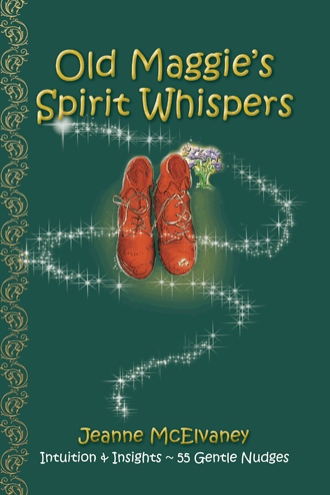
Lyrical and nostalgic, Old Maggie’s Spirit Whispers gives you the simplicity, trust, and connections to ignite your own spirit insights. It’s like riding your bike on a sweet summer day, exploring all the familiar places – knowing the real adventure is taking place deep inside. There is nothing common about the friendship between a muse as ageless and solitary as the oak trees in Paddington Cove and a proper, young lady of Jane Austen’s England. Old Maggie is guided by serendipity, intuition, and coincidence. Lydia has only known the dictates of family and social expectations. Together they find their way to unexpected treasures that celebrate their spirits. You already have your answers. With 55 spirit whispers, this tale reminds you to listen.
About the Author
Jeanne McElvaney is all about the beauty of personal spirit and the power of energy. For the past 40 years, she has been celebrating, exploring, and writing about the wonder of these forces. A master of language and feelings, her fiction is often a journey of insight. Warmed by family connections and rich friendships, Jeanne is a muse to many and learns some of life’s greatest lessons from her grandchildren. Her awesomely supportive husband and delightfully distracting dog share life with her in California where they live in possibilities.