
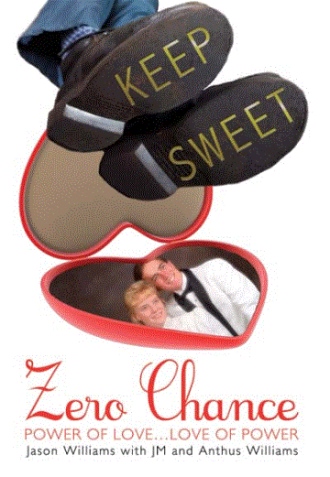
Zero Chance
Power of Love…Love of Power
by
Book Cover & Preview Text
I
Dear Jason
The cold January rain ran in rivulets down my windshield. Sitting in my car outside the Post Office, I stared down at the letter my wife had mailed to me after she kidnapped my two little boys. The darkness made it hard to read, but I needed answers. I knew I could trust no one in the community to give them to me. I was not just dealing with my wife Suzanne. My wife would never steal my children from me; she would know the things that might make me do. Tears of rage and frustration filled my eyes. I sobbed in the car, relieved it was raining. Now passersby could not see my grief. I knew if I made an angry demonstration, it would not help me see them any sooner. Suzanne had my boys; she held the power, for now.
I had to play this cool. Gather in my emotions. Act smart. A come-apart would ruin my relationship with my children. I would play this out. I would be patient, knowing this would not be a sprint. It was shaping up to be a drawn-out and grueling marathon. Glancing at the letter, I could hardly focus on the fragments of sentences. Choking back tears, I read again the note that changed my life forever.
I sat, helpless, stunned, wondering whether I would ever see those boys again. This was not like my wife. Suzanne wouldn’t use phrases like “him who holds the keys.” Or “I have put myself in the Prophet’s hands.” She wouldn’t even write “I wish you the best.” Instead, two weeks ago, she had written “I you, baby.” And now here she was using lines out of the sixteenth century? Whoever was behind this, it was not my wife.
My wife did not steal those boys. It was the religious leaders of the community I was once part of who were screwing with my family. I had to act fast, or Kyle and Jay would disappear. This sect had refuges in
That church had grown arrogant and greedy. They were used to people giving up and giving in, because they made life just damn hard for them. But I was just as stubborn as they were. This time they had broken the glasses of a kid who wasn’t afraid of bullies.
But I was caught in a dilemma. How could I challenge what I believed? What did I believe? I believed in the FLDS church, and I had since I was a kid, which was what made my belief possible. I don’t think an adult can convert to the FLDS.
That’s why they wanted my kids, while they were young, so they could start the process, just like they started it on me when I was young. I grew up believing entirely in what the “Prophet” said. Then I was forced to watch the maliciousness of my benevolent church, and I realized the incompatibility.
Most of my family expected me to obey. My father had been through the same thing with his wife, and twelve of his children, but his protests were like a whimper in a hurricane. They failed. He lost his kids, and he was finally, sadly, reduced to accepting it. I knew that I was going to try to talk Suzanne into coming back. I was going to try to find my children, peaceably. But, failing that, I was determined to start a cyclone of my own.
My dad shared empathy for my situation, but he wasn’t likely to come to my aid. There were a couple brothers who were long on support but short on means. I had a lot of poor relatives who would lend a sympathetic ear, but that was it.
Many members of my family were linked to the church in various ways, and the FLDS is very good at convincing people that salvation sometimes depends on betraying the ones you love most. Even now, there were some members of my family trying to convince me that my own salvation would involve sacrificing my will and abandoning my sons.
I knew my own mother, for example, would resent anything I did in the way of protest or retaliation. Her attitude was that I should meekly submit. The “Prophet” was never wrong. It was this kind of attitude that gave the church its formidable power.
My parents’ position made my predicament difficult, because the concept of the infallible “Prophet” went back a hundred and seventy years. Any objections to the words of the “Prophet,” or even the title “Prophet” had its consequences. I knew any protest at this point would bring the full brunt of Rulon Jeffs power, money, and influence right at me, and any friend or associate who stood by me. I had seen it before, and I had no illusions about what this man could do. Still, no one was going to push me around.
This man wielded a frightening power in the minds of the people. The peculiar belief held by this church is that all women and children belong to the “Prophet.” He could assign them to men he favors, and he could reassign them to men he favors more. He could take the wife away from the husband and “give” her to someone else. He could take the man’s children, and shuffle them around, like playing cards. Pimps dream of this kind of power.
Formats

Book Details
About the Book
When religion and family turn on you, what is left? This is the amazing story of a young man willing to do whatever is necessary to maintain a relationship with his children. After growing up in a polygamist family and life-style, Jason Williams is given zero chance for salvation from the leaders of the FLDS. His wife and children are kidnapped from him and he is instructed to have nothing to do with them. Instead of giving in, read the true story of how Jason took on the FLDS leaders and saved his children.