
Persepolis
Takht-E-Jamshid
by
Book Cover & Preview Text
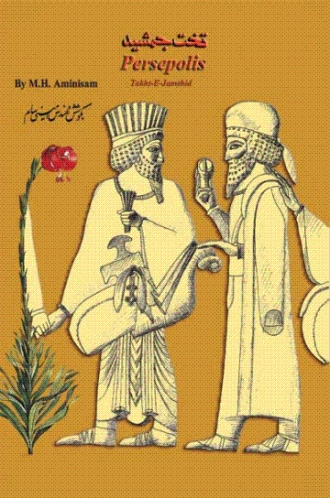
The Ancient Persian Culture which advocated human rights and proper humane behavior has been the foundation of the Aryan people from the beginning. Because of
Both dynasties lasted 380 years. During almost four centuries these dynasties contributed much to mankind in the area of construction, art, philosophy, literature, among other areas. This is evident when one visits many of the world’s museums.
Since my youth, I have been influenced by the values and virtues that these historical heroes represented. After completing my high school education in
In 1983, I made another one of many trips to the
Throughout the centuries, after numerable invasions
Formats

Book Details
About the Book
Persian Empire rose to world prominence during Achaemenian dynasty (559–330 BC). At the height of its power after the conquest of Egypt, the empire encompassed approximately 8 million square kilometers spanning three continents: Asia, Africa and Europe. In 480 BC, it is estimated that 50 million people lived in the Achaemenid Empire or about 44% of the world's population at the time, making it by population percentage the largest empire ever known to mankind.
Persepolis, the ancient ceremonial capital of Persian Empire is a testament to its glory and its Geopolitical and Socioeconomic management prowess in ruling such a vast territory in peace and prosperity. Located 58 kilometers north of ancient city of Shiraz, it is much regarded as a wonder of old world with likes of Great Wall of China, Pyramids of Egypt or Roman Coliseum. Unlike its counterparts, archeological studies and historical research about this unique place has been limited and not so well published. This book tries to remedy that problem by gathering the most comprehensive historical facts and presenting some well researched hypothesis about what that has been dubbed as “United Nation” of ancient world. Starting with the fact that no slave labor was employed in building such a magnificent royal compound and ending with details of its sad demise by looting of its treasury and setting it on fire after its take over by Alexander in 330 BC, the readers will be transported to a time resembling a classic Hollywood movie set.
Persepolis’ magnificence is still evident today by simply walking through in its ruins. Its impact on bringing together various nations under one unified and peaceful society ruled by the most humanistic set of laws, is as valid of an idea today as it was back then. As such, it is our duty to know and learn more about its significant role in history and ideas implemented by kings who ruled Persian Empire in hopes of finding out more about us and our place in time and history.