
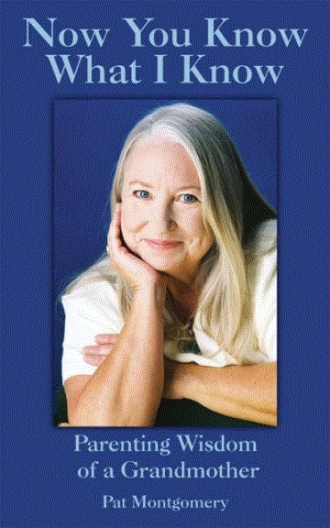
Now You Know What I Know
Parenting Wisdom of a Grandmother
by
Book Cover & Preview Text
A toddler is the busiest human being ever created. It seems like they have fifty hands and can run a world record forty-yard dash. Nothing is safe from their sticky fingers and everything they see needs to be tasted. They will exhaust you and delight you with their antics. The short attention span ensures that every toy you ever bought will be on the floor within thirty minutes, scattered from one end of the house to the other.
Small children also want to help Mommy with the housework. I remember one day I was feeding the baby in the kitchen and Erika came in announcing in a proud voice that she had cleaned the rug. I knew better than to ignore that statement. As I went into the living room, I asked her to show me where she had cleaned. As I suspected, the help was in her mind only. The dog had an accident on the rug (the solid form) and she had run her little plastic vacuum cleaner over and over it until it was ground into the carpet and stuffed up into the toy. Boy, was I ever grateful for that assistance! It took me hours to clean the carpet and the toy. I didn’t fuss at her; I just thanked her and got her interested in something else—fast. After all, she was just trying to help.
Keep track of their movements. If you have more than one child, this gets harder because they go in opposite directions. Just as you get one off the top of the refrigerator (don’t ask), you find another eating the dog food (again, don’t ask). They are full-time jobs.
*****************************************
Guilt is used by influential figures, including parents, to control behavior. Notice I used the word “control” rather than “guide” or “shape.” Control of the other person is why we try to make the other person feel guilty. We think that if we make our child feel blameworthy enough, she will do what we want her to do. Have you ever heard about all the pain I went through giving birth to you? This is a classic, and most of the time, I was kidding.
Our child’s subconscious is taught to fear dire consequences that will not occur. “Step on a crack and break your mother’s back” is an example. So is the little girl who cries all night thinking her mother doesn’t love her—all because she was sassy and her mother refused to hug her before she went to bed. The mother thought she was teaching her daughter not to be sassy. Instead, she was teaching her that the mother’s love was not unconditional, a big difference in perception! The little girl, even the next day after they had made up, still thought that her mother could stop loving her. This is very dangerous for a child. Children love unconditionally and need to be loved unconditionally in return by their parents.
The mother could have scolded or punished the girl. Then, later, she could have talked to the girl explaining why that was inappropriate behavior and that it would not be tolerated.
After the discussion, the mother could have held her close and told her she loves her. It is important that parents separate the behavior from the child. Our children must know that the action was wrong, but that you love them no matter what they do.
Why am I devoting so much time to this? It is because I believe that guilt is one of the most destructive forces to the mind ever devised.
Formats

Book Details
About the Book
Join us around the kitchen table with the author of "Now You Know What I Know" as she discusses parenting with her children. Punctuating her advice with real-life examples, Pat offers a conversational glimpse into one woman''s experiences and lessons in child rearing.
"Now You Know What I Know" is an essential handbook for all parents and parents-to-be on how to raise the next generation with love and common sense. For anyone who has already raised children, this soulful, often comical, book will compel them to reflect on and fondly remember their own parenting experiences
About the Author
Pat Montgomery lives with her husband, Monty, in