
Cruzeiro do Sul, A History of Brazil's Half-Millennium
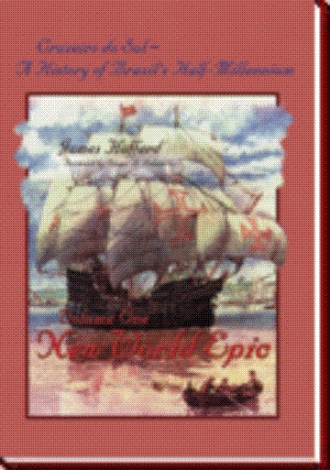
Vol 1 New World Epic
by
Book Cover & Preview Text
INTRODUCTION
This is a history of another
Frei Vicente do Salvador, the mild-tempered Brazilian-born Franciscan schooled by the Jesuits who wrote the first genuine history of Brazil in the 1620s, a book still unmatched in many ways, recorded as his first sentence the newly-synthesized knowledge that his little-known subject embraced a portion of “America, one of the four parts of the world.” When he wrote, the grandly-proportioned, very lightly-populated Portuguese colony in the tropical
Conversely, a modern French Brazilianist, Pierre Monbeig, noted in the introductory sentence of his geographic overview that “what is most surprising about
Frei Vicente’s observation identified
The country - apart from little snippets of real estate we manage to connect with, such as the urban beaches of Rio and, perhaps, a few downtown blocks at the center of super-city São Paulo for certain businessmen - remains precisely as elusive as the Portuguese language (unentangled with Spanish) is rare in the world as a second language. Over all, we probably know more about
My motivation for composing this history, after more than twenty years of reading, collecting materials on site, traveling, and sometime residence, is to attempt to fill this surprising void and help to remedy the English-reading public’s lack of familiarity with a country and history every inch as big, colorful, and full of stupendous events, wonders, and superlative personalities as our own, in a reasonably balanced, comprehensive way.
To the point: perhaps as much as sixty percent of the essential information cited and presented in this two-volume history has never been available before, except in Portuguese and, in many cases, in antique Portuguese or in rare or difficult-of-access sources. As a result, broad overviews of
The extent of congruency in critical themes is indeed uncanny, though the two eventual continental-scale offshoot societies’ responses often differ markedly. In the meantime, the numerous and inevitable contrasts between Brazilian and more-familiar Anglo-, and even Spanish-American history, are startling and, invariably, instructive.
In essence, the colonial history of
There were centuries of intrigues and struggles - mostly successful in the end - against the Spanish and their independent successor states, along 8,000 mile
Formats

Book Details
About the Book
xvi + 564 pages
TO SAY THAT THIS BOOK IS A HISTORY OF ANOTHER
ITS CENTURY-LONGER HISTORY CONTAINS MANY ELEMENTS FAMILIAR TO NORTH AMERICANS: ATLANTIC COASTAL COLONIZATION BY A EUROPEAN POWER OF THE DAY (PORTUGAL), DEVELOPMENT OF A SERIES OF DIVISIONS GRANTED TO ROYAL FAVORITES (IN ITS CASE, CALLED ‘CAPTAINCIES’), AN EARLY EXTRACTIVE ECONOMY, FOLLOWED BY VERY EXTENSIVE PLANTATION ACREAGE WITH THE WORLD’S LARGEST AFRICAN SLAVE POPULATION AND EVENTUAL EMANCIPATION, NUMEROUS BLOODY INDIAN WARS AND EARLY FOREIGN INVASIONS, CONTINENTAL EXPLORATIONS, A LONG WESTWARD MOVEMENT, ENORMOUS CATTLE KINGDOMS, MOMENTOUS GOLD RUSHES LONG PRESAGING CALIFORNIA’S, A WAR FOR INDEPENDENCE AND A DECISIVE, FORMATIVE CONFLICT IN THE 1860S, A REPUBLIC WITH CONSTITUTIONAL AND PARTISAN BATTLES AND SERIES OF PRESIDENTS AND ELECTIONS, AND THE RISE OF URBAN LANDSCAPES AND A DISTINCT CULTURE OF ARTS AND MUSIC MATCHING OUR OWN IN SIZE, HERITAGE, AND SPLENDOR.
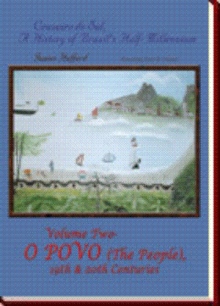
Other Books By This Author , Cruzeiro do Sul, A History of Brazil''s Half-Millennium, Volume 2 - O Povo (The People), 19th & 20th Centuries
About the Author
James Huffered earned his Ph.D. at