
BLIND BASEBALL
A Father's War
by
Book Cover & Preview Text
FOREWORD
Joseph Sobran
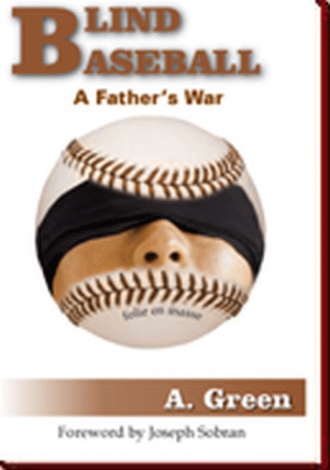
The novel you are about to read is the 1984 of modern family relations and domestic law. “Blind baseball,” explained late in the story, is a fine image for the legal blood-sport it describes.
At first Blind Baseball reads like a mere story of an unusually bitter divorce. Barry Ballinger, the hero-narrator whose wife seeks a divorce, is told by his first lawyer that under
Barry’s assumption that the law is fairly reasonable proves an early casualty of experience. He finds that winning possession of his children is going to be an uphill fight. Equality of the sexes turns out to mean a shift in the balance of power between them, to the detriment of men – in reality, a new kind of inequality. His wife and her lawyer mean to make the most of it.
But this turns out to be only the beginning of Barry’s Orwellian torment. He is stripped of his children (and even visitation rights), his property, his income, his reputation, his livelihood and clientele, his freedom, and very nearly his sanity. He discovers the astonishing gap – the actual opposition – between his assumptions about the rule of law and the hard facts of arbitrary power in egalitarian
Barry finds himself systematically punished for trying to take responsibility for his six children, the ultimate victims of a mad system governed by a mad materialist philosophy. Under the “no-fault” system, the victim is held guilty, and the burden of proving his innocence verges on the impossible. Whatever the laws in the books say, the system rewards predators, because it is itself predatory.
Yet a surprising thing happens. Unlike Orwell’s Winston Smith, Barry Ballinger, throughout his ordeals, never quite loses his sanity. On the contrary, he almost miraculously finds it. In one phantasmagoric episode, he finds himself confined in a mental hospital, unable to obtain release, without explanation and incommunicado. Slowly his bitter experiences of legal in-fighting give him a deepening comprehension of his plight – a plight he shares, to some extent, with all rational, responsible, and productive men under the welfare state and its unspoken code. A generation ago Barry’s story might have seemed incredible; today it reflects a way of life all too many of us are familiar with.
Barry is peculiarly unlucky, but the book’s shock lies in the reader’s realization that his fate is no fluke. He is describing the system we all inhabit now. And anyone who happens to make enemies who know how to work that system, as Sal and her allies do, may meet a similar fate. The law is the enemy of men – especially honest men.
Barry sees that “feminist” is a misnomer. The welfare state serves the interests of certain kinds of women -- but also the sort of men they attract, exemplified by Sal’s sponging lovers. Barry is horrified to see these men moving in with his children, but t
Formats

Book Details
About the Book
A wonderful novel. Author and publisher Joseph Sobran, has called this novel a “monumental work of genius.” Blind Baseball is a game of absurdity and monstrosity as well. On its surface this is a story of a vicious super divorce. Metaphorically it is a story of the death of the American family. As arbiter of the rules of marriage, divorce and custody the social engineers are intentionally attempting to destroy the traditional family to create a new socialistic blended family, one that has been through the blender. The modern materialist state accrues power unto itself and will not tolerate any rival authority or loyalty. The state has been wildly successful in fostering and exploiting divorce. Attorneys have been wildly successful at cashing in on the bonanza of subjective law and social engineering. Is the family being destroyed on purpose or is it just another case of government stupidity? The decision is yours. The stakes are enormous. Skeptical? Read the book.
About the Author
A. Green has a Bachelor of Science and Master of Arts degrees from
It was Mr. Green’s youthful ambition to one day become a published author. For thirty years he pursued his private studies and honed his writing skills. Blind Baseball was written when Mr. Green was 35 years old but edited to his satisfaction in his fifties.
A. Green is President of A. Green Charity, sponsor of amateur baseball and The Greater Ypsilanti Santa Project. He is past treasurer of the Ypsilanti Central Business Community and current board member and season sponsor of the Ypsilanti Symphony Orchestra.