
Diamonds in the Dew
An Appalachian Experience
by
Book Cover & Preview Text
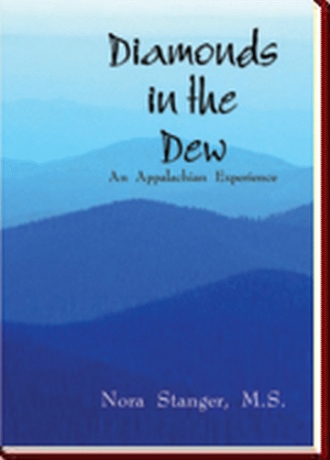
Have you ever passed by a broken down house, windows covered by cardboard, siding falling off, trash littering the yard and porch, and a rusted out car in the yard? Have you wondered what type of people would care so little about their home? Don’t they care about the environment?
What are they teaching their children about responsibility and life? What type of influence will their children have on yours? Allow me to take you into my childhood home.
I was born and raised in the foothills of the Appalachians located in Lawrence County, Ohio. I was the fifth of eight children in my home. My father was in and out of our lives in my early years until right after my eighth birthday. That’s when he decided to find something better for himself and left us for my mom to raise. Her one goal was to make sure we all stayed together. This was not easy for a woman with only a high school education and no work experience. Our community offered little as far as employment was concerned. Even if she had a job, what would she do for childcare?
My mother scrapped together $125 to purchase a crumbling log house up in a hollow. The house had no indoor plumbing, a coal stove in the living room for heat, and was being used as a barn when we got it. I remember the day we shoveled out the horse manure and scrubbed the floors so we could move in. We drew water from a well with a bucket and a rope, sometimes fishing dead animals out and pouring a gallon of bleach in the well to try to remedy the problem. We went to the bathroom in the woods until we finally built an outhouse across from our yard. We heated our water on top of the stove and bathed with a cloth out of a small pan of water.
The problems were only starting for my mother. My grandparents did what they could to help but were poverty stricken themselves. Also, in those days divorce was a shame to all family members and a divorced woman was the object of gossip and harassment. To add salt to the wound, my mom had to sign up for welfare. For all generations before her, no one in my family had ever had to ask outsiders for help. They prided themselves in being self-sufficient, living off the land, taking care of their own and helping their neighbors whenever they could. My mother had to face the shame of asking for help and then demonstrate her need for it. At times we would all follow behind her into the caseworker’s office to prove we existed. What I noticed most during caseworker visits was that the workers appeared bothered by our needs and seldom, if ever, made eye contact. It was as though we were trying to take something from them and we didn’t care about things like pride and dignity. There was always a heavy cloud over us after one of those visits.
Our lives reflected the pains of poverty. We stood in line at the city mission in the closest town for Thanksgiving and Christmas meals. We ate government commodities (powdered eggs, powdered milk, processed meat). When food stamps were created we were able to shop at grocery stores but we were constantly being scrutinized by the cashier to make sure we did not try to slip a non-food item through. We were reminded by other children that their daddies paid for our school lunches. We were not selected for school programs or activities because those making the decisions knew we could not afford the related expenses.
Through these difficult years my mother made some things very clear to her children: we all needed each other and would only survive if we were each other’s champion; education was not an option but a requirement; and every person is created for a purpose...a good purpose. She suffered from depression but worked her way out of the darkness as best she could. She slept on the couch by the stove to make sure the fire did not go out at night. She read poetry to us from books borrowed from the bookmobile, taught us the constellations by laying on the grass during summer nights too hot to sleep indoors, and read daily from the red leather Bible my sisters won by selling the most garden seeds at school. My mother did not do everything right, but she did the best she could with what she had.
My family has experienced tragedies and victories, and believe it or not, I feel richer for the journey, even for the dark times. Now more than three decades later, one of Mom’s children has a Bachelor’s degree and five have Master’s degrees. (One is working on her doctorate at this time.) Even my mother went back to school when she was 40, earned a bachelor’s degree, and taught special education for several years.
Along the way there were special people who would encourage my family. Sadly, others did just the opposite. We were bombarded with verbal and non-verbal reminders of our low status in the community and in the world. Thank goodness we did not give in to those voices. It was hard but it was not out of reach. Now I feel the need to share and encourage others who desire higher ground than they currently know. I guess the point of my story is we were valuable people even before we had college degrees and houses with bathrooms. It took a long time for us to realize this.
In this book I attempt to share my insights on life based on my experiences. There are many in the Appalachian studies field that may be offended by my frequent references to poverty within my home region.
Formats

Book Details
About the Book
Poverty is an oppressive situation that eats at the core of the human experience. Educators across the country are focusing upon poverty as a key issue affecting student performance. Diamonds in the Dew: an Appalachian Experience is written from the viewpoint of one who has overcome poverty and the paralyzing shame-based living that is often associated with it.
The author, Nora Stanger, was a child of poverty within the Appalachian region. She was one of eight children raised in a single parent home after being deserted by her father. In a desperate attempt to keep her children, Nora’s mother buys a crumbling log cabin in a hollow to house her family. Nora shares memories of the pain of poverty and battles with the welfare system. She describes the struggle to overcome social and emotional barriers to gain a better life. Diamonds in the Dew offers practical tips for three specific audiences: those who are currently experiencing some form of poverty and long for higher ground; those who desire to better understand and assist people struggling with poverty; and those who have moved out of poverty but desire to define and re-connect with life’s lessons learned.
About the Author
A child of poverty, Nora Stanger grew up in the foothills of Appalachia. Nora is a 1980 graduate of Berea College in Berea, Kentucky with a Bachelor of Arts degree in psychology. She continued her psychology studies in Abilene, Texas and earned a Master of Science degree from Abilene Christian University in 1982. Her professional experiences include providing psychological services to people with disabilities, consulting school systems on the Appalachian culture, and motivational speaking. In 2002, Nora established Higher Ground, an effort to encourage children and adults of poverty to finish high school, plan for and attend higher education, and expand their personal vision to a greater level than ever before realized.