
Inarguable Leadership
by
Book Cover & Preview Text
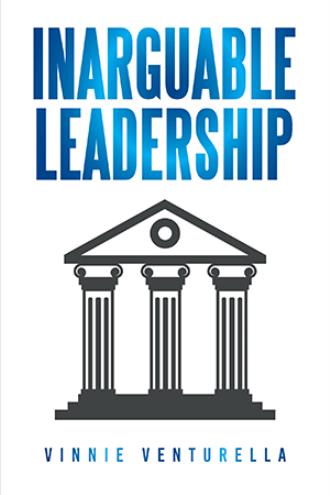
I have spent more than four decades studying leadership – not from a distance, not from textbooks, and not through the lens of theory or trend-driven management philosophy. My understanding of leadership was forged in environments where theory does not survive contact with reality. It was shaped in the unforgiving world of Air Force Special Operations as a Combat Controller, where decisions are immediate, sometimes life and death, consequences are irreversible, and leadership is measured in outcomes, not intentions. It was refined over two decades in the highly competitive, volatile, and demanding personal finance industry, where trust is earned in seconds and lost just as quickly. Across every one of those environments, one truth has remained constant: leadership is either grounded in fundamentals – or it fails. This book, Inarguable Leadership, is the result of that lifetime of observation, experience, success, failure, and refinement. It is not a collection of theories. It is not a compilation of best practices that shift with cultural trends. It is not a motivational speech disguised as instruction. It is something far more direct: a distillation of what consistently works, what never works, and what remains true regardless of time, industry, personality, or circumstance. The word inarguable is intentional. It is not used lightly. It reflects the central premise of this book – that there are foundational principles of leadership that are not subjective, not situational in their existence, and not dependent on preference. They are constant. They are repeatable. They are observable. And when violated, the outcome is equally consistent: failure of trust, failure of teams, and ultimately failure of leadership itself. This book is built on the belief that leadership is not defined by charisma, title, or position. It is defined by behavior under pressure. It is defined by consistency when it is inconvenient. It is defined by the ability to execute fundamentals when complexity, ego, and emotion tempt you to abandon them. The leaders who endure are not the ones who do extraordinary things occasionally. They are the ones who do ordinary things extraordinarily well, repeatedly, under pressure, when no one is watching. The structure of this book reflects that philosophy. It is divided into three foundational pillars that form the architecture of all leadership: Followership. Self-Leadership. Leadership of Others. These are not abstract categories. They are a progression of responsibility. They are the ladder every individual must climb if they intend to lead anything of consequence. Followership is where it begins. Before you lead others, you must first learn how to be led. You must learn discipline, humility, execution, and the ability to contribute to something larger than yourself without needing recognition. Most leadership failure begins here – when individuals attempt to lead without ever learning how to follow. In this section, we examine what it means to be dependable, coachable, and committed to standards that are not self-defined but mission-defined. Self-Leadership is the internal battlefield. It is where discipline is proven when there is no external accountability. It is where excuses are eliminated, habits are formed, and character is either strengthened or exposed. If followership teaches you how to serve a system, self-leadership teaches you how to govern yourself. Without it, leadership of others becomes impossible, because you cannot give what you do not possess. Leadership of Others is the highest level of responsibility. Here, your decisions no longer impact only your performance – they shape the lives, direction, and future of others. This is where clarity replaces confusion, where standards replace ambiguity, and where influence becomes the currency of impact. At this level, leadership is no longer about authority. It is about trust. It is about example. It is about execution through others, not control over them. Across these three pillars, you will find sixty chapters built on real principles, real stories, and real consequences. These are not hypothetical lessons. They are drawn from lived experience – in military operations, corporate environments, financial institutions, and leadership roles where failure was never theoretical. Each chapter is designed to expose a principle that either strengthens leadership or destroys it when ignored. This book is written for a specific kind of reader. It is for the doers. The builders. The problem-solvers. The individuals who understand that leadership is not granted by position but earned through behavior. It is for those who are willing to confront themselves honestly before they attempt to influence others. It is for aspiring leaders who want clarity instead of confusion, and for experienced leaders who understand that mastery is not a destination but a discipline. You will not find here the comfort of ambiguity or the luxury of doctrine. You will find clarity. You will find directness. You will find principles that are designed to be applied, not admired. Some will challenge you. Some will affirm what you already know but have not consistently practiced. All of them are intended to sharpen your ability to lead yourself first, then others. The goal of Inarguable Leadership is not to inspire momentary enthusiasm. It is to build long-term capability. It is to provide a framework that holds up under pressure, not just under ideal conditions. Because leadership is never tested when things are easy. It is tested when everything is not. If you take nothing else from this book, take this: leadership is built on fundamentals, and fundamentals do not change. What changes is whether you are disciplined enough to execute them. Everything that follows is designed to bring you back to that truth. Let’s begin.
Formats



Book Details
About the Book
I have spent more than four decades studying leadership – not from a distance, not from textbooks, and not through the lens of theory or trend-driven management philosophy. My understanding of leadership was forged in environments where theory does not survive contact with reality. It was shaped in the unforgiving world of Air Force Special Operations as a Combat Controller, where decisions are immediate, consequences are irreversible, and leadership is measured in outcomes, not intentions. It was refined over two decades in the highly competitive, volatile, and demanding personal finance industry, where trust is earned in seconds and lost just as quickly. Across every one of those environments, one truth has remained constant: leadership is either grounded in fundamentals – or it fails.