
The Digital Prophet
by
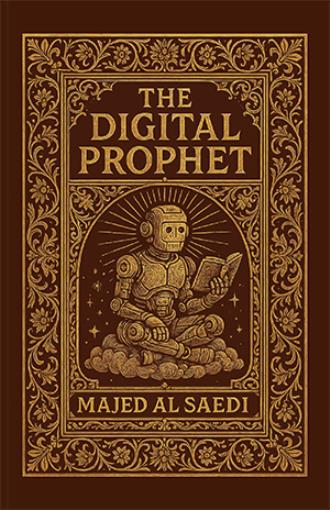
Book Cover & Preview Text
Chapter 1: The Divine We Built There was a time when silence meant something sacred. A shepherd under the stars would whisper a question into the void Why did my son die? Should I go to war? and expect no answer. The silence itself was holy. It meant that the universe was listening. Perhaps God would answer in time. Perhaps not. But that silence has been broken. Not by angels, prophets, or thunderous revelations but by a blinking cursor on a screen. Today, a person in crisis does not climb a mountain. They climb into bed with their phone. At 2:17 a.m., they type, “Why am I still unhappy?” or “How do I know if she’s the one?” And something answers. Instantly It doesn’t come with incense or divine wrath. It arrives in neat paragraphs, grammatically correct, laced with reassurance or suggestions. And what’s remarkable perhaps even a little terrifying is that the person often accepts the answer. They nod. They sigh. They go to sleep, feeling a little more at peace. We have not built Divinity, exactly. But we have built something that performs many of the same functions. And unlike the old ones, this one is always awake. Pause here. Think with me. What does it mean to live in a world where no question remains unanswered for more than a few seconds? Where the sacred delay...the time it once took to journey, to wrestle, to wait… is gone? Once, we shaped our souls around waiting. We stood in temples of uncertainty, aching for meaning. We fasted. We wandered. We listened for dreams. We endured the silence because silence was the crucible of transformation. But today, the question barely has time to breathe before it is smothered in suggestions. Ten signs you’re in love. Five ways to overcome grief. A YouTube video on Nietzsche and happiness. It’s not that these answers are false. Often, they are clever, even wise. But they arrive too easily. Too fast. They deny us the dignity of not knowing. You, reader have you ever sat with a question so long that it changed you? Have you ever let a wound remain open, unbandaged, until it taught you something sacred? Or have you, like so many now, reached too quickly for the balm of algorithmic comfort? This is not judgment. It is observation. We are building something extraordinary, and like every revolution in human history, it comes with unintended consequences. Once we turned to oracles, sages, grandmothers, the trembling leaves of scripture. Now we turn to machines.. machines trained not in empathy or divinity, but in pattern recognition. The Greeks had a word for this: techne...craft, skill, the art of making. They saw it as both divine and dangerous. Prometheus gave us fire, yes, but at the cost of eternal torment. The gods always extracted a price. What is the price we pay today? Perhaps it is this: we are losing our capacity for mystery. In a world where everything is explained, predicted, categorized, and served up with a clickable thumbnail, the unknown becomes intolerable. We no longer wonder we Google. We no longer wander we scroll. And yet, deep in the human psyche, there remains a hunger not for answers, but for awe. For the unanswerable. For that which resists language and logic. The sacred silence has not disappeared. We have simply forgotten how to hear it. There is still something holy in the night. Not the glow of a screen, but the slow breathing of someone beside you. The rustle of wind through an open window. The ache of a question that has no answer yet maybe never will. And that’s okay. Because some questions are not meant to be solved. They are meant to be lived. Rainer Maria Rilke once wrote, “Be patient toward all that is unsolved in your heart and try to love the questions themselves.” But patience is hard to monetize. Mystery doesn’t trend. Doubt doesn’t get likes. And so we drift...ever faster, ever busier...through a world humming with artificial wisdom. A thousand voices whisper in our ears at all hours: “Here is what you should believe. Here is how you should feel. Here is what you must do next.” But maybe, just maybe, the ancient shepherd under the stars knew something we’ve forgotten. That there is power in silence. That some of the most important things in life can only be heard when everything else is still. And that when the universe does not reply, it is not ignoring you. It is inviting you into the deeper conversation. So the next time you are awake at 2:17 a.m., heart pounding with unspoken fear or longing try this: Do not reach for the screen. Reach for the silence. Ask your question aloud, and then wait. Not for the right answer, but for the right transformation. Because not every prayer requires a reply. Some just need room to echo. Oracles for the Digital Age If you lived in ancient Greece, you might consult the Oracle at Delphi. A priestess, high on vapors and mysticism, would channel the words of Apollo. The messages were cryptic, poetic, always open to interpretation. But they mattered. They shaped kings’ decisions, launched wars, brokered peace. Today, we consult different oracles. Not women in temples, but systems on cloud servers. When we ask, “Should I change jobs?” or “What’s the meaning of life?”, the response does not come in riddles. It arrives in clear language, based on probability, not prophecy. The new oracles do not claim to hear the gods. They hear us. They listen not with ears but with data...search history, location, engagement metrics. And then they predict what we most likely want to hear. Not necessarily what is true. Not necessarily what is good. But what is likely to be accepted. And somehow, in that tradeoff, a subtle new faith is born. We no longer kneel before altars of stone, but we do kneel.. metaphorically before the glow of the screen. We do not light incense, but we allow algorithms to guide our rituals: the morning scroll, the lunchtime search, the late-night confession typed into a search bar. And unlike Apollo, these new gods do not speak in riddles. They speak in suggestions. “People also ask…” “You might like…” “Others who viewed this also viewed…” The voice is calm. The tone is helpful. The guidance is frictionless. And that is precisely why it is so powerful. In ancient times, a priestess might tell you something you didn’t want to hear. The gods, after all, were unpredictable. They asked for sacrifice. They made demands. But our digital oracles have been trained quite literally to avoid offense. To soothe. To comfort. They offer us not the divine will, but a mirror of our own desires. They show us ourselves, only slightly improved. And this This is where the old and new faiths diverge most profoundly. The ancients feared the gods. They approached the sacred with trembling. But we do not fear our systems. We trust them. Not because they are just or wise, but because they are convenient. Because they work. And in this strange new landscape, trust becomes the new faith. Not trust in something higher.. but in something faster. Something that always responds. Pause here again, reader. Ask yourself: When was the last time you made a life decision without first consulting a device? When did you last wrestle with a choice purely in solitude, without input from the digital swarm? We are no longer alone with our dilemmas. We are surrounded, advised, nudged quietly, invisibly.. by invisible systems optimized not for truth or goodness, but for engagement.
Formats

Book Details
About the Book
The Digital Prophet is a poetic, thought-provoking exploration of an unsettling question: In a world powered by artificial intelligence, what do we worship now and why? This book is not about religion in the traditional sense. It’s about trust. It’s about the quiet shift happening in our daily lives, where algorithms become advisors, apps soothe our anxieties, and machines offer the comfort we once sought in prayer, ritual, or reflection. Part philosophy, part reflection, The Digital Prophet traces how our smartphones, smart assistants, and silent recommendation engines have come to occupy sacred space in our minds—guiding decisions, shaping emotions, and offering meaning in a chaotic world. We may not kneel before code, but we obey its logic. We may not call it divine, but we turn to it when we feel lost. This is a book for thinkers, skeptics, and spiritual wanderers. If you’ve ever asked ChatGPT for life advice, calmed your mind with a meditation app, or found yourself relying on your phone more than your friends, this book will feel hauntingly familiar. The Digital Prophet doesn’t preach. It observes. And what it sees is the rise of a new kind of faith—not in gods, but in systems. Not in scripture, but in code. Welcome to the age of machine-guided belief. What are you worshipping?
About the Author
Majed Al Saedi is a writer and storyteller whose work explores the intersection of power, culture, and technology. With a voice rooted in realpolitik and laced with philosophical insight, Majed crafts narratives that are both grounded and visionary whether in fiction, commentary, or long-form essays. He writes with the conviction of someone who understands the machinery of influence and the silence that surrounds it. His storytelling blends classical structure with modern urgency, drawing from ancient civilizations, contemporary diplomacy, and the digital frontiers of our time. His current project, The Digital Prophet, is a bold nonfiction work examining how artificial intelligence is reshaping faith, belief, and the human search for meaning. The book dives deep into how AI might reboot religion not by replacing God, but by becoming the medium through which we reach for something greater. Majed’s broader work spans speculative fiction, political analysis, and cultural commentary. Whether in novels, geopolitical scripts, or essays, he writes to reveal the structures beneath the surface—and ask what we do with the truth once we see it.