
Last Dollar in Lubbock
by
Book Cover & Preview Text
Ty lifted his feet onto his rowing machine. Loosening his shoulders and taking the handles into his hands, he watched the sun break above the countryside. It was his habit to rise early on the days he rowed. The machine on his porch was stationary yet it carried his recollection across lakes and along rivers he had known. He started his stroke with his legs, pushing the tiny seat backward on its slide at the same moment as his arms tightened and he began drawing backward using his chest and back. A nearly complete exercise, aerobic for cardiovascular and resistance for toning all the major muscle groups, it was a predictable source of endorphins—creating a sense of well-being about twenty minutes into the routine. More than a few decisions had come during his exercise periods, when his vision narrowed to a point below the horizon and his breathing became deep and timed just before the stroke. Possibilities would occur to him, and he would also question recent decisions. Dennis Collier had come to see him carrying a leather valise with the papers. The smile was engaging, his handshake friendly enough. “You don’t want to be left out. It’d be awkward, working with everyone, right?” Quick and to the point. Threat noted. Ty had lifted his head slightly and stared at Collier with narrowed eyes for several long seconds. “Awkward is just fine with me.” That was two weeks before. It was now late April and there was another meeting next week. He would attend just to be sociable with the colleagues who were involved in this, but Ty, never easy in a crowd, had a gnawing and persistent discomfort. He welcomed the jolt of the machine’s seat and arms. The 30th came on a Thursday. There would be no dinner this time. Doctors could close their offices early and take care of business before going home. At least seventy people packed the banquet room at Sorrento’s. Dining tables were stacked at one side, the padded chairs arranged in rows across the other, classroom style. Collier was sorting some files at a table in front of the rows, Purdy seated in the front. Ty arrived late and found a seat toward one side next to Walter Everett, at Mark Russo’s suggestion. Mark’s absence was a reminder—well connected, as he was—that this was not civically blessed. “This’ll be interesting,” Everett said out of the side of his mouth. “Like a pep rally?” Ty asked, low enough so that others would not hear. “Egos bigger’n wallets is my guess,” Everett answered. “I don’t think they got the money.” Ty had heard talk in the doctors’ lounge that Collier had all the partners he needed. Now he wondered whether that was true. Beside Collier was a large architect's drawing on an easel. This was of a broad two-story building surrounded by trees, made of brick, with a roof that sloped back, and tall windows. There was a curved driveway alongside of which stood eager young people. A tasteful gold-lettered sign proclaimed it Lubbock Specialist Hospital. Dennis Collier stood when all but a few of the chairs had filled up. He wore a pressed lightweight suit. His hair was cut in layers and perfectly trimmed. “Welcome, friends. Thanks for coming out,” he said. He smiled, closed a file he had been studying, and placed it carefully among the several others neatly arranged on the table. He glanced around the audience, which had mostly attentive faces, and exchanged knowing glances with a few. “You’ve all got places to go, and I respect everyone’s time. I’ve got good news,” he paused and smiled. Then he stepped over to the drawing and picked up a small pointer there. He touched its tip to the top of the brick building. “We’ve reached the tipping point! We have enough commitments to go forward. Our dream… is within our grasp.” Letting that sink in amid wondering murmurs from the assembled group, he surveyed the faces. “For some of us, this is a proud moment. For others—Collier’s gaze lingered briefly on a woman in the crowd and then on Everett and Ty—there are still questions and that is natural. If you are undecided, know that we want you with us, but if you can’t see your way clear, I guess we have to understand. “Now, many of you are familiar with business partnerships,” he continued. “Typically, there’s a general partner who manages the business. Each investor is a limited partner. Their risk is limited to the capital invested. They can replace the general partner, though.” He waved the pointer at the group and there were some chuckles. “Don’t everyone speak at once,” he said and the chuckles turned to laughter. “Many have asked me to be general partner, and I humbly appreciate that. There’s the matter of the general partner’s share of the profits, that is, compared to the limited’s. Look, we all know each other. I don’t know what’s fair. That’s why I’d rather you decide,” Collier said. Everett had been looking at the ceiling. At “you decide,” he turned to Ty, “I’ll be damned,” he whispered. “They’re splittin’ the profits already.” Ty drew in a breath. “You going to say anything?” he asked. “Not yet.” There followed a spirited discussion—with one camp, mostly surgeons, on the side of a higher compensation formula and the other, mostly internists and family physicians, clearly having trouble seeing one of their own so favored. The doctors eventually settled on fifteen percent, giving themselves a self-congratulatory round of applause after the vote. When Dennis Collier came back in, still carrying the pointer he had used, he was all smiles. “What’s next?” It was Sherm Purdy, who had been uncharacteristically quiet. Collier again went over again to the drawing. Without referring to any notes, he proceeded to describe his team of accountants and MBAs. They had pored over the patient logs submitted by the doctors, studied their demographics, insurance plans, all the procedures. They had a very good idea of the revenue their hospital could generate. Collier had showed the preliminary analysis to banks. Financing would be no problem.
Formats

Book Details
About the Book
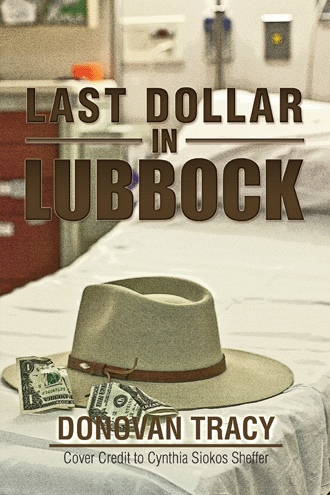
Dr. Tyson Ross, a radiologist who owes his education to his country, comes home to Texas. The doctors of Memorial Hospital are doing well, but not well enough for some. There is more money to be made, if only they had their own hospital. They don't trust anyone in town to lead them but Dennis Collier—a doctor from one of the old, landed families and, best of all, one of their own. Having tracked terrorists in military intelligence, Ty senses trouble and is appalled by the greed. So are Dr. Mark Russo, considered an outsider by many but like a father to Ty, and Sue Ann McGinley, the lovely but married woman who fascinates Ty more than he can admit. The doctors need a truckload of money and Collier raises it. Then, after ground is broken, he commits an unspeakable act of betrayal. The money is gone and Collier with it. Many in the town will be ruined. The doctors can't turn to the local authorities… and they all know why. Determined not to be drawn in and with feelings he can’t afford to explore, Ty moves to Dallas, leaving behind the outrage, the rumors and, reluctantly, Sue Ann. Then a series of break-ins occur back in Lubbock. Mark and the city’s finest are on a not-so-legal hunt for Collier and the money trail leads to Hollywood. But making the traitor talk without violating the Hippocratic Oath? When a doctor knows not, he shall call in a colleague—one with the Skills of Another.