
The Spirit of Attack
Fighter Pilot Stories
by
Book Cover & Preview Text
SCRAMBLE! The klaxon horn suddenly blared; I stumbled out of bed, strapped on my G-suit, grabbed my survival vest & gun, and ran for my plane. The crew chief was already there - I scrambled up the ladder into the cockpit, flicked on the battery switch and hit the starter. The engine whined; lights came on - gauges showed increasing fuel flow, oil pressure, and RPM. The crewchief pulled the chocks and I pushed the throttle forward, roaring out of the floodlighted hangar into the black night outside. My wingman was right behind me. There was much to do - the radio crackled with instructions: where to go, what altitude, who to contact, which radio frequencies. I closed the canopy, turned onto the runway, pushed the throttle forward, checked my instruments, released my brakes and lit the afterburner. The red glow of the afterburner flickered as I roared between the runway lights and then up, up into the utter blackness of the night. My young wingman flew close to my wing as we climbed into a wall of thunderstorms; everything was black except for his aircraft lights and the sudden blazes of lightning. We plunged into the utter blackness of the storm; torrents of rain hit us and the aircraft were tossed in turbulence. A green glow appeared on my canopy; it quickly became fingers of green fire, creeping eerily around the cockpit. Saint Elmo’s Fire - static electricity - was a spooky companion in the cockpit. The green fire became so bright that I could barely see my wingman, grimly hanging on to my wing, the green fire dancing and playing with his plane too, as he held tight formation despite the rain, turbulence, and lightning. Suddenly we broke out of the thunderstorm and into a beautiful, moonless night with stars shining brightly in a clear sky. We flew west, watching the wonders of Vietnam at night. American or South Vietnamese army outposts were encircled by perimeter flood lights; flares and occasional tracers lit one that seemed to be under attack. We flew to our appointed rendezvous and descended to find the Forward Air Controller (FAC) who had called for air support. The FAC came up on the radio and quickly briefed the situation. Using special night-viewing equipment, he had found three enemy barges unloading supplies on the shores of the Mekong River; the enemy didn’t know they had been spotted. We would launch a surprise attack: I would fly directly over them and drop flares; my wingman would attack as soon as the flares lit and revealed the barges. I could make out the river in the starlight, and could see the spot that the FAC described. “SET E’M UP HOT, ARM NOSE-TAIL, BE SURE YOUR SIGHT’S UNCAGED”, I called. My wingman dropped back in trail and prepared to attack. I checked my bomb switches armed HOT, and uncaged my bomb sight. I flew over the spot, guessed at the wind, and pushed a button to fire my flares. Two flares lit the sky; they floated toward earth on parachutes, lighting the river with a flickering, ghostly light which exposed the barges. The barges were nosed-in to the shore. I bent my plane around in a tight turn to attack; Wing was already diving for the kill! Two sudden flashes on the shore marked the impact of his bombs; then I was diving down, under the flares, and the three barges were in my sights. I punched the bomb button and the plane jumped as a heavy napalm bomb fell away; I “jinked” my plane in violent turns to throw off anti-aircraft fire and climbed back up to start another attack. The scene below was spectacular. The napalm had hit on the shore, splashing fire on two of the barges. One barge had broken loose from the shore and was drifting downstream, burning and exploding as fuel and ammunition detonated. The other barge burned at its spot on the shore. My wingman was diving for his second attack; his bombs detonated among supplies on the shore, starting a fire which began to grow. I rolled in again, diving toward the fires, and aimed at the supplies that he had uncovered. Two napalm bombs, this time! They hit among the stacked supplies, and the night glowed with billowing flames. Wing was attacking again; his last bombs hit beside the remaining barge and it sank right there. We were out of bombs; I switched to cannon and attacked again to strafe. I dove, put the pipper on the fires and pulled the trigger. My plane shuddered with the recoil of my cannon, and the explosive shells stitched a pattern of sparks in the scene below. I pulled off the target and watched as Wing made his strafing pass. One barge was sunk near the shore; one was burning, nosed-in to the shore, and the third was drifting down the river, burning and exploding. The fires on the bank told of gasoline drums and ammunition...
Formats

Book Details
About the Book
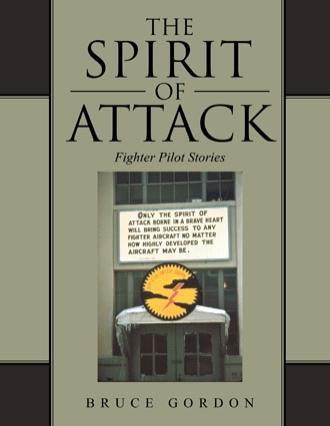
SCRAMBLE! In a couple of minutes my wingman and I would be airborne on another adventure. Sometimes we intercepted an airliner, sometimes a misplaced B-52 bomber, and sometimes Russian bombers probing our defenses; Russian warships; MIG fighters; or “troops in contact” in Vietnam, calling for napalm only yards from their positions. Twice it was UFOs - Unidentified Flying Objects! This book is a series of short stories, supported by more than 90 photographs. The first part has my own stories; later stories were contributed by my fellow pilots. The last story is from WW II of our P-38 fighters attacking the Romanian oil fields and getting badly mauled by defending Romanian fighters - and a Romanian pilot's view of the battle! “Only the spirit of attack borne in a brave heart will bring success to any fighter aircraft, to matter how highly developed the aircraft may be.” That quote from Adolf Galland, an Ace of the German Luftwaffe in WW II, was the motto of our 317th Fighter Interceptor Squadron in Alaska. The fighter pilot is a hunter, and his quarry is the most dangerous in the world - men who want to kill him! The best defense is a good offense - ATTACK! The US Air Force had a program called “Every Man a Tiger”. A tiger does not kill impulsively or in anger, but plans his attack carefully and strikes with cool ferocity. We were tigers! Fighter pilots tell stories around the bar, but they seldom write them down. These stories were written by the fighter pilots themselves! Come with me and hear of the beauty of flight, the mortal danger of electrical power failure at night in a snowstorm, and the thrill of attack with 20mm cannons firing right under your feet!
About the Author
About the Author Bruce Gordon’s adventures with flying and the military started when he first was taken aboard the Pan American Clipper during its first flight to Manila in 1935. He saw planes flying low over his home in Honolulu on December 7, 1941, during the attack on Pearl Harbor. He wore a life jacket as a 7-year-old refugee in a convoy from Honolulu to San Francisco. His junior high school years were in Hong Kong, where he heard stories of the Japanese conquest of the city. As the Chinese Communists approached Hong Kong in 1949, he was a refugee again, this time going to Massachusetts for high school and college. After AFROTC and graduating from Tufts University, he was commissioned as a Second Lieutenant and went to pilot training. He flew the T-34, T-28, T-33, T-37, F-86, F-100, F-102, and F-106. He often carried his camera in his cockpit and took some remarkable photographs as he flew in Alaska, Korea, and during his 132 combat missions in Vietnam. After Vietnam, he put his experience with airborne radar to use at Air Force Systems Command at Wright-Patterson AFB in Dayton, Ohio, where he was in the Electronic Warfare Systems Program Office. An offer of good money took him to Saudi Arabia, where he managed a motor pool of 214 cars,56 buses, a “black fleet” of 8 limousines for VIPs, and three business jet aircraft. He returned to the USA and helped develop software systems to manage depot maintenance of Air Force aircraft and Army tanks. He retired to Kentucky, where he is the proud patriarch of a family of his wife, three children and six grandchildren.