
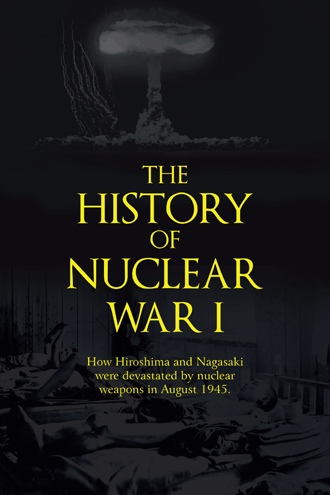
The History of Nuclear War I
How Hiroshima and Nagasaki were devastated by nuclear weapons in August 1945.
by
Book Cover & Preview Text
Formats

Book Details
About the Book
In August of 1945, some 200,000 people died at Hiroshima and Nagasaki from two nuclear weapon explosions during Nuclear War I. This book details the following historical events that led to Nuclear War I: Fermi and Szilard worked on nuclear fission at Columbia University in 1939. Plutonium-239 was discovered in 1940. Einstein informed President Roosevelt of possible German uranium bombs. Fermi built the world's first nuclear reactor in 1942, to manufacture plutonium. General Groves and Oppenheimer led the U.S. effort to build atomic bombs as part of the Manhattan Project. Soviet spies infiltrated the Manhattan Project. The Trinity Test on July 16, 1945, was the world's first nuclear explosion. The Pope (1943) and many scientists spoke against the use of nuclear weapons. Truman became President on April 12, 1945 and first learned of the Manhattan Project. The B-29 bomber was selected to deliver atomic bombs to Japan. On August 6, 1945, an atomic bomb (uranium) was exploded over the Japanese city of Hiroshima. For three days (August 6th to the 9th) hope abounded that Japan would surrender but preparations for more nuclear war continued. On August 9, 1945, an atomic bomb (plutonium) was exploded over the Japanese city of Nagasaki. Emperor Hirohito survived a coup by angry military officers and Japan surrendered on August 14, 1945.
About the Author
John Richard Shanebrook was a Professor of Mechanical Engineering before becoming a technical writer on nuclear technology issues. He is the author of the book, “Nuclear War I and Other Major Nuclear Disasters of the 20th Century,” published by AuthorHouse in 2007, under the pseudonym, Samuel Upton Newtan. During his engineering career, the author published over 90 technical papers and invented, or co-invented, several biomedical engineering devices including prosthetic heart valves and the Vortex Blood Pump. He has been an invited lecturer at many colleges and universities, including the United States military academies at West Point and Annapolis. His publications include measures to halt the horizontal and vertical proliferation of nuclear weapons and a proposal for an international treaty to protect nuclear facilities from Acts of War.