
East Asia
A New History
by
Book Cover & Preview Text
Formats

Book Details
About the Book
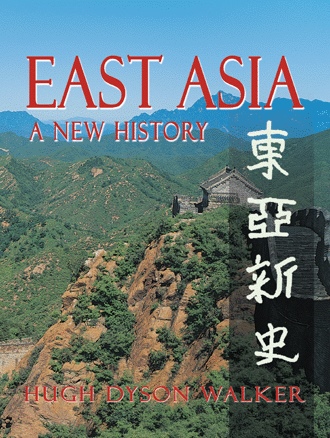
Histories of East Asia traditionally emphasize China and Japan, and neglect Korea and Vietnam. Essentially, 20th century East Asia is re-written into the past, as though China and Japan was always the core of East Asian development. This is not at all how East Asia developed. Chinese prehistoric cultures became historic in the 18th century B.C.! Japan was not part of East Asia for over 2300 more years. By studying periods of Chinese unity and disunity, and their effects on China’s neighbors, Korea and Vietnam, a distinct culture zone, East Asia, gradually emerged, and slowly included Japan. The main elements of East Asia—cultural, social, political, philosophical, religious and linguistic—were derived from China, but the others were not minor replicas of China. Each was unique: its people ethnically distinct, from China and each other; its native language, and linguistic blend with Chinese, also unique. Korea and Vietnam resisted Chinese colonization, but adopted and adapted advance Chinese elements to their own needs. Emerging later, Japan underwent wholesale adoption of Tang China’s advances, replicated in the 19th century, when Japan was the first East Asian country to modernize. Spanning some thirty-eight centuries, from the 18th century B.C. to 2012 A.D., this diversity with common elements derived from China, is a major theme of this work. It is often overlooked by those who prefer general views, based on surface impressions, to more complex realities. The former often lead to mistakes; the latter become the basis for more sound understanding. After all, these four countries and people share the eastern end of the Eurasian continent, yet each country’s geographic situation is also unique. As the twenty-first century continues to unfold, this new approach to East Asia should help to produce clearer and more accurate understanding of this important world region.
About the Author
Born in New Hampshire, B.A., U.N.H.; after U.S. Navy, M.A., Ph.D. U.C.L.A.; Chinese graduate studies, Yale. Taught in East Asia for U.Md., fluent in Chinese, Korean, Japanese, semi-fluent in Vietnamese. Prof. Emeritus, History and Chinese, Univ. Wisconsin-Stevens Point. Taught courses in East Asian History for 45 years and Chinese Language for 31 years. Ordained Catholic Deacon.