
Dragon Bait
Book II of The ASA Trilogy
by
Book Cover & Preview Text

Excerpt/”Free Preview” in WordPerfect X4 From Dragon Bait, chapter 18, “Joss Sticks and Temple Dragons” Winter lay in the shadow of the mangroves, looking out into the light in the field, his face stupid in shock. Beyond him in the clearing and where the bunkers had been, the carnage was complete. The world before him was tinged blue-green, shifting, transmuted in the swirls of dust and smoke that eddied about the fresh-pocked earth. He tried to stand, to walk, but some elusive constraint admonished him with mild severity to lie still. His eyes roved the scene in awe, in silence. The edge of an illusion intruded into what he saw before him. Children screaming in mock terror. Chasing across a similar field where balls were hit and races run. The children fled. He heard their feet pounding the dirt, stirring the hot summer dust, and he sought to reach through a screen of bamboo to warn them. The limber, clattering growth sprang aside and closed behind the passage of his arm, distended and detached from the eyes that followed it. He could identify the sound of gunships as they arrived to work the treeline, pushing the diminishing enemy farther and farther from him. He knew vaguely there was something he had to do, but the ringing in his ears and the echoes of screams and the sounds that did not belong to the jungle—were not of the rubber trees—held him. A sensation of limpid green translucence, pulsing and receding, washed over him as he tried to stand. The M-16 was still in his hand; he leaned on it; he pushed erect and hefted the weapon. It weighed nothing, but the grass and mud in the flash suppressor and in the barrel was a burden. He observed with care how the same green growth that was around him as he had lain in the field now sprouted from the muzzle. It was ridiculous that it did so. He was hallucinating and knew it. He giggled. He threw the rifle aside, useless. Can't fire a green gun! he giggled again. Nearby lay the upper half of a Vietnamese Ranger sergeant's body, hands still gripping an M-2 carbine. Vaguely he realized he hadn’t known there were ARVN troops on this LZ. The remainder of the soldier was nowhere in evidence, as if he had been issued only the trunk, arms and head of a body. Without thinking, provoked by instinct, Winter wrenched the smaller, older weapon from the dead man's grip and checked it automatically, cleared it, and flicked the safety off. The sharp, crisp click sounded loud in the cathedral silence. He pulled two banana clips of .30 caliber ammo from a muddy pouch on a web belt slung around the soldier's neck, and wiped the blood and gouts of tissue from them abstractly. He carried the weapon and ammo loosely in his hands. Winter walked up onto the cairn of stones where the small temple had once stood. It was just at the edge of the trees and he could see the entire field in the blazing sun. Under the trees, the dappled light seemed cool. But out there . . . out there . . . * * * When he was nine years old, Davey Winter had traveled with his mother to visit her cousin in Abner, Arkansas, in the late summer of the year. That town of 2,300 in the tornado belt of the Mississippi Valley boasted only two industries: the mines and a doll factory. The mines were dug for the limited Arkansas diamond trade, but they were played out. The doll factory was a high, ugly wooden structure of ancient vintage that had once been a shirt factory, before that a furniture factory, and originally a cotton gin. Only the gin had provided enough work to employ the few in town who did not depend upon the mines, but following the decline in mine fortunes, when the cotton market failed, everything else in the town failed too. So the owner tried furniture, sold out to a shirt maker, and when he went under, the wife of the town's only service station operator opened the doll factory to capitalize on a family cottage industry. In the doll factory the tall gin shaft served as storage space for the completed dolls. They waited on four levels in regimented poise for shipment to the various doll houses and battlefields of genteel southern darlings. On the day in August of 1944 when Davey and his mother arrived, a tornado warning had been issued. As they stepped off the train they could feel the warm, quick rush of winds presaging storm. Aware of the impending tornado, most of the townspeople rushed to the mines for shelter. Those too far away, or disdainful of the threat to the degree they would not demean themselves in the filth of the mines, moved to a hope of safety in the school gymnasium. It was a county school, large for the community and the gym was able to accommodate the entire six hundred-plus people who poured into it in a slightly festive mood. They crowded into corners, huddled with loved ones, played cards, joked, laughed, and for the most part stoically awaited the passing of the storm. As the winds grew louder and the building began to shake, those who were believers began to pray. Those who were not, prayed for the conversion that might put them in a category to be saved. Neither prayer could stop the winds. When the twister had finally passed, miraculously lifting away the walls and half-domed roof of the gymnasium and revealing to God's own view and judgement the six hundred sudden Christians inside, either He was satisfied with their state, or so disgusted He chose to ignore them. He took their gymnasium as token, and with a touch of contempt, left all six hundred-plus untouched as a huddle of fakirs. The doll factory two hundred yards down the road was taken in sacrifice, a sudden inspiration on the part of the frivolous God out for an afternoon's tornado, with the implicit understanding that expiation was the common goal of the community. Boxed and cellophaned whole dolls, pieces of little bodies, tiny dresses and coveralls and uniforms were flung into thirty acres of sweet potato vines some five miles from the town, scattered like fallen leaves; the first few coloring sumac leaves of the season fell with them, among them. Broken, dismembered, shattered beyond repair; little dresses and boots and blouses, tiny Sam Browne belts and swords, unrecognizable in the vines of the mis-labeled yams, the dolls in their destruction created a fallout like tiny human confetti. His mother and cousin had taken him along when they went out to see the strange and wonderful sight, gawking like other townspeople, believers and renewed skeptics. Little Davey Winter, like most boys—though he would have denied it then, and for years afterward—had played his share of girls' games and created his own phantasies. God-like, with bits of stuffed cloth and clothespin arms and legs, he’d created living worlds responsive to life on another level. When, standing by the gravel road that ran along the ditch with the air oppressive and close in the aftermath of the tornado, he saw the littered sweet potato field, Davey grew frightened. The same fiction in his mind that allowed him the fantasy of the dolls on that long-ago afternoon had played him false here in this other green field. The transposition had confused him then, and his mother had to take him back to the house before she could deal with his fear. A dish of ice cream had stopped the quavering chin, but the picture remained, deep in his psyche, and all the glossing-over of later years was futile now on this different field that was somehow the same. Real as that scene had been to him that late summer day, that day he had his first view of apocalypse, so un-real was the scene before him now. He must remember, his mother had chided him gently but repeatedly; they were only play. They were not real people. As far as he could see in the gloom of the forest and the rubber tree plantation, there was no movement at all. Turning slowly about, scanning the ruins of the bunkers and the littered field beyond, Winter could hear no sound.
Formats


Book Details
About the Book
Dragon Bait is book II in a trilogy, three
linked and contiguous novels which
feature the same common primary
characters and venues throughout a
continuing story. Use of “fl ash-back” or
back story reversions to earlier times/
places is common, allowing introduction
of relevant but minor swatches of
information and perspective.
Book I, Involuntary Tour, published in
2009, was set in Bad Aibling, Germany,
in 1968, Viet Nam in 1964-65, and
briefl y the U.S. in 1965-66. Dragon Bait,
more ambitious, is set in Bad Aibling,
again in 1968; the U.S. in short segments
over several periods; Asmara, Eritrea
(Ethiopia) in 1960-62; Rothwesten and
Gartow, Germany, in 1966-67; and Viet
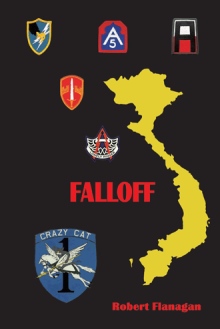
Nam in 1968. Book III, Falloff , projected
for publication in mid-2011, is set almost
entirely in Viet Nam, multiple locations,
in 1969. Th ough each book stands alone
as a novel, the entire story demands the
range of the full trilogy.