
Why the Bible Cannot Be the Word of God.
by
Book Cover & Preview Text
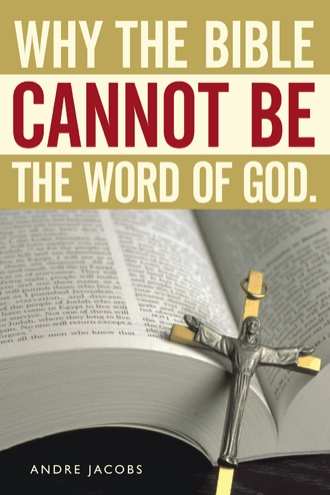
What is the meaning of life? Is there a God? What happens when we die? Is there life after death? Does God care about humankind? Why is there suffering in the world? Why do bad things happen to good people? Does God communicate with humans? Does God answer prayers? Did God write a book? Is that book the Bible? No doubt, you've asked yourself many or all of these questions at one point or another in your life. These questions trouble billions of people on a daily basis. It seems that we search and search for answers, only to find answers that leave us unsatisfied, and that lead to more questions. Throughout the ages of human existence, these questions have led people to many different conclusions. Regarding the afterlife alone, there are several different theories. Some believe that our eternal souls are sent to either heaven or hell according to our deeds. Others believe we're reincarnated into some other form of life. Still others believe death is the end of life, leading into eternal nothingness. Who is right? Who is wrong? How can anyone know the truth? In this quest for answers, humans turn to many different sources for guidance. Many seek answers from expert religious leaders and scientists. These resources have offered many different explanations for why things are the way they are. They have written countless books addressing the eternal questions of why we are here and the meaning of life. For countless individuals living today in previous centuries, the book that holds the answers to life's most complex questions is the Bible. Many humans have dedicated their lives to teaching the Bible to others. Some have gone so far as to die for these beliefs. The Bible itself claims to be inspired, or breathed of God. This means that the Bible is unique in that its author is no mortal. Rather, its pages contain the very thoughts of God and our Creator. 2 Timothy 3:16-17 tells us “All Scripture is inspired by God and profitable for teaching, for reproof, for correction, for training in righteousness.” Today, approximately 33% of the world's inhabitants consider themselves Christian. This 33% can be broken down into several different branches of Christianity, such as Catholic, Protestant, Jehovah's Witness, and Mormon. Although these different denominations of Christians may differ on certain beliefs, almost all have one thing in common. They all believe the Bible is the inspired word of Almighty God, and they base their teachings and beliefs on this book. In the minds of countless Christians, there is no debating that the Bible contains God's thoughts, and not mans. Many believe that a study of the Bible can give us final answers to the most enduring questions, such as what happens to us at death, who God really is, and the meaning of our existence. They believe God approves of a life that adheres to Bible teachings. On the other hand, choosing to go against the teachings of the Bible is a sin, which is the same as rebelling against God, and will ultimately incite God's wrath in some form. For skeptics, the Bible is merely a book written by different men thousands of years ago. It has some good teachings in it, but there's no reason to believe its authors were divinely inspired. The book you now hold examines the claim that the Bible is the word of God, and presents evidence showing why it is not. Whether you're a Christian, Muslim, Buddhist, Hindu, atheist, or something else, this book will prove valuable to you in your search for truth.
Formats

Book Details
About the Book
We all search for truth and direction in our lives. In this search, many turn to the Bible, believing that God has inspired its pages. Is this belief correct? Does the Bible contain wisdom from above? Or is it a fraud, merely containing knowledge from other humans? This book examines the claim that the Bible is the word of God, and presents overwhelming evidence that it is not. Whether you’re a Christian, Muslim, Buddhist, Hindu, agnostic, atheist, or something else, this book will help aid you in your search for truth.
About the Author
Andre is a former Christian Minister who has been a student of the Bible for over 25 years. He has given countless sermons to thousands of people on a wide range of Biblical topics. It was these years of intense examination allowed Andre to determine that the Bible could not have been inspired by a higher being. He left the church and is now an atheist. He now attempts to share his knowledge about the Bible so that others can draw their own accurate conclusion regarding the Bibles' claim of divine authorship. Andre lives in San Diego California.