
Paving the Way
by
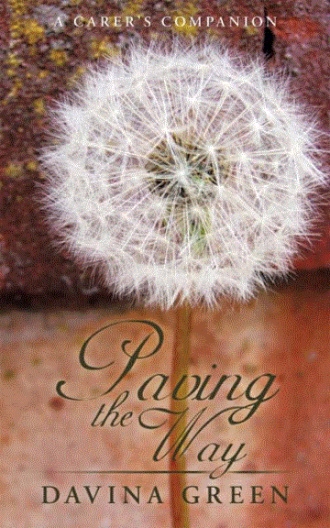
Book Cover & Preview Text
THE CARING ROLE
“It takes less time to do something right than to explain why
you did them wrong”
By Henry
Hello. Are you sitting there a little like a startled rabbit in the headlights? Are you quietly wondering at what point you became a carer? Let me hold you by the hand and see if we can work through the bombshell.
You might be surprised to know that you have more skills than you first thought. These skills may be a little rusty and may not have been consciously used for a while but your greatest asset is in knowing the person with a memory problem. Already subtle changes may have begun as unbeknown to you both you have started to make some adjustments.
I guess it may have been your doctor or the Consultant at a Memory Clinic that first referred to you as a carer. Quite possibly it did not initially register but slowly crept over you. Now doubt you secretly look at the person affected and think to yourself…but they look the same. It’s not too bad. Nothing has changed. Understandably you maybe resistive to the title Carer, or perhaps crying inside “Why me, Why us? What did we do to deserve this?”
The dementias are a mixed bag of uncontrollable interlopers who move into your life uninvited, they take up residence when you least expect and refuse to move out. A wild range of emotions are often experienced by the carer at this point. The range swings from anger to resignation and back again. With allsorts inbetween.This is normal. As the dawning of a new reality invades your life it is common to experience a grief loss reaction. What makes it harder is if the person….your loved one is aware of the diagnosis and understandably they are also experiencing mixed emotions. The other side of the coin being if the person is unaware of their memory problem, you may feel lonely, isolated and scared for the future. It is not uncommon to find this period of time very difficult. Talking does help for both of you and it can be most positive to talk outside of the family to someone who is not emotionally involved, as well as talking to each other, if you would normally do so. If you do not normally discuss this type of matter with each other it could be a huge jolt. It may be that the person with the memory problem feels that their nose is being rubbed in the open wound of their failings. It is possible that one of you really wants to talk whilst the other just clams up. It is also unlikely that you will both adjust to the diagnosis at the same time. You may both be running an obstacle race but the way you each look at each obstacle is probably not going to be the same.
You may find that the person with the diagnosis feels a wave of relief to have a cause for their memory problem. It is quite possible they feared they were “losing their mind” and despite the nature of the progressive degenerative condition it is better facing the devil with a name, than the devil without a name. We all need to be allowed the right to process new information at our own pace. Despite the diagnosis and unlike many other traumatic situations they can put their house in order, with your help, that of the family and professionals too. It is also possible that they might become introvert for a while as they process, within the limitations of the condition what is taking place. Should you have concerns and feel that they are uncommonly down then go back to the doctor and discuss your observations. It is important to not put everything down to the memory problem, after the entire entire person is still very much present, although possibly not so easy to reach.
We have all experienced when we have worries how in the small wee hours of the night or when we think no one is watching, that the demons that are our fears unleash themselves and make us appear to behave out of character. Maybe now, gradually over a period of time you will grow to realise odd things that took place over the past couple of years that can now be firmly attributed to the condition. Somehow we gain 20/20 vision in hindsight.
Carers often want to know how to tell if they are getting it right. The short answer is to be guided by the behaviour and reactions of the person with a memory problem. If they are unwell or unhappy it will translate in the way the respond to life. By the same token if they are well and more or less themselves then in the main all is O.K.
Formats

Book Details
About the Book
“It was like watching my dad and listening to the girls in work. I really enjoyed it and found it easy to follow. As a nurse and a carer’s helper and years of experience with people who have a memory problem -where have you and your book been?”
By Karen a daughter whose Mum has Vascular Dementia, Karen works as a radiology nurse.
“This is an extraordinary book, warm and compassionate, informative and completely honest, serious and funny and totally readable. Davina’s “no holds barred”, “be prepared for anything” style will bring vigorous nods of recognition as well as wry smiles to those carers and others involved in caring. Caring is the most difficult job imaginable and this timely companion will bring hope and reassurance to those who read it. All G.P’s should read it as well!!!!!
By Dr George Smerdon.MB.FRCGP
“…..A POCKET GEM HELPING TO MAKE SENSE OF A LOVED ONE’S REACTIONS AND UNDERSTANDING LIFE THROUGH THE EYES OF SOMEONE WITH A DEMENTIA”
BY Stephanie, a carer for her Mum who has a dementia.
About the Author
Davina lives and works in Cambridgeshire. She is a qualified psychiatric nurse with a wealth of diverse experience. She has three sons, at one time the youngest pub landlady in Carmarthenshire. Spent 9 yrs working for Mencap in