
One Mo' Time
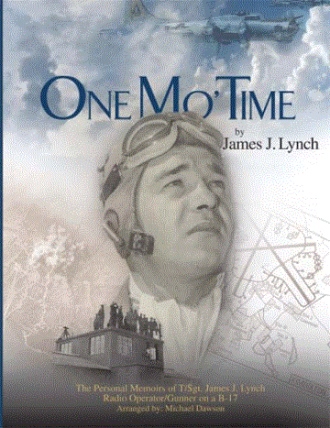
The Personal Memoirs of T/Sgt. James J. Lynch Radio Operator/Gunner on a B-17
by
Book Cover & Preview Text
We were falling behind the formation due to lack of full power. We had little choice but to drop out and continue alone. We turned back toward
Without warning, the blue sky around us exploded in ominous black puffs with orange centers that spewed jagged, molten pieces of metal. The flak ripped through the metal fabric of our plane like it was paper. This was our first introduction to flak! The concussions tossed the huge bomber around like a toy boat in a bathtub. Russ and Len were cranking the lone bomber around in an evasive action configuration that was limited by having only two healthy engines.
The first solid hit was directly under the bomb bay smashing the oxygen lines, thereby forcing us to start losing altitude rapidly. The second hit was under the number two engine. Immediately pulsating oil started spewing over the left wing. Once we had passed through the barrage, Russ asked for a position check to evaluate the damage. We had no oxygen, but this was of small consequence, as we were rapidly losing altitude. The pressing problem was the number two engine. Despite several tries, it would not feather. Worse, it was beginning to wobble erratically on the propeller shaft. The hub, now a blazing red, was screeching and grinding the gears into a mass of metal filings. Russ was doing everything possible to shake the prop before the wing caught fire. He pulled up into a stall, and then kicked the rudders, shaking the plane like a dog shaking water. The prop, with a final screech, broke the shaft and went sailing over the top of the radio room, just missing the huge rudder. Now the plane was flying better; however, we were still rapidly losing altitude….
We came in, “tearin’ ass,” as Johnny put it, and were doing great until we hit the first shell hole. We careened back into the air, only to come down squealing the tortured tires in a heart-stopping skid. Russ and Len fought the brakes and straightened the skid. We began to feel a series of jars as we bounced over some of the holes. Then, we hit the big one, which tore off the landing gear, drove the ball turret up into the waist, and stood the bomber on its nose in a shell hole. It wavered on the peak of its nose for a moment, and then crashed back to the ground amid the crunch of glass and the hissing of oxygen remaining in the tanks. Oil and gas were spilling out all over, so we clawed our way clear of the plane and dropped into a nearby shell hole. Grateful to be alive!
Formats

Book Details
About the Book
One Mo’ Time is the story of one crew’s 35 Strategic Bombing Missions in a B-17 Flying Fortress during World War II. The Details of the missions I describe are from a diary I kept. Some details I have omitted. I am not a prude in any way, but men living on the brink of death act differently than in their normal lifestyle. Therefore, this is rather a story - the fears, the laughter, the tears - of men who fought a war.