
FORTUNA
by
Book Cover & Preview Text
"Howling winds continued to pound the Fortuna. Strong winds whistled through the rigging and, catching in her sails, threw the ship in all directions at once. The wind and sea had grown so violent that holding a course was too dangerous and exhausting. It was time to stop fighting the elements and trim the ship so it would take care of itself." "As the Fortuna pitched in the turbulent sea and water washed over the deck, Giovan clung tightly to a lifeline that stretched the length of the ship. For just a brief moment he turned his attention from the angry sea to consider the plight of his ship. He knew that the lives of all on board were in his hands. His thoughts were interrupted by the desperate screams of the lookout: BREAKERS AHEAD!" "They were only minutes into their shift when, not more than a distance of 300 yards off shore, they could see the unmistakable outline of a ship's hull through the thick, heavy fog. It was a sign their eyes were trained to recognize but hoped they would never see. Surfman Brad Salmons withdrew the gun he carried and, with careful aim, discharged a red flare to signal the distressed ship that help was on the way. Above the roar of the surf, he faintly heard the cries of the sailors aboard the stricken ship, gratefully acknowledging that they'd been discovered." "Truex returned to the Fortuna a few hours later at 10:45 a.m. High tide was approaching, making it more dangerous for the sailors to remain on board their ship. It was flood tide at 11:00 a.m. and the churning surf left little beach to perform the rescue mission. Violent waves were tossing the Fortuna in the turbulent surf like a bobbing cork. The high waves were beginning to move the vessel in a sideways direction, and the lifesavers feared the ship would be undercut by the waves and heel over on her side. The time had come to order - not request - the captain and his passengers to leave their doomed ship." "We began to talk about the obstacles. We would need a big crane to lift it out, and surely we didn't have one of those in our fleet of vehicles. Besides, the beach where the anchor is located is not our property. It's public land. How could we get permission to dig up public property to remove someone else's anchor and keep it for ourselves? And, what about Ship Bottom? The Fortuna was a wreck of such historic importance to the town, surely they would never allow someone to just dig it up and take it away. The more we talked about the recovery of the Fortuna's anchor, the more it became apparent that we could not, and should not, recover it for ourselves. Again, we both came up with the same idea. We could recover the anchor and give it to the town of "Paul started the motor on the crane to begin the recovery operation. The water in the pool was still, and the crowd remained silent as the crane prepared to hoist the anchor from beneath the water. The crane heaved forward, trying to pull the heavy, invisible object from beneath the water. But not a single ripple appeared on the water's surface. The anchor did not budge. They gave it a few more tries but still the anchor refused to leave its grave of seventy three years. "We need to determine its exact position," requested Paul as he searched the workers for a volunteer to brave the depth of the murky pool. But no one stepped forward to accept the assignment. "I have to get some kind of bearing on how it's positioned so I'll know in what direction to nudge her." "Well," I said to myself. "This was my project from the first time I uttered the words 'I think we can get the anchor out', so it is up to me to stand behind my project one hundred and ten percent. Someone has to go into the water to find out how the anchor is resting. That someone has to be me." "Well, Carole, now that the anchor is out, what are you going to do next," asked a reporter. I didn't know where the words came from, but I answered his question without hesitation. "Well, I guess the next thing would be to find the newborn baby who was rescued from the Fortuna in 1910."
Formats

Book Details
About the Book
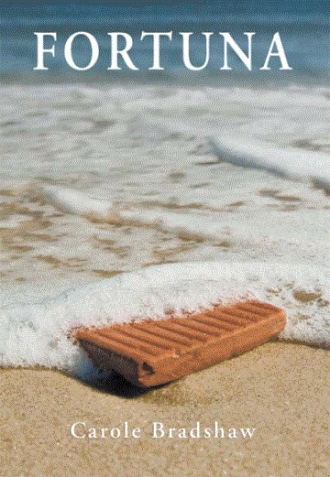
I chose to use the image of a tile as the cover of Fortuna because, for me, that's how the story began - with a small piece of red tile that washed up on the beach on Long Beach Island, New Jersey in 1970.
More than half a century before, the Fortuna, loaded with roofing tiles for ballast, set sail on a two-year voyage to New York. Just short of her final destination, she became one more shipwreck off the coast of Long Beach Island. Those tiles were her calling cards.
Fortuna almost ended the same as it started. While photographing the tile for the cover of this book, a huge wave came in and washed the tile back into the sea. But, like all the other pieces of this story that landed at my feet, the tile washed back onto the beach five days later.
About the Author
About the Author
While public speaking is nothing new for Carole Bradshaw, becoming an author is. Over the years, she has told the Fortuna story to many organizations throughout New Jersey. When a routine walk on the beach unfolded into an incredible story, she was urged to record her adventures in a book - which she did in Fortuna. Carole still walks the beaches of Long Beach Island, New Jersey, looking for treasures, though she doubts she will ever find another as grand.