
One Left Handed Hug
by
Book Cover & Preview Text
Foreward
One left-handed hug
Cynthia Wetmore, M.D., Ph. D
I first met Jackson Hoeger and his family in May 2005. We connected at first meeting. His eyes were guarded as he peered at me in the exam room. He was curled up in his mother’s lap. He seemed engaged in his surroundings but so tired and scared, as were his parents Jen and Marty. My thoughts were caught up in how to put them at ease and also, in how to help Jack battle this tumor while still preserving his sense of self. In medicine, as in parenting, we are not to have favorites. As a physician at Mayo Clinic, the model of care is to strive for the best for every patient, ever time. The patient always comes first. The science of medicine is to find cures to stop the tumor cells from dividing and spreading throughout the body. The art of medicine is to cradle the young person and family in love and compassion, to help them to understand what lies ahead and feel that they have a partner at every step of the way. I feel blessed and privileged to be able to care for children and their families as they battle brain cancer and have great joy as I have been invited by Jack’s parents to contribute to their story.
Brain tumors are the most common solid tumor of childhood, only leukemia is more common as a type of cancer in children. As I explain to my patient families, most pediatric cancers arise as a kind of “typo” or in cell’s DNA as it is copied and segregated into the two daughter cells. Such “typos” occur in thousands of cells everyday in each of our bodies but most of those errors do not result in a growth advantage and those cells do not survive. In some cases, the “typo” or mutation occurs in a gene that gives the cell a growth advantage and the cells loose their normal regulation of control over cell proliferation and death. These are the cells that grow into a tumor. Presently, we do not know of the major genes involved in promoting tumor growth. We have some ideas about a few genes that are mutated in a small proportion of pediatric brain tumors but most of the pathways in the molecular regulation of brain tumor growth are not yet known.
One of the greatest challenges in treating brain tumors in children and adolescents is the fact that their nervous system is still developing though the first decade of life. Usually therapy consists of surgical resection of as much of the tumor as possible, then several months of chemotherapy and/or radiation therapy to try to kill the tumor cells. In Jack’s case, this was a particular challenge because while his tumor was one of the most common families of brain tumor (primitive neuroectodermal tumor or PNET) is was extremely unusual in that there was no primary lesion that could be removed surgically. Rather, Jack’s tumor formed a type of “frosting” coating the surfaces of his brain and spine. These tumor cells were irritating normal brain cells and causing seizures. Generally, this type of tumor in this area of the brain is difficult to treat and patients have less than 20% chance of survival. Part of the struggle in Jack’s care was to target therapy to the tumor cells while still hoping to preserve as much normal function of his brain as possible. At this time it is impossible to selectively kill tumor cells without also harming the normal cells of the developing brain. I hope that one day, we will be able to understand more about the genes and pathways that initiate and promote brain tumor growth so that we may be able to selectively target tumor cells and leave the remaining normal cells unharmed. This is the goal that I and many others have committed our lives to attaining.
I marvel at Jack’s recovery. He has been tumor free for more than two years now. He has emerged from the seizures, malnutrition, infections and low blood counts with a new sparkle in his eyes. Jack is back to playing baseball and being a little boy, wrestling with his brother and sister and living each day to the fullest. He is speaking out and telling his story. Jen and Marty asked me what they could do to help other children with cancer and I told them to use their words and tell Jack’s remarkable story. I hope that those who read Jack’s story take from it his hope and inspiration. While medicine is becoming ever more technical, it is still an art and we do not have all of the answers. In Jack’s honor we may all Live Stong an
Formats

Book Details
About the Book
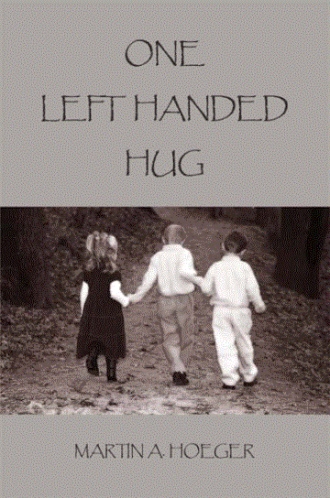
This inspirational story is about a 5-year-old boy named Jack and how he unknowingly teaches thousands of others about hope, faith and life. This true story is a powerful journey through Jack’s battle with a rare form of brain cancer. Within these pages you will witness the struggles of being misdiagnosed, the cancer that breaks down his mind and body, but not his soul. You will celebrate the many victories that Jack experiences as he fights to become a healthy boy again. One Left Handed Hug is a story that touches the young and old and encourages you to always believe in miracles.
LEARN FROM THE PAST, BELIEVE IN THE FUTURE
BUT MOST OF
About the Author
This inspirational story is about a 5-year-old boy named Jack and how he unknowingly teaches thousands of others about hope, faith and life. This true story is a powerful journey through Jack’s battle with a rare form of brain cancer. Within these pages you will witness the struggles of being misdiagnosed, the cancer that breaks down his mind and body, but not his soul. You will celebrate the many victories that Jack experiences as he fights to become a healthy boy again. One Left Handed Hug is a story that touches the young and old and encourages you to always believe in miracles.
LEARN FROM THE PAST, BELIEVE IN THE FUTURE
BUT MOST OF