
The Wizard's Secret
Along the Yellow Brick Road to a Healthier and Happier School Year
by
Book Cover & Preview Text
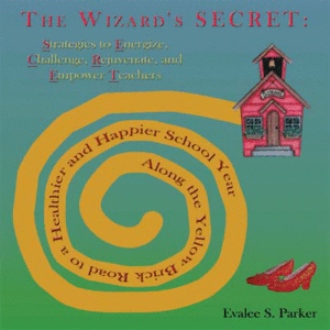
Dorothy was constantly tormented by the Wicked Witch, who represents stress. Like the witch, stress can creep up at any time if we are not mindful of taking care of ourselves. Just as Dorothy had to deal with the Wicked Witch, we have to find ways to deal with our stress.
Along her journey, Dorothy meets the Scarecrow. The Scarecrow represents how stress can affect the brain. He helps us learn to take care of our mental health through daily affirmations and activities that engage our brain in positive ways.
Next, Dorothy finds the Tin Man. The Tin Man helps us take care of our heart, including emotional and physical health. We also learn the value of adding passion to our thoughts.
Dorothy then comes face-to-face with the Lion. The Lion represents things we are “en-couraged” to do to take better care of ourselves. He helps us to step outside our box and visualize what we really want to happen in our lives.
Throughout the story, Glenda, the good witch, is there to support Dorothy. She reminds Dorothy at the end of the story that she had the power all along; she had to find it for herself. Glenda represents the support system we must recognize, or create, to help us through tough times.
The Wizard represents solutions for the challenges that teachers face each day. Dorothy’s search for “the Wizard” leads her to realize that the secrets of successful teaching are right there inside of her. As teachers we must tap into our strengths, nourish our minds, and constantly seek new ways to be creative problem-solvers.
The American Institute of Stress (2001) identifies teaching as the most stressful job in the nation. Studies have shown that some teachers experience more stress than police officers, air traffic controllers, and medical interns! Although there is support available for beginning teachers, they must still meet the same job competencies as their veteran colleagues. This includes the planning and delivery of engaging lessons, paperwork, test preparation, and nurturing the social, emotional, physical, and cognitive needs of their students. At the end of the day, most beginning teachers are unable to disconnect and find time for rejuvenation. On the contrary, they spend more time planning and organizing. They simply don’t have the tools and strategies to manage the stress of the job, especially during those initial years when everything is new and requires additional planning. No one can deny the impact this has on a beginning teacher. Basic tips of stress management are overlooked or forgotten. That is what can cause teachers to lose their way physically, emotionally and mentally, which could eventually lead them to leave the profession.
We spend many hours engaged in our work each day. For teachers, it is sometimes hard to distinguish when work hours begin and when they end. Even if we love our work, there are times when we don’t feel the joy, pressures mount, and stress builds. Stress may make it challenging to be fully present in a job that requires us to be “on.” Teachers are gradually worn down by the cumulative effect of day-to-day stresses. This is when we need to step back, take a deep breath, and use strategies that help us manage these rough patches.
Formats

Book Details
About the Book
The Wizard of Oz provides a wonderful metaphor for dealing with the everyday stresses of teaching. The Wizard’s SECRET (Strategies to Energize, Challenge, Rejuvenate and Empower Teachers) can help educators avoid the stress and burnout often related to the job. With the help of Dorothy, Scarecrow, Lion, Tin Man, and Glenda, teachers find their way back to the yellow brick road where they will achieve greater balance and manage the inherent stress in teaching.
Dorothy, the main character, wants to find her way home, a place where she feels safe and secure. Dorothy can be compared to teachers who are trying to feel safe and secure in their new teaching “homes” while balancing personal and professional demands.
About the Author
Evalee Parker has been an educator for 26 years. She graduated from Appalachian State University with a BA in Psychology and she earned her Master’s Degree in Middle Grades Education Curriculum and Instruction from