
Reversal of a Downward Trend
Return to the Foundations
by
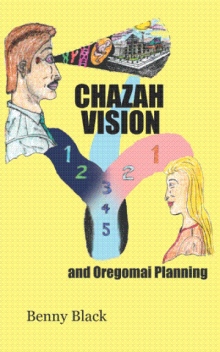
Book Cover & Preview Text

The first observation people notice when they enter a city is a feeling. Feelings, in themselves, have no real value, but when they lead to the evidence that can be handled, witnessed, or proven, feelings are a very valuable tool when used properly.
Feelings are merely an expression of our own spiritual awareness, whether that awareness is the truth or a lie. Regardless of the teachings of many people, particularly of the Christian faith, feelings are a part of our sixth sense, or ESP, that either help us or hurt us. Feelings send our brains signals which convince us to protect ourselves against enemies or receive friends, known as fight or flight (protect, run, or both), or be calm in allowing an event or person to cross our paths without fear.
Sometimes it is erroneously referred to as witchcraft. It allows us to surround ourselves with invisible bubbles of protection that alert us to violations of our space that may prevent injury or death. A person who has good control can enlarge or shrink the bubble at will, influence others (known as charisma), and can even use it as a defensive mechanism. At times, only when necessary, it can be used offensively, often wounding and preventing a known attacker from hurting us again. This is one technique used in Zen self-defense.
All people, being they are first and foremost spiritual creatures, have this ability. They use it either for good or evil, depending on their character. It is based largely upon their values, education, and the environment they were raised in. With feelings, people choose their influences whether they are friends; teachers or parents; peers or leaders; or male or female. They subconsciously make these decisions, and often don’t know why. They make essentially the same decisions over and over again from their subconscious with the same results and live in those results because of their upbringing.
For instance, in any city, there are invisible sub-divisions in which each has its own environment. Just walking through each sub-division can give a good indication of the environment that was created. Sometimes it’s a good or bad “vibe.” The witnessing of good and bad activities and simple compilation of data gathered (through observation and feeling) determines what the major influences are. If a person walks through many subdivisions, and they display the same characteristics on a consistent basis, day or night, a general conclusion can be made whether the entire city is under the influences of good or bad, making up the overall character of the city.
Simple observation determines if the people are trustworthy or corrupt and provides an indicator stating whether one has to protect himself or if he can be free without fear of retribution or some evil consequence. An evil person will reside in areas that are evil. A good person will reside in areas that are good. Failure to observe properly can lead to disaster. If an inherently good person tries to live in a bad area, he will find himself ridiculed, taken advantage of, and will be very unhappy.
Evil people are trained to usurp their opportunities from good people who have the rightful expectation that they will be treated well. Evil people gain trust, take what they want, then often leave their prey for dead. They use resources without returning them, destroy an area, and go to the next to destroy it. They believe they should claim it as their own, then take it. Good people give and are given to by other good people, and they believe in self-sufficiency through hard work.
Formats

Book Details
About the Book
This is a contrast between the
For every kingdom or society, there are principles or laws that make a society work. Though there are many societies, there are only two kingdoms opposing each other in this earth and the world systems. Though these two governmental and militant powers take many forms, it can be inferred which one is the controlling authority. There can be no mistake. It is either the
I will address the attributes of each kingdom while citing practical, life experience examples as well as documented history. Some history is undocumented, but will be told from an unpopular and eye-witness view point. This book is where I will painfully rip off the rose-colored glasses.
About the Author
NA