
The Call To Care
Charity in Ancient Christianity
by
Book Cover & Preview Text
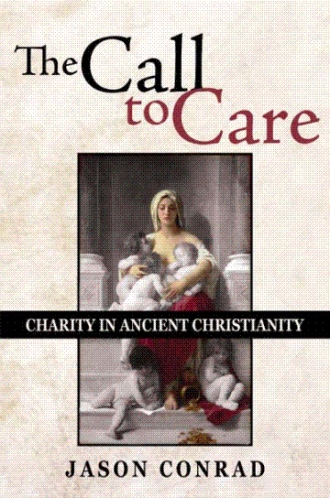
From Chapter 7: Cyprian
Though Tertullian is the father of Latin Christianity, his disciple Cyprian towers above all others in the west until his martyrdom in AD 258. He uniquely carries eastern ideals as well, so much so that he can be considered the “Ignatius of the west.” Cyprian was born into a wealthy family and consequently received the best in education. We know for certain of his rhetorician profession. He assumed the bishopric of Carthage in AD 248 and gave himself wholly to the task until his death. From his numerous letters and treatises, we have an unhampered picture of third century Christianity. From the same we also have a first-rate depiction of their care ministry. In fact, in Cyprian’s work we have the most and lengthiest references to help us understand their shared emphasis from east to west. Whatever else Cyprian is known to represent, he embodies early Christian care. What feature of the gospel obligated care ministries? What were the limits of care for the indigent? Were poor Christians regarded diff erently than poor unbelievers? How were the wealthy regarded in the church? Pontius Before we dive into Cyprian’s works, we must be introduced to him by his close friend and deacon of the Carthaginian church, Pontius. Speaking of Cyprian’s conversion, he writes: "By distributing his means for the relief of the indigence of the poor, by dispensing the purchase-money of entire estates, he at once realized two benefits, — the contempt of this world’s ambition, than which nothing is more pernicious, and the observance of that mercy which God has preferred even to His sacrifices, and which even he did not maintain who said that he had kept all the commandments of the law; whereby with premature swiftness of piety he almost began to be perfect before he had learnt the way to be perfect." This excerpt illustrates much for us. First, the path to "perfection" for the Christian was paved with distribution of all monies to the poor. This is in reference to the commonly cited encounter of the rich young ruler and Jesus. Second, the giving away of money to the needy had “two benefits.” It was the great sign of turning from this world in preparation for the next. So it had a confessional aspect to it. Also, the giving away of money represented the truest form of the mercy of God at work in a man. Pontius describes the most excellent way in his friend. He writes of Cyprian’s great balance: "Henceforth who is sufficient to relate the manner in which he bore himself? — what pity was his? What vigor? How great his mercy? How great his strictness? So much sanctity and grace beamed from his face that it confounded the minds of the beholders."
Formats

Book Details
About the Book
The Call to Care: Charity in Ancient Christianity asks and answers pointed questions about charity, using ancient Christian literature immediately after the New Testament until the early 4th century. How important is charity to the Christian faith? What are the limits to Christian charity? Should poor Christians be treated differently than poor unbelievers? How should wealthy Christians view themselves, and how should they be viewed by others? These questions were popular in the ancient world, and the ancient Christian church voiced a unified answer to each. In the end, the reader will find those answers to be just as relevant today as they were centuries ago.
About the Author
Jason Conrad, M. Div., lives in South Carolina with his wife Jennifer. He is the Vice President for Academic Affairs and professor of New Testament, theology, and church history at Christ Central Institute. For more on Jason’s work visit the Christ Central Institute website at www.ccins.org.