
Epidemic Stupidity
by
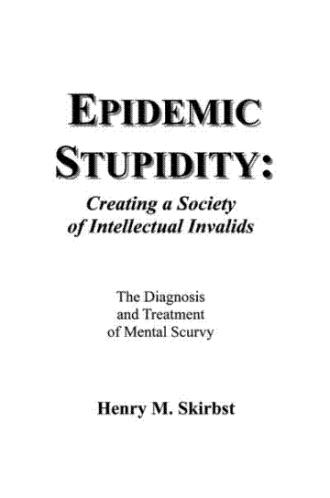
Book Cover & Preview Text
The Consequences of Mental Scurvy
Logical consequences are the scarecrows of fools
And the beacons of wise men.
- Thomas Huxley
Consequences are inevitable. It is a simple matter of cause and effect: an undeniable law of the universe. This is understandable because we humans have been given the gift of intellect. When used, this gift enables us to alter our actions in order to change or direct the consequences we experience, for good or bad. This is called free will.
Unfortunately, this will is forfeited when we fail to exercise our intellect. At this point, we are no longer free: we are slaves to the consequences set forth by the natural order. Those who suffer from mental scurvy are becoming slaves to this order. Nurturing this condition in an entire generation is not only inexcusable, but the precursor to a society’s demise.
Today, we find ourselves at a dangerous precipice. Failing to take action now as a people united will cause us all to continue the deadly freefall into the abyss of relinquished self determination. A generation of intellectual invalids will be entirely incapable of reversing these dire consequences.
Formats

Book Details
About the Book
Lurking behind the doors of many public schools is a condition more insidious than the most dreadful disease. Cleverly disguised as a remedy for the condition itself, it is affecting our young people en masse due to its surreptitious nature. Despite triumphs of modern science in combating unseen microbes, the imperceptible world of misguided pedagogy is often more mysterious and dangerous than most can imagine.
Consequently, school children in
Mental scurvy silently contaminates the intellect. It destroys individual and national vigor and strength. It preys upon ignorance and complacency. However, it can be stopped. This book is an attempt to halt and reverse the shocking effects of mental scurvy. In it, you will find – in layman’s terms – a diagnosis and treatment of this condition plaguing our public schools today. Find out how you can help, and avoid being afflicted, before it is too late!
About the Author
Currently a middle school science teacher, the author’s teaching experience spans two decades. From summer camps to undergraduate school, Henry Skirbst has taught in a variety of settings to diverse ages and ability levels. Although trained in the sciences, he chose a career in education thinking he could make a positive difference in people’s lives. His passion for teaching, however, is being slowly sucked out of him. The contemporary educational philosophy, so misguided at its core, has been eroding away at his drive to remain in the most noble of professions. His drive to do what is right has caused him to take on this philosophy head-on. This book is the result of his struggle. May it not be in vain. Henry Skirbst has a Bachelor of Science in Environmental Studies from the Richard Stockton College of New Jersey and earned a Master’s degree in Geography from Rutgers University. He has numerous credits toward a second Master’s in Educational Technology and is an avid reader of special and gifted education materials. Although he has several years of professional experience in the "real" world, his most valuable experience comes from the time spent with real students an actual classroom.