
From Immigrant To U.S. Marine
by
Book Cover & Preview Text
CHAPTER 1 –
ESCAPE FROM COMMUNISM
SURVIVORS OF
At about 10:15 pm on Wednesday, 13 of February in 1945, three incendiary gravity bombs hit the roof of our townhouse, on
For as long as I will live, I think I will remember the howling sirens and the increasing sound of the engines of many aircraft. As the sounds of the aircraft came closer and their engines became louder, there was suddenly a deafening crash on the top of the three-story townhouse in which we were staying, followed soon by two more loud crashes.
Somehow our family survived through a nightmare of air raids in a city of thousands of refugees fleeing from the Soviet Army and communism. During three days of bombing, according to U.S. Air Force historians, about 25,000 persons were killed and 35,000 were wounded. Reportedly one British writer has estimated that about 60,000 people were killed in
BACKGROUND
Our family consisted of five persons. In addition to my mother and father, there was the wife of my cousin, Eugenia, and her two-year old son, Erikas, with us. We were displaced persons and refugees from
We fled from
Formats

Book Details
About the Book
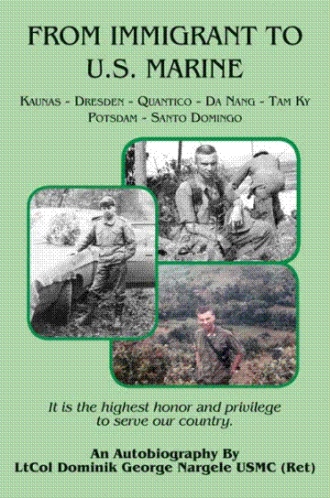
Historical eye-witness biography about escape from Eastern Europe, Dresden survival, coming to America, Cuban Missile Crisis, Vietnam service, East Germany and Dominican Republic political and military events. It is dedicated to the victims of Communism and terror. Original sources are used primarily and references to personal papers, photography, diary entries and direct observations are made. Father was young lawyer in St. Petersburg before and during 1917 Russian Revolution and later observed political developments as an important lawyer in Lithuania. Survived two World Wars. Author was Infantry Officer with 1st, 2nd and 3rd Marine Divisions, served 28 years in the U.S. Marine Corps, with two combat tours in Vietnam, with award of Purple Heart, was Naval Representative to Soviet forces in Germany, Defense Attaché in Santo Domingo, Naval War College Honor Graduate, Served with DIA and CIA. Earned MA and MSA from George Washington University and PhD from Georgetown University.
About the Author
Dominik G. Nargele, LtCol USMC (Ret), MA, MSA, PhD, was born in