
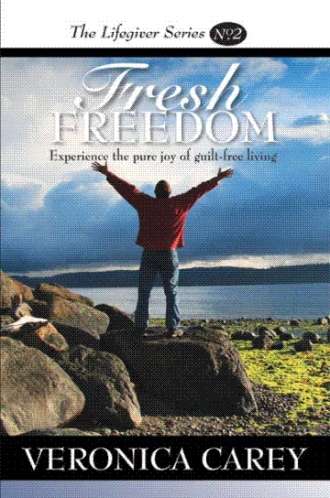
Fresh Freedom
The Lifegiver Series Book 2
by
Book Cover & Preview Text
A DEATH FOR A DEATH
Catch a glimpse in the following drama, taken from the Chronicles of the Restoration in “Bathsheba’s Tears”, of but a teaspoon of the cup of sorrow that David had to drink as wages for his sin of adultery and murder:
The procession meandered through the narrow, winding streets of
‘What a painful day for the new queen,’ subjects lamented when she passed by. Queen Bathsheba bit her lower lip, trying to fight back as many tears as she could, in the presence of the curious crowd that began to appear along the way.
At times, when she could not contain her grief, tears streamed down freely, coating her face with liquid sorrow. And despite his strong efforts to appear regal, David found tears trickling down his ruddy cheeks as his arm encircled Bathsheba with solace.
It seemed like days instead of hours, trekking through the streets of the city from the palace to the royal cemetery. Onlookers bowed their heads, while some of the Hebrew mothers, in hushed tones, stopped to explain to their children the reason for the sad procession.
“The new queen is very sad today. Her baby was sick for a week and died. They are going to bury the baby prince in the royal cemetery.”
Children nodded in quiet acknowledgment as they watched the unusually little golden casket glimmering in the sunlight. It was adorned with a dainty garland of cream-colored rosebuds, befitting the tiny royal. The bier moved steadily because of its weight above the lowered heads of Prince Amnon, Prince Chilleab, Prince Absalom, and Prince Adonijah.
Here and there, cries of anguish could be heard from the women and old men who had come out to share in their king’s grief.
The official weepers began to lift their voices and echo a song of bitter, woeful tones. This moved the queen’s heart once more, and a new stream of tears enveloped her large lavender eyes.
Having shaved her head and covered herself with ashes at the sudden death of her husband Uriah, Bathsheba was now a picture of a woman overwhelmed with tragedy. Now her hair was growing out short stubble. This robbed the beauty of her natural glory, the golden tresses that once adorned her fair head. There were no bejeweled circlets of chains and gems to adorn her crown today.
Bathsheba suffered shame along with her grief, as a new mother devoid of her baby. The queen was fully aware that this loss was a punishment, for her conscience would not let her think otherwise.
David’s queen felt robbed and empty. She had been given a few days to nurse her newborn son before he slipped silently into the deadly sickness. All of her efforts to bring healing to his infant body were of no avail. He refused to nurse, and he would not respond to her rocking and singing to him. The royal physicians arrived one by one to offer their services. But by the end of the week, the fact became clear that the young prince was dying.
Cognizant of the queen’s panic and exhaustion, the royal servants urged the king to coerce Bathsheba into taking some rest. Bathsheba fought off such suggestions for she could not abandon her son now. But finally David convinced her to relinquish their son into the hands of the Lord, for his sake. Very reluctantly Bathsheba handed the frail little form to her fasting husband and ran away weeping into the privacy of her own quarters.
David felt so responsible for the baby’s illness that he fasted and laid bare upon the earth for seven days. He could not be persuaded to eat or wash or get up and leave his place of supplication. His son’s life lay in the balance. David hoped, against all odds, to incur the Lord’s favor and mercy by his actions. And so he pleaded hourly for his son’s life.
As long as David fasted, Bathsheba held out hope. Yet hope was dashed to sorrow as the Lord’s decision became known in the passing of the prince. The couple became so distraught they could not even name the child.
It was then that David began to comprehend the extent of God’s wrath toward his sin; and the gracious pardon of his own death as penalty. David’s life was spared because the Lord chose to take out His wrath on David’s son. The Judge of all the earth had spoken. It was decreed in the heavenlies that the king’s son would pay the punishment.
As the golden casket was lowered into the freshly dug, yet tiny grave, a beautiful sound could be heard filling the air with a note of solemn memorial. The king had ordered the temple musicians to play a dirge to honor the innocent infant. Six tall, straight sentries, garbed in crimson and gold braided uniforms, blew on their golden trumpets a most melancholy, yet lull-a-bye-like melody.
As the afternoon sun cast a golden glow upon the royal couple, they paid their last respects. Bathsheba whispered, in a prayer of release, these final words of parting:
“Good-bye sweet prince-babe. Rest gently in the arms of your eternal Father in the heavens, and be comforted and healed in the warmth of his bosom.”
And as she did so, the trumpets blew in the background, filling her heart with a memory that would be forever a part of her days.
It was then that the king began to cry aloud and reveal the depths of his anguish. Loud wails now erupted from his lips as the brave monarch reduced himself to that of a grief-stricken father.
“No, no!” David bello
Formats

Book Details
About the Book
Have you ever wondered why man's dysfunction, his propensity toward sin and mischief is so pervasive? Look with me at the struggle of the human heart, as you read Fresh Freedom, the struggle to overcome temptation and recover from sin's folly. Learn anew how God's laws on sexuality were given for a high purpose -to call us up to a holy life and spare us pain and sorrow. Look at God's law as a mirror - a mirror that reflects our dark side as well as God's holiness.
<p>
Watch Dinah, Jacob's daughter, as she suffers from her rape and then finds deliverance. Watch King David as he flounders in his quest for peace and forgiveness amidst the shock of his sin's residue. Rejoice with David as God helps him to rescue his captured family. Discover how merciful God was to Rahab, the Jericho prostitute, and to back-slidden Lot and his daughters as they miraculously escaped the judgment upon their cities. Discover God's zero tolerance for sin at the Cross.Gaze with Israel at the image of healing which Moses offered to them in the wilderness of sin. Fresh Freedom explores the justice and mercy of God, and points us to the Christ, in our journey for wholeness.
About the Author
Veronica Carey is an ordinary woman with a dynamic friendship with God. She became a Christian as a child living in
As Veronica's friendship with God deepened, she began to write. She not only wrote about God, but she has put her faith into practice. Veronica then founded Carey House, a home for fatherless children and widows in