
The Scattered Scruffs
by
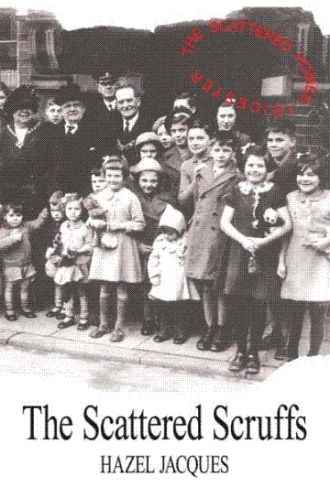
Book Cover & Preview Text
Formats

Book Details
About the Book
Until 1944, tuberculosis was rampant among poorer families. The second World War hampered medical research until 1944 when Streptomycin, the first antituberculosis drug, was invented. But it was too late for the many sufferers who died from the disease. This is a true story about children who through no fault of their own were taken into care between 1939 and 1949, and about one such family in which both parents developed tuberculosis.It is about abandoned children – some ill-treated, others on the ‘bread line’, whose parents had split up, were in prison, or could not cope.Brothers and sisters who were separated, each losing touch with the other. All these children were in the hands of the care system of the day, run by the Public Assistance and The Poor Law. I would like my book to be read as part of Social Services’ training, so that everyone understands the hardship, and the mental cruelty, that all children in care go through when separated from their parents. It may take as long as forty years, before such children, now well into adulthood, can even talk about their lost childhood. With vaccination available today no one should suffer from the dreadful disease of tuberculosis. But it is a disease which spreads rapidly through families. My own brother was operated on when he was 15 years old, losing a lung and ribs and thereby scarred for life. Fortunately today this does not happen, although the bacillus Mycobacterium tuberculosis is still lurking in the background. Let us not get careless or complacent, and risk losing more precious lives
About the Author
Hazel Jacques was born in
The eldest brother Ted lived with his Grandmother, and the eighteen month old baby Brian was taken to the Countesthorpe Cottage Homes until his mothers dying wish was that her baby be near her at the Hospital. When Emma died, George then took the baby to live with a friend. George was then readmitted to hospital where he died in 1947.
The three girls Hazel, Doris and Edna were sent to the girls Home on
After seven years in the girls home Hazel left at school leaving age and lived with foster parents.
Hazel eventually met and married a policeman (now retired) and lives in Loughborough, she has four daughters.
Writing this book was quite traumatic having to relive her experiences, but it was also therapeutic as she couldn’t talk about her childhood for forty years. She would like the social services to read her book, so that they understand what a trauma it is for children to be taken away from their parents.