
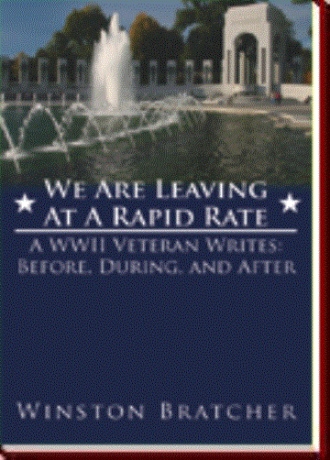
We Are Leaving At A Rapid Rate
A WWII Veteran Writes: Before, During, and After
by
Book Cover & Preview Text
LCT –
Our unit, the 13th Machine Records Unit (
Just seconds before July 5th a bright flare shot up and hit a balloon. The balloon exploded and slowly descended in an inferno of yellow flames, lighting up the entire area. Shortly after that incident an order was issued to all craft not to do such a dumb and dangerous thing again. An enemy plane did make a pass over us later that night.
As a child I never dreamed I would be anchored, on a landing craft, offshore at
The next morning we rolled off the LCT, hardly getting wet. Minesweeping was still being done on the beaches. We proceeded west. Somewhere along the way we spent the night in an open cow pasture in our bedrolls. None of us had bathed for weeks. In addition to being filthy we had beards and looked pretty bad. A cow pond in the corner of the field was the source of a bath. Algae covered the pond, but when swished to the side the water was clear. An order came down that everyone was to shave. General George Patten must have been around! The
Retreat – Bed Check Charlie – Au Revoir
Our unit operated on a 24/7 schedule with three shifts of personnel (when not on the move). While we were in
It only took seconds for what was about to happen. We heard a faint high-pitched sound from way above us. It became louder and louder. Then there was a wobble sound added. Everyone froze. It had to be a bomb from “Bed Check Charlie” headed directly for our trailer! We only thought, “This is it!” These were the last seconds of our lives. The shrill became deafening. In the next second we would be blown to bits! There was nothing to do about it! We were about to die. Au revoir, c’est la guerre. I am still around today. For
Formats

Book Details
About the Book
We are Leaving at a Rapid Rate is an appropriate title for this book. Veterans of WWII are rapidly leaving the scene. Many have already left. WWII will soon become history with no living witnesses. As a veteran of WWII at 84 years of age, the author decided to gather his thoughts and memories and write something to leave behind. This is not only about war. It covers before, during, and after WWII. As these thoughts and memories have come to his mind, he has put them on paper. Scattered throughout this book you will find humorous stories and quips, some true and others fictional. This humor will provide a bit of relaxation from the rigors of reality that are talked about in this book. The Introduction describes, in more detail, the contents of this book and the style in which it is written. It is a book that a person can read in one sitting, start anywhere, or stop anytime and resume reading later. It’s a type of book that a person might even enjoy reading again.
About the Author
Winston (Win) Bratcher was born in