
THE SACRED HEART LEGACY
SOUL OF A CITY
by
Book Cover & Preview Text
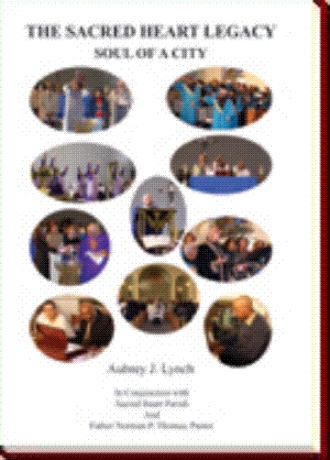
Over the years, on various occasions, I have had the opportunity to introduce people at public events or to introduce a book to the reading public.
To introduce this book, The Sacred Heart Legacy, I consider a truly unique privilege. I am honored by the invitation and only hope that I can do justice to the task.
Perhaps you have read books in the past detailing the history of a parish or a diocese. There are many of them in circulation. I assure you, most of them are so lacking in conveying a Spirit-life that they can make a reader conclude that history is always going to be dry and boring. Most histories of parish churches or dioceses are filled with details about the clergy, bishops or priests, who have been part of the Church life over the span of time covered by the historical record. Often, the major achievements detailed in the book will be the succession of buildings that were constructed under the guidance of the pastor or bishop. Or, you might find a lot of numbers – baptisms, first communions, marriages and funerals and so on.
This book is different. It sets forth in an honest, even critical way, the dynamic life of a “community of disciples of Jesus.” You will not find out a lot about when the cornerstone was laid for this building. Nor will you get a long list of pastors who put up buildings or were chaplains to the ladies’ guild or guided the ushers’ club and the like.
Instead, you will read the personal stories of the individual people who have come to be Sacred Heart Parish.
I suppose that it is only fair to alert prospective readers that the history of this community is the history of an African-American Catholic community. For this reason it is inevitably a tiny piece of the history of racism in the Catholic Church in the
And even though the racism in the Church goes on, they manifest a commitment to the Catholic tradition as theirs, a commitment nothing will shake or weaken. These are people who can sing with greater authenticity than most, “We’ve come this far by faith…” and that faith will be forever the real cornerstone of this community as it moves on into new phases of their life as a parish.
One final reason why I am pleased to introduce this book and urge many people to read it is the timeliness of its publication. In the Archdiocese of Detroit we have already gone through a very painful period of closing churches and suppressing parishes. We are currently in the process of developing a so-called strategic plan for the diocese. Anyone with eyes to see recognizes immediately that the plan’s development and implementation will result in the closing of many more churches, especially in the City of
When you read this book detailing the history and legacy of this beautiful community of Jesus’ disciples located in the heart
Formats

Book Details
About the Book
The Sacred Heart Legacy tells the history of the first African American Catholic congregation in the State of
The book examines the role of the Church as a bureaucracy, concerned about its temporal existence, which must balance the demands of its several constituencies just as any other large, multinational organization must do. It also examines the role of the priest as a leader who must choose between organizational expediency and the Word of God in ministering to his flock. The book is, most of all, a celebration of the parishioners who have defied all odds to build themselves into a highly competent community of believers who are confident in their ability to carry on regardless of what the future holds. The Sacred Heart Legacy is, ultimately, intended to be a model for those who would combat the pernicious effects of the quest for wealth and power by adhering to the Word while collaborating with the disenfranchised of all races and creeds.
About the Author
Aubrey currently enjoys retirement from 30 years of practice as an Organization Psychologist. He has degrees from the
Aubrey was a student at