
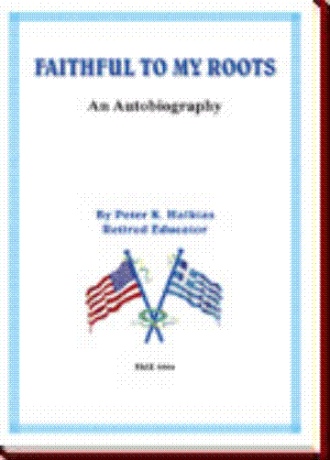
FAITHFUL TO MY ROOTS
An Autobiography
by
Book Cover & Preview Text
Foreword
Perhaps you have read many books of various subjects and themes, written by authors of all socio-economic classes. Depending on the topic, these authors try to hold your attention from start to finish and leave a lasting impression upon yourself. “Wow! What a book!” most likely was your first reaction after reading such a publication. You admired its captivating title that says it all. Too often, it makes you fall so much in love with such a book you read that you want to read its content over and over again. “I can’t get enough of this book,” would be your next reaction after you get hooked reading such a fascinating edition. It is true, some writers use electrifying techniques to pass on their thoughts and ideas to a large reading public, and become very popular authors because they earn the respect of their readers almost instantly. A good author knows when and how to use documented facts, figurative language, statements of emotion, moralistic views, content of compassion, argument, convincing elements, humor, and all those techniques of good writing. The author of this book you hold in your hands, in contrast, is not a popular writer who tries to compete with those authors of worldwide fame that too often seek critique and advertisement in the New York Times for commercial purposes. The author of this book is an ordinary man, who is distinguished for his simplicity in form when writing his autobiography. He tried to write his life story as an immigrant who came to the shores of this country, searching for the American dream at the age of twenty-five years. Faithful to My Roots is my own life story that includes the challenges I was faced with at the early stages of my life, prior to my coming to
You or someone else reading this book may ask: Why are you writing this autobiography now? Because I believe no man should leave this Earth without traces after he dies. Too often we admire the remains or fossils of a huge creature that existed thousands or perhaps millions of years ago. Other times, we are fascinated with the statuary or palaces left by an ancient civilization and we make every effort to preserve it for its archeological value and with artifacts on display in a museum. Still other times, we remain speechless in front of an outstanding portrait or painting that captivates our imagination with its artistic form and shades of colors. In these instances, however, we praise the collective achievements of people and we do not do justice to the individual sculptor, architect, or artist for his glorious immortal contribution. Every man, who is God’s perfect creation, should leave behind something of his existence on Earth so new generations can be inspired by it. A writing of his own life story, no matter how small or large, in my opinion, would be the best testament of his legacy left behind after he has departed. Inside of me, I believe, and in every human being, there is a spark, a little torch from the everlasting source of light that we call God. We should never let this light be extinguished; it should burn and glow into eternity. This is only possible if you and I are doing good deeds on Earth as a legacy to future generations.
For better editing and organization, Faithful to My Roots is divided into units of chronological blocks. When it was necessary, I included a picture, because I am a firm believer that a picture is worth a thousand words. Descriptive and narrative in its style, each unit is a detailed account of my personal experiences, from birth as a baby to the present as a retired educator. I tried to avoid figurative language, but if I did use it, unconsciously, of course, I apologize in advance. I did, however, use some idiomatic phrases from the ancient and modern Greek language phonetically, consistent with the English text, for extra flavor. My ethnic pride, you see, follows me like a shadow everywhere I go. An advocate of truth all my life, I tried to include all my real experiences I could recall in an honest and objective way. And that’s exactly what is revealed in my book: the truth and nothing but the truth. Now sit back, find a comfortable position, and continue reading. I hope you will enjoy my autobiography.
Formats

Book Details
About the Book
Retired educator Peter Halkias, in his autobiography Faithful to My Roots, writes about his childhood years during the German Occupation (1941–44) and the subsequent civil war that ravaged his native country of
The educator writes how he met his wife of forty years, a remarkable marriage nowadays, and how they endured the struggles in raising their three children.
He devotes quite a few pages to how he immigrated to
In a special chapter, he writes of his personal, family, and other episodes he thought were important life events, and experiences that he could not omit.
He concludes his biography by summarizing his philosophies as a naturalized
As a final thought, the author encourages people of all ages to attend the summer Olympics in