
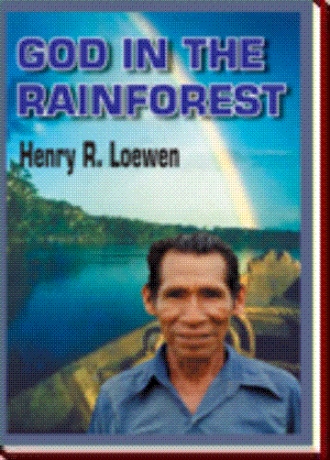
GOD IN THE RAINFOREST
by
Book Cover & Preview Text
1955
An Indian runner emerged from the setting sun along the path into
“When did my wife give you this letter?” I anxiously asked him.
“Ariki, she did not give it to me.” He replied, using my Indian name. “Another runner gave it to me to take to you just two days ago.”
“Did the other runner say anything about my family?” I enquired of him.
“No, he didn’t tell me anything except that your wife told him to get the letter to you as fast as possible. I paddled as fast as I could and when I took to the trail I ran all the way.”
“Thank you very much. Now I’ll see what it says.”
Nervously, I opened the green and yellow envelope.
1952
We set sail to
Days went by. Then weeks turned into a month and we became considerably anxious because the due date of the birth of our second child was fast approaching.
During this time our entry visas to
God, however, worked and the new visas arrived just in time to begin the journey across the
As we were nearing
In the morning new sextant readings were made, and soon we were on our way to the mouth of the Amazon. This was no small river! It is over 90 miles wide at the mouth with a 4,000 mile long body to give it enough volume to spew between 3 and 7 million cubic feet of water per second. This water is drained from nearly half of the South American continent as a result of an annual rainfall of over one hundred inches. The ocean tide reaches over four hundred miles inland.
There were miles and miles of beaches on the coast. Farther into the mouth we saw small settlements with sailboats lining the sea-side ports. Then around another bend we saw a large two-story colonial building right in the center of a fair-sized town near the water’s edge. The name of the town was Icoaraci. Within a few days we moved into that same two storied mansion for the duration of the Portuguese language course.
1956
(Susanne Plett, had come to visit us at our station when she became very sick.)
“What do you think, Joaquim? Shall we take Susanne to the mouth of the
Traveling around bend after bend I wondered if we would be able to pass the last rapids before dark. The sun was quite low when
“Henry,” she said tearfully. “Susanne is going!” I quickly put my fingers to her wrist and found her pulse was fading away. And then she was gone!
Since it was my bo
Formats

Book Details
About the Book
GOD IN THE RAINFOREST is a fascinating insight into the real life experiences of the Henry Loewen family who gave up the comfort and security of rural
This book is much more than just a personal diary of the challenges and difficulties that the Loewen family faced in the isolation of river life in the jungles in Brasil. It is a testament to the remarkable accomplishments that the people from very ordinary backgrounds can achieve when they place their faith and their lives in the hands of God. - Vic Toews, Member of Parliament for Provencher.
About the Author
Henry Loewen gave himself to learning the Baniua language “from scratch” as he and his family lived along the
Enemies of the Gospel added to the difficulties of Nature along their rocky waterway. But God was on the side of the missionaries.
Today, radio has carried on the message of the printed page. Indians who understand Baniwa are carrying on the messages also. Jean Dye Johnson - Author of several books
* * * * * *
“The full impact of Henry Loewen’s life will only be fully revealed in Heaven. Tribal people in the Northwest section of