
HELP!
WHAT TO DO WHEN YOUR SMALL BUSINESS NEEDS AN EMPLOYEE
by
Book Cover & Preview Text
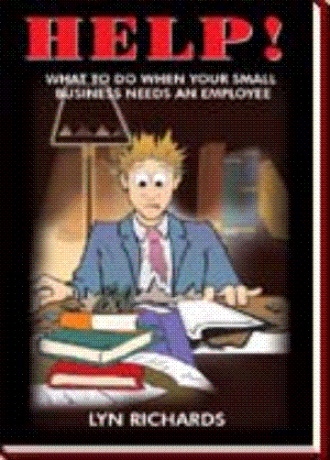
I have been a Certified Public Accountant working with small business owners for over 20 years. Over the years, the most common complaint I’ve heard is that it is just impossible to find good help. Indeed, as a small business owner myself, I’ve said the same thing.
Michael Gerber, in his book The E-Myth Revisited, outlines some of the reasons most small business owners start their businesses. There is the entrepreneur who truly believes they’ve got a unique offering and can fill a niche in the market that no one else can. Or they feel they can make more money, have more independence, and do things the “right way” by going into business for themselves. Sometimes, they start a business to build something. They intend to have a family legacy, or an asset to sell upon retirement. They never start their business with the goal of becoming an employer! And yet, no other skill will serve them better in building a business that remains competitive in the market, delivers a consistent product, and is an independent asset useful for selling or passing on to heirs.
The E-Myth Revisited tells the story of a pie maker who goes through the usual nightmare of hiring help. Either the employee fails to deliver the services or product exactly like the owner wishes, or the opposite is true: the employee becomes invaluable, then quits. And that is exactly what I see everyday in my practice. For every small business owner I serve, I feel like I’m waiting for that shoe to drop. The business owner either has an overpaid employee that is under-functioning, or has an employee that they are over-reliant upon who may quit. Either way, the owner is faced with the constant stress of knowing that on any day, at any time, his (already too heavy) work load may double as a result of employee transition.
When that shoe finally does drop the owner often gives up and goes back to doing it all himself. They try to make do without replacing the worker, intentionally limiting growth and expansion. They’re putting themselves at risk since their business depends exclusively on them. If they’re suddenly unable to work, the business will fail. At the minimum, they are working too hard for not enough money, thus running a higher risk of burnout. Sometimes they restructure the job to be less challenging and lower paid. They think this means they’ll have an easier time trying to fill the position and they’ll be less hurt when the employee leaves. Or they devise “incentives” to boost productivity or loyalty. Most often these are just several complicated hoops for the employee to jump in order to get paid decently. These “incentives” rarely inspire productivity or loyalty though.
Since the most common question I get from my clients is “How do I find someone to work for me?” I’ve spent some time and money on researching the response. This book is offered as a step-by-step solution to equip small business owners to be successful employers. The book is organized by first addressing some popular myths about human resources, and then provides specific steps to find the right person for the job. The steps work regardless of the size of the business, whether one employee or a hundred. It is written in a language that small business owners will understand. The book is designed to help the business become a place that runs like clockwork, where employees are competent, loyal, and happy in the workplace. Following these guidelines will help the owner maximize the business’s largest monetary investment, the team.
Formats

Book Details
About the Book
Most business owners go into business for themselves to increase their personal wealth, build an asset that they can either pass on to heirs or sell, and for greater flexibility or an enhanced quality of life. To do this, every business will eventually need employees. And this is the biggest hurdle a small business owner will face in growing the business. Common difficulties include finding a good fit for the growing enterprise; matching skill level with affordability; employee “management by abdication” issues; and the nightmare of compliance with regard to tax payment and reporting requirements. This book will provide a step-by-step guide to finding and keeping the right people. It provides suggestions on structuring the job, advertising and interviewing, creating job descriptions, and reviewing and rewarding team members. This book can help transition a one-man shop into a professional organization that will eventually be able to survive without the owner working at every task, thus building true business value.
About the Author
Lyn Richards is a CPA practicing
in