
K-5 SMART Languages and Cultures
by
Book Cover & Preview Text
Teach
Smart and Have Fun!
I grew up in an oil camp, a little piece of
heaven on earth, in the middle of the Colombian jungle, where I attended a
total immersion English program. The second language I was learning then was
the medium as well as the object of instruction. Math, language arts, science
and social studies were all taught in English. At home, when I was around my
parents, brothers, and grandparents I spoke Spanish, and when I was at school
with my teachers and friends I spoke English. It just happened, it was natural.
I used the language that I needed to use, when and where I needed to do so. I
am a product of a very successful English immersion program. Therefore I am a
true believer in early language learning. The lifelong skills acquired during
my childhood have given me the opportunity to meet and to communicate with the
wonderful people, who in one way or another, have touched my life and inspired
me to become the woman I am today. Imagine this, here I am, writing books in my
second language, English, while having the privilege of teaching “little ones”
my beloved native language, Spanish. What an incredible gift my parents and
elementary school teachers gave me! My first teaching assignment was at a
public elementary school as a first grade Spanish partial immersion teacher. I
planned, designed, implemented and delivered all the math, science and social
studies lessons during two years. When I thought that I knew what I was doing I
was reassigned to teach third grade. I had to do it all over again. The
children who attended these language programs are now bi-lingual. What a joy to
know that I made a difference in their lives by sharing with them a gift that
was once given to me! Today, I frequently have the opportunity to advocate for
early language learning as a board member of the TFLTA and as a presenter at
numerous world languages conferences. I always leave these places with the warm
feeling of having shared and generated genuine enthusiasm for the teaching of
world languages. The idea of writing this book was born somewhere at one of
those places. I have had the pleasure of meeting many new teachers, whose
questions and comments have challenged me to write about what the children have
taught me through their creativity, curiosity, and eagerness to learn. During
the last twelve years, my passion has been this wonderful and challenging
journey of teaching and learning how to teach Spanish in elementary schools.
Every day, I find out that there is so much more to learn. And frequently, I feel that I haven’t taught
my “little ones” enough. I have realized, though, that in a smart elementary
world languages program the curriculum needs to be planned, developed, and
implemented for young learners in a happy, creative, interesting and
stimulating environment while targeting the multiple intelligences. It needs to
offer the children the opportunity to discover and understand the popular
culture, traditions, and the lifestyle of the countries where the target
language is spoken, while following the same sequence as when they learned
their native language: first they listen and start to understand the language,
then they begin to speak it, and this is followed by pre-reading and
pre-writing attempts. The degree of proficiency acquired by the children in these
programs is proportional to the quantity and quality of time spent using the
new language in meaningful ways. A carefully planned elementary world language
program that accommodates a variety of learning styles will eventually lead to
a very successful language learning experience in the middle and high
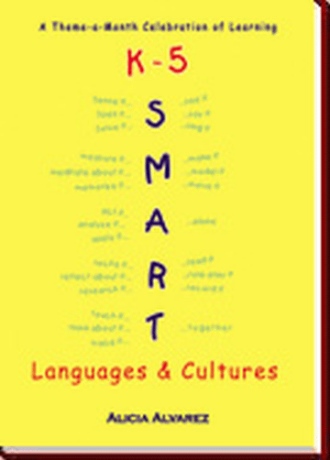
schools. This book is a recollection of
smart strategies for making world languages learning comprehensible and
meaningful to children who attend elementary programs. It contains a variety of
brain-friendly, thematically based lesson plans to help present, review and
practice a language, while developing children’s speaking and comprehension
skills. These lessons are intended to support individual, partner, small group,
and whole class instruction. It is my hope that this book will be practical and
useful to world languages teachers, who are looking for fun, ready to use,
easy-to-follow lesson plans with ideas, activities and projects to help enrich
and promote their programs. I encourage you to value the opportunity of using
the target language as a teaching tool to inspire your students to communicate
and interact in their new language. Use the information in this book to develop
and expand your program, while addressing the multiple intelligences. Adapt
these ideas if you need to. Copy, add, modify or just use them as a guideline
to create your own lessons or to supplement your curriculum or textbook. All of
the tried-and-true classroom activities and projects in this book appeal to
different learning styles and can be adapted and implemented in any language.
This book ends with a resource section of my
favorite catalogs, books, software programs, music tapes and CD’s, videos, and
Internet sites for Spanish teachers. There is also a section on theme-a-month,
easy-to-learn traditional Latino songs and rhymes. All the reproducibles are in
Spanish. Translate them to the language you teach and you are ready to go.
Teach smart and have fun!
Formats

Book Details
About the Book
This book is a Theme-a-Month Celebration of
Language and Culture Learning! It contains fun, ready to use brain-friendly
lesson plans, adapted by a teacher for teachers, with ideas, multiple
intelligences activities, and hands-on projects to help enrich and promote an
elementary world language program:
* How to keep your world language program alive
* How to advocate for your program and
communicate with your students’ parents
* How to plan theme “brain lessons”
* SMART Theme-a-Month curriculum with a holiday
approach
* Assessment ideas
* How to implement a Multiple Intelligences
Calendar Time
* Multiple Intelligences HAPPY Calendar Time
Activities samples
* Free reproducibles
in Spanish
* Free Spanish teachers
resource guide: catalogs, books, videos, music, and software
* Free Theme-a-Month Traditional Spanish Rhymes,
Tongue Twisters and songs guide.
* Monthly projects: games, songs, events, puppets,
posters, and certificates to help you teach smart and have fun!
This book is innovative in its offering of suggestions
and examples on how to promote an active and fun use of the new language while
appealing to your students’ learning styles and preferences. Language and
culture provide a stimulating connection that will enrich your young learners’
overall school experience.
About the Author
Alicia Alvarez holds a B.A. in Journalism from
the Universidad Externado de Colombia, in