
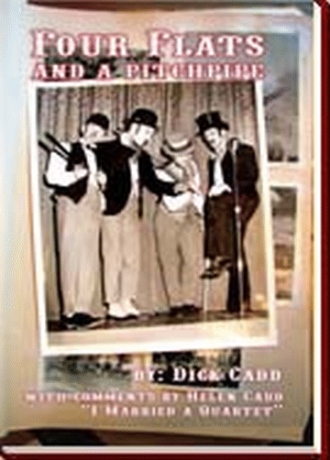
FOUR FLATS AND A PITCH PIPE
by
Book Cover & Preview Text
It was a solemn occasion, sitting
at the breakfast table of the President of the
But the solemn occasion was not
solemn for long. As usual, and as was
expected of this musical foursome, we began singing our trademark “sugar stick”
- De Animals A’comin’, a hilarious story of
how Noah put the animals into the
“What am I doing here?” I asked myself “Is
this some kind of omen?” How could I possibly know that in a few short years I
would come back for the next 32 years of my life in this country, living among
the people, having breakfast with several more presidents? But that’s another
story.
The Four Flats Quartet started in
a peculiar manner. Not many people
believe this, probably because it is so unbelievable. We were all students in 1946 at
He was probably as surprised as I
was when about 40 or more fellows showed up.
My first observation was that it wasn’t organized very well. Pop suggested that we all get together in
groups of four. He didn’t seem to care
much whether one could sing or not, nor whether there might be the four
distinctive parts that are needed to make a musical foursome. At any rate, everyone seemed to find three
other male species with whom to harmonize.
I began to see that this was turning into something like choosing up
sides in a baseball sandlot with eventually that unwanted guy left in last
place. And that’s just how it turned
out. There were four guys left over that
nobody seemed to want. You guessed it;
they were destined to become “The Four Flats.”
As with all quartets, the
personnel changed from time to time. I
don’t really remember who was in that original group. I’m not even sure that I was one of them. At any rate, after a few weeks it shuffled
down to what became a fairly permanent quartet.
We named ourselves “The Four Flats.”
We have often been asked why we chose that name. Our usual response is, “It refers to our
billfolds.”
Ron Crecelius
was the second tenor (usually singing the melody) and had a cultured and
beautiful voice. He came to Pacific from
the military service, having spent the war years in the Air Force. It was immediately following the close of
World War II, so our campus was overflowing with veterans. His gregarious personality and his hilarious
sense of humor made him extremely popular on campus. He would prove to be one of the quartet’s
great assets that branded us as not only singers, but performers as well.
Norval
Hadley sang first tenor and came from
Many a night in Hoover Hall (the
men’s dormitory) you could hear us practicing.
As young college students, we were most interested in how much fun it
was to hear close harmony coming out of our vocal chords. To grab hold of a juicy barbershop chord was
actually exhilarating. The crazier the
song the more we were attracted to it. Norval had been to several Methodist summer camps and he
always had an abundance of hilarious, if not slightly odd ball, renditions of “camp
songs.” One song was called Beans. We put together our own arrangement and it
stayed in our repertoire all through the years of our association.
Harlow Ankeny came to the group a little later with a smooth lyrical voice. He had an uncanny ability to pick out the baritone part with ease. We seldom used any m
Formats

Book Details
About the Book
The story Four Flats and a Pitchpipe
is a tale of four men that surprised themselves with the talents they were
unaware of, until they entered a musical contest. That contest won them not
only the title of “Barbershop Champions of the Pacific Northwest”, but set them
on a path that would take them into areas they never dreamed about. In the
process they appeared with
As a stay at home wife and Mom
(in her comments of “I married a quartet”), Helen writes of the complexities of
life without her husband most of fifteen years. She and the other wives
faithfully kept the home fires burning.
About the Author
Dick Cadd
graduated from
Dick’s wife Helen, was an author
before her husband. Her book Never To Forget
has become a “must read” for people going overseas. She has had an outstanding
career in the music world as a pianist and trumpeter as well as producing her
own TV show over a nationwide network in the