
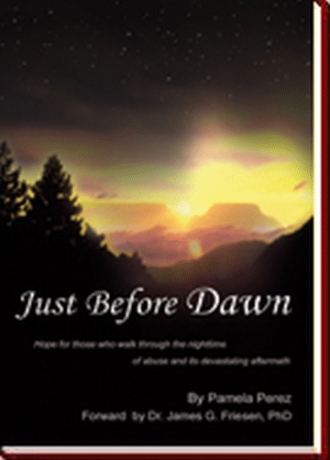
Just Before Dawn
Hope for those who walk through the nighttime of abuse and its devastating aftermath
by
Book Cover & Preview Text
Through the Silence
Through the silence,
if one would but stop
and listen,
a voice, distant and small. . .
Its tenor is plaintive and hesitant,
fearing detection or even acknowledgment,
and yet praying for it all at the same time.
Through the silence,
God is speaking, as well.
Longing, yearning to be heard,
whispering softly and lovingly to His beloved ones,
drawing them to Himself.
Every
survivor of abuse knows about silence - the dead stillness in the house at
night that wraps its cold arms around the silent soul of a child who is too
afraid to cry out. The silence of family
members who either know, or at least suspect that something isn’t quite right,
yet respond with nothing but more silence.
Silence
is often the protective device of choice for those who have learned that
breaking silence can be a dangerous thing; yet, unless we break the long
silence, the secrets remain intact and will continue to keep us bound up and
far from healing.
One
survivor wrote about it this way:
It was in the darkest part of my
lifetime, the place where silence was loudest, that I knew the time had come to
break the long silence at last. What I
eventually had to come to terms with was that I had believed the lie that if I
broke my silence, it would surely result in my complete annihilation and
ruin. I had been bound by that belief
long enough! Instead,
I finally understood that my silence was breaking me.
So I dared to speak. For the first time ever, I broke every rule
I’d ever been taught by speaking my pain out loud, speaking my memories, and
telling someone about the horrors of my past.
It was an extremely difficult thing to do. I took the chance, though. Because I did, I found my voice again and
I was able for the first time in my life to hear other voices than the cruel
ones inside me. For the first time, I
heard hope. And as a result, I healed.
If
breaking the silence is indeed the way to healing, what keeps the walls of
silence so intact? What is it that we
have come to believe about ourselves that leaves us bound and gagged in self
imposed prisons of mute despair? This is
something we must be willing to consider carefully if we are to break free from
the fetters that hinder the freedom God intended for us to have all along. We must ask ourselves then, audibly, the
questions that demand an answer.
***
Employ the appropriate use of the word
"No". Many of us would be quick to say that we
aren’t able to say no; that we cannot deny anyone else having his or her way
over us. This simply isn’t true. Think about how often we have said no - to
ourselves! No, I will not take care of myself!
No, I will not rest, even when I’m tired. No, I will not call someone for prayer or
support! No, I will not allow myself the
time I need to exercise, eat properly, take a nap, get counseling, journal,
spend some time alone with God, have coffee with a friend, read a good book, go
to a Bible study, relax and have fun, or give myself a break. No, no, NO! You see?
We are often quite good at saying no; the problem is that we are not
using our "no"
appropriately or directing it properly.
The key for any of us is balance and moderation.
When
something is not good for us, we need to recognize it, with help if necessary
(it usually is), and find better ways to function and do life. Because we cannot be fair or objective when
it comes to matters concerning ourselves, we need others to help, to hold us
up, and to keep us on the right track.
Once we become aware of the possible pitfalls in the path, we can then
take steps (sometimes literally) to redirect our course so that we can avoid
them. Sometimes we get so caught up and distracted by the things we cannot do
that we forget or neglect to do the things we can. We do have
choices, always - they may not be
easy ones or the ones we would prefer, but we have them. We
aren’t little and powerless anymore!
We do not have to be anybody’s
victim, not ever again!
Formats

Book Details
About the Book
Just
Before Dawn
offers a treasure trove of insight, inspiration, and guidance for the survivors
of abuse and those who come alongside them in the healing process. The struggles of the healing journey are
spelled out in detail, complete with the stumbling blocks survivors commonly
encounter. This hope-renewing book
features informative and helpful articles, letters, poems, artwork, and
personal stories from survivors in various stages of the difficult healing
process. While not minimizing the
difficulties of the path to healing, this book offers practical,
Biblically-based advice to help the reader challenge the false beliefs which
abuse victims typically fall into, along with help in understanding the coping
mechanisms which survivors employ, and the behaviors which keep them living in
pain long after the abuse has stopped.
Just
Before Dawn
is a valuable read for trauma survivors, their spouses, therapists, and
families. The author does not shy away
from such difficult topics as Dissociative Identity
Disorder or ritual and sexual abuse; she handles these issues with knowledge,
concern, and experience, leaving the reader at once understanding the darkness
survivors live in and the true promise of the dawn which healing can bring to
even the most shattered of lives.
About the Author
In
her work as a Biblical lay counselor, Pam specializes in ministering to
survivors of severe abuse. From
individual counseling to leading small groups, she uses her knowledge and
experience regarding healing from abuse to equip survivors for the process,
with its pitfalls and triumphs.
Additionally, Pam is an inspiration conference and retreat speaker who
possesses a rare insight into the complex and difficult issues surrounding the
spiritual aspects of healing from abuse.